
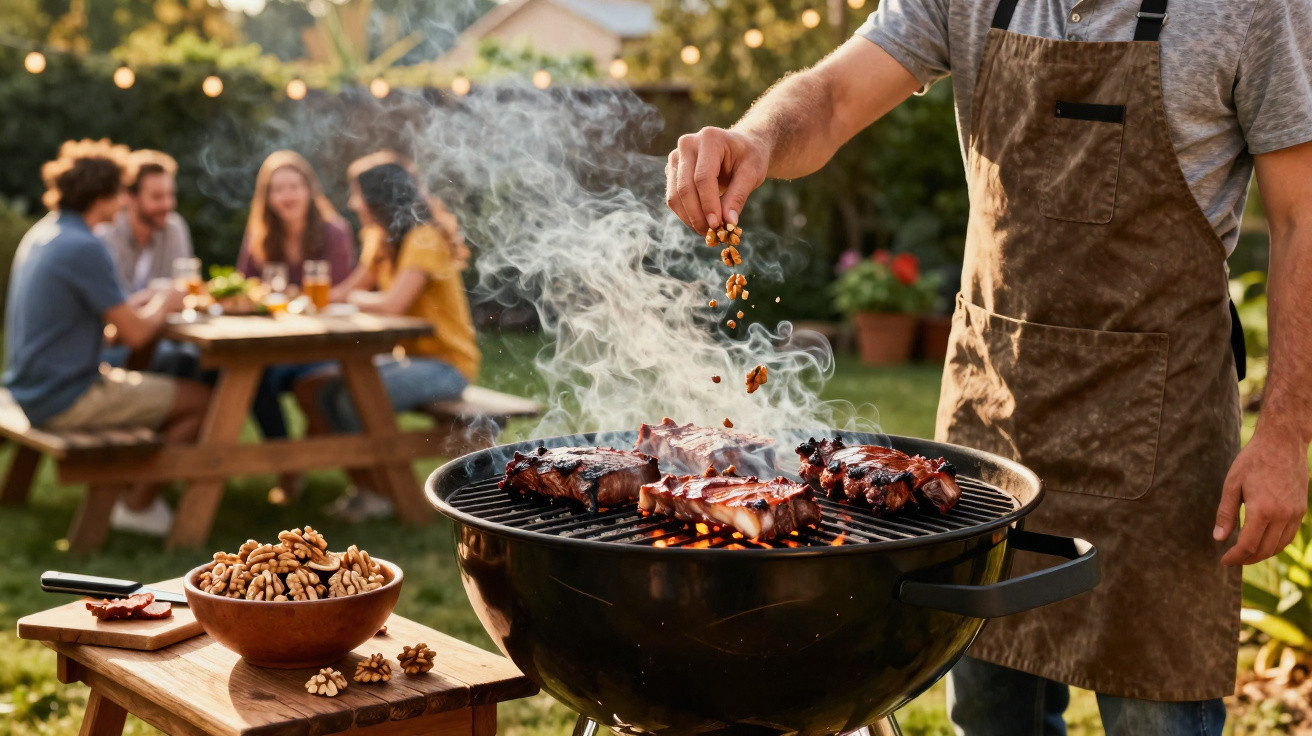
Using walnut shells can give your barbecue an unexpected twist: they can scent the embers and produce a light, gentle smoke that subtly shifts the flavour of the meat. This tip doesn’t replace charcoal, logs, or solid grilling technique, but used sparingly and in the right amount it can add a toasted, faintly sweet edge to your cuts.
Why put walnut shells on the embers?
When walnut shells hit the heat of hot embers, they release aromatic compounds. Those aromas travel with the smoke and drift around the meat as it cooks, creating something close to a mild smoke effect-without needing dedicated smoking kit.
You’ll notice the change most in the smell and the underlying flavour. The meat won’t taste like walnuts, but it can pick up drier, more toasted, deeper notes. It’s a handy option for anyone cooking over standard charcoal who wants extra character without relying on heavy marinades.
What kind of smoke does this trick produce?
Smoke from the shells is usually more fragrant than smoke from charcoal alone. In small amounts, it helps lay down an aromatic layer on the outside of the meat, especially on cuts that stay on the grill for longer.
- The aroma is typically gentle, with a lightly woody character.
- It suits meats roasted at a steady, medium pace.
- The flavour shows up more clearly on fattier cuts.
- Too much can make the smoke dense and bitter.
The key is not to confuse “aroma” with “lots of smoke”. Good barbecue needs stable embers, controlled heat, and clean smoke. If the shells burn too fast, go very dark, and give off a harsh smell, remove the excess and let the meat breathe.
How to use it on the barbecue without ruining the cook
Add the shells only once the embers are properly established-glowing red and without tall flames. Throwing shells onto live fire makes them burn quickly and can create aggressive smoke. The best time is when the grill is already hot and the meat is ready to take consistent heat.
- Use only shells that are clean, dry, and free from mould.
- Sprinkle small amounts across the embers.
- Don’t dump a large pile in one go.
- Avoid shells that are treated, painted, or contaminated with chemicals.
- Keep the barbecue well ventilated and away from flammable items.
For your first attempt, a small handful is enough. That way, you can judge whether the aroma suits the cut you’ve chosen. After that, tweak the amount based on the size of your barbecue and how long the meat will be cooking.
Which cuts work best with this aroma?
Walnut shells pair well with meats that welcome a smoky note without losing their own identity. Beef ribs, flank steak, rump cap, ribeye, chicken thighs, and artisanal sausages often take on the aromatic touch nicely, because they have enough fat to absorb some of the smoke.
More delicate foods need extra restraint. Fish, vegetables, and lean meats can end up with an overly strong aroma if they’re exposed for too long. In those cases, use fewer shells and let the smoke work for just a few minutes-just enough to perfume the start of the cook.
Is the walnut shell trick worth it?
It’s worth doing when you treat it as an add-on, not a miracle fix. The foundations remain the same: well-chosen meat, the right amount of salt, steady embers, and correct timing on the grill. The embers must be firm and stable before you add any aromatic ingredient.
Walnut shells also offer a smarter use for something that would usually go in the bin. On the barbecue, they help generate a fragrant smoke, add personality to the cook, and give the barbecue an extra layer of flavour. Used in moderation, they turn a small detail into a useful technique for anyone who enjoys trying new ways to grill meat.



Comments
No comments yet. Be the first to comment!
Leave a Comment