
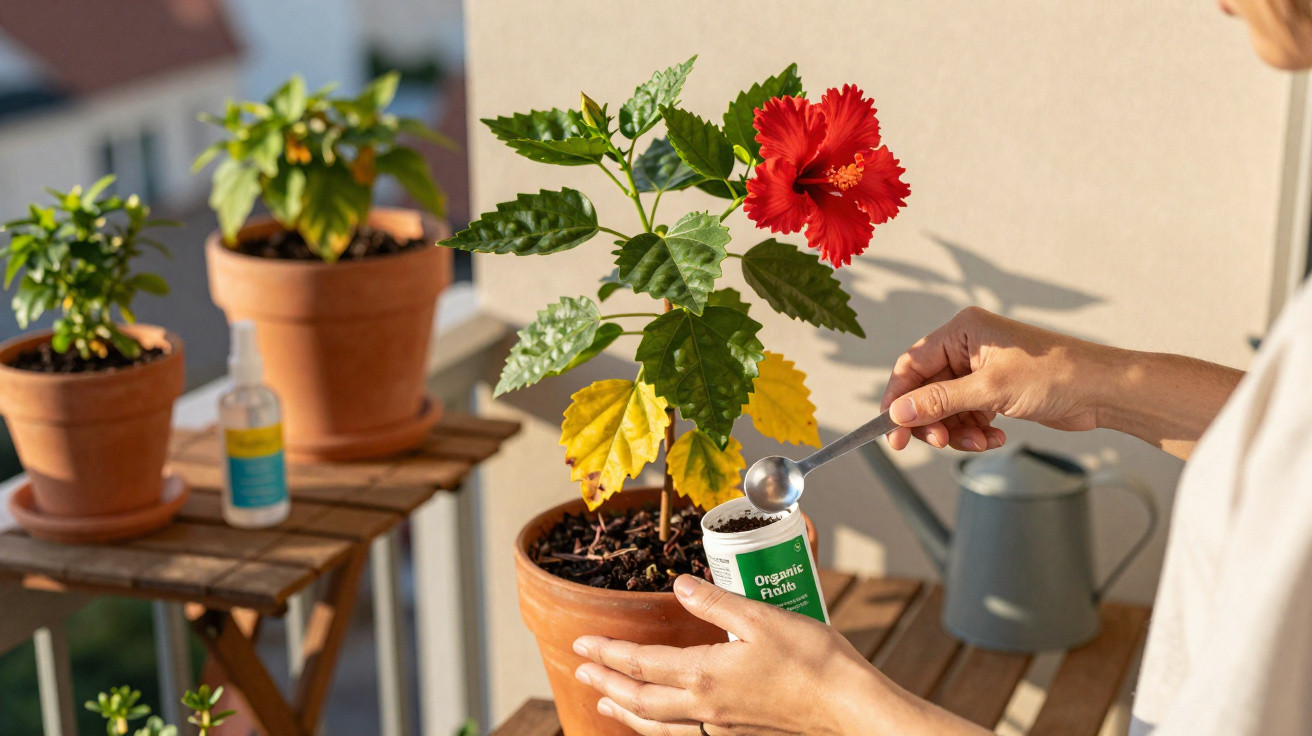
Before adding any fertiliser to the pot, it is best to work out what the hibiscus is trying to "say" through its leaves. Changes in colour, shape or texture are not always directly linked to a lack of feed; in many situations the cause is watering habits, the amount of sun it gets, or even the quiet presence of pests. Looking closely helps prevent the plant being exposed to an excess of nutrients.
How can you identify hibiscus problems by the leaves?
Caring for a hibiscus starts with reading its signals day by day. Yellowing, limp or spotted leaves can point to different causes, and each one calls for a specific response that does not necessarily involve fertilising.
Before deciding on any feed, it is worth checking whether the compost is waterlogged, whether the pot offers proper drainage, and whether the plant is getting suitable light. Only after this first assessment does fertilising really make sense, helping to strengthen the hibiscus safely.
How to fertilise hibiscus correctly based on leaf signs?
Knowing how to fertilise hibiscus begins with recognising what the leaves reveal about the plant’s overall condition. When nutrients are lacking, typical patterns appear, such as yellowing between the veins, older leaves dropping earlier than normal, or growth that stalls.
With too much fertiliser, however, the leaf edges may scorch and darken even when the compost seems rich. To cut down on mistakes, many gardeners follow a simple visual check before mixing any feed, paying attention to the hibiscus itself and its surroundings.
- Check the overall leaf colour, distinguishing new leaves from older ones;
- Look for round spots, dark specks or areas of dead tissue;
- Test the compost by touch to tell whether it is dry, damp or waterlogged;
- Inspect for insects on the underside of leaves and on flower buds.
What do yellow hibiscus leaves really mean?
A hibiscus with yellow leaves often gives the impression that it needs feeding, but that is not always the case. Yellowing may be caused by too much water, poor drainage, insufficient light, or sudden temperature changes, all of which reduce nutrient uptake.
When the issue is nutritional, older leaves tend to yellow due to a lack of nitrogen, while shortages of iron or magnesium lead to yellowing between the veins, which remain green. If the compost is constantly waterlogged and the leaves feel soft, it is best to correct watering and drainage before thinking about increasing fertiliser.
Which signs indicate a lack or excess of nutrients in hibiscus?
Nutrients influence the hibiscus’ appearance in different ways: nitrogen supports deep green foliage, phosphorus encourages buds and flowers, and potassium improves resilience and the quality of blooming. Gaps in these elements show up as specific symptoms, making it possible to adjust the type and amount of fertiliser more accurately.
Among the most common signs are older leaves turning yellow and slow growth from a lack of nitrogen, reduced flowering and buds falling before opening when phosphorus is deficient, and scorched or yellowing leaf edges when potassium is lacking or when there is an excess of salts in the compost. By noticing these details and also checking watering, drainage and pests, fertilising stops being automatic and starts responding to the hibiscus’ real needs, keeping the plant healthy with more consistent flowering throughout the year.


Comments
No comments yet. Be the first to comment!
Leave a Comment