
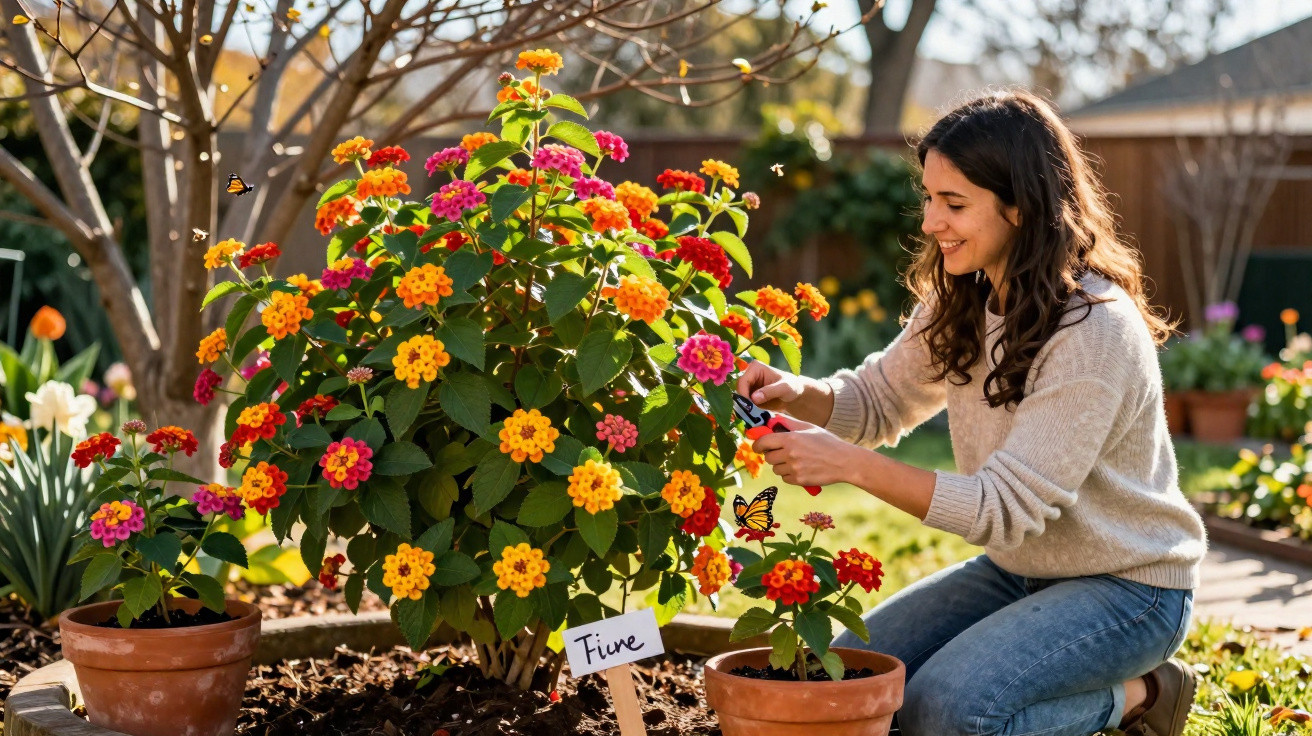
As roses take a breather and perennials die back in autumn, this shrub simply carries on. When other beds look bare in winter, it still puts out rounded clusters of colourful flowers - and it does so with surprisingly little effort from you. It’s time to look more closely at Lantana camara, a plant many people have never consciously noticed.
A flowering shrub that almost never stops
In a traditional ornamental garden, everything follows a set timetable: early bloomers such as snowdrops, then tulips, a summer explosion of perennials - and, from autumn onwards, a long stretch of emptiness. Lantana doesn’t follow that script. Its approach is simple: keep flowering.
The shrub produces spherical flower heads made up of many tiny individual blooms. They don’t open all at once; instead, they unfold one after another. Older flowers fade gradually, while fresh buds keep appearing right behind them.
"This means the plant hardly ever looks as though it has ‘finished flowering’, but more like a constant firework of colour."
The range of colours is particularly striking. On a single plant you can often see, at the same time:
- vivid yellow
- orange through to copper tones
- bold pink or magenta
- plenty of violet and purple shades
Depending on the cultivar, the flowers can even change colour as they age. A flower head might look mostly yellow in the morning and, just a few days later, glow orange-red. The result is an ever-shifting display in the border.
The big advantage in a winter garden
The clearest difference compared with many other ornamental plants appears in the colder months. While most flowering plants retreat into dormancy, Lantana will often keep going in milder areas. Even when temperatures fluctuate, the shrub continues to form buds.
So gardens that usually look bleak in January can still keep pockets of colour. For anyone tired of the grey winter stretch and unwilling to wait until April, this plant offers genuine value. Once you’ve got a shrub within view of the patio or by the front door, it’s easy to wonder why it stayed a niche choice for so long.
And while many bulbs make you wait until the second year before they truly perform, Lantana tends to start flowering almost immediately after it has established. No long lull, no underwhelming first season.
Easy-care and tough - almost the anti-diva in the border
A lot of long-flowering plants demand constant attention: deadheading, specialist feeds, careful soil improvement. Lantana sits firmly in the opposite camp. If you enjoy gardening but don’t want to be permanently attached to a watering can, it’s a strong contender.
"The shrub is considered highly drought-tolerant and will cope with longer gaps between watering."
Once it has rooted in, it manages well in poorer soils, as long as excess water can drain away. It dislikes waterlogging, but beyond that it copes with conditions remarkably calmly.
What Lantana actually needs
Its requirements can almost be written as a minimal checklist:
| Aspect | What the plant needs |
|---|---|
| Water | Water only during prolonged dry spells |
| Soil | Standard garden soil is fine as long as drainage is good |
| Feed | Occasional feeding is possible, but not essential |
| Pruning | Light trim for shape correction once or twice a year |
| Diseases | Problems are rare thanks to strong resistance |
What really matters is placement: Lantana thrives in full sun. The more light it receives, the stronger the colours and the more densely it flowers. In semi-shade it will still grow, but it produces noticeably fewer flower heads.
Unlike many roses or delicate summer bedding plants, it doesn’t require fussy routines. You won’t be constantly removing spent blooms, and you won’t usually need elaborate pest control either - the plant can fend off most attackers on its own. For people short on time but serious about appearance, that’s a compelling point.
A container plant for colder regions
In areas with harsher winters, the obvious question is whether year-round flowering is realistic. It can be - with a simple approach. If you grow Lantana in large pots or tubs, you can move it to shelter during frosty spells, for example into an unheated stairwell, a conservatory, or a bright garden room.
With enough light, it will keep flowering there or only pause briefly before starting again. That makes it possible to use the plant long-term even in more exposed climates, without having to buy a new one each season.
A magnet for butterflies, bees and birds
Lantana isn’t just eye-catching for people. Because it flowers so consistently, it provides food for insects throughout the year. Where many perennials offer only a short blooming window, this shrub supplies nectar with barely a break.
"Butterflies in particular launch almost direct assaults on the colourful flower balls."
Place a Lantana near your seating area in summer and you’ll soon notice how butterflies congregate around it. Wild bees and bumblebees make use of it too, especially when little else is in flower.
After flowering, Lantana forms small dark berries. These attract various bird species, which feed on the fruits. In this way the shrub serves two purposes: nectar for insects from the flowers and food for birds from the berries.
Gardeners who already plant with pollinators in mind can combine Lantana well with other bloomers, for example lilies or native perennials. With different flowering periods working together, you can create a near-continuous food source for pollinators across the year.
Versatile ways to use it in the garden
From a design point of view, this shrub is surprisingly adaptable. Depending on the cultivar and how you prune it, it can look quite different.
Practical ideas
- As ground cover: Lower-growing types are useful for quickly filling bare patches.
- As a small flowering hedge: Planted in a line, they create a colourful edge along paths or patios.
- In a pot: Ideal for balconies, roof terraces or by the front door - easy to move and simple to manage.
- As a colour accent in a mixed border: Among calmer green plants, Lantana creates strong contrast.
That vigorous growth has a downside, however: left unpruned, it can crowd neighbouring plants. Cutting it back firmly once or twice a year keeps it tidy and encourages branching - which, in turn, brings even more flowers.
What hobby gardeners should know before buying
If the plant appeals to you, it’s worth keeping a few points in mind before you head to the garden centre. In some tropical regions, Lantana is considered problematic because it can spread uncontrollably. In a domestic garden, this is easy to manage, particularly when it’s grown in containers.
Important: the berries and leaves are not suitable as a snack for people or pets. If you have small children or particularly curious dogs, position the shrub so no one is tempted to taste it. For pruning, gloves are sufficient - as with many ornamental shrubs.
Cultivar choice matters too. There are compact forms for pots, trailing types for hanging baskets, and more vigorous shrub varieties. If you only have a balcony, you’ll usually be better with the lower-breeding types; if you have garden space, larger specimens can be integrated without difficulty.
Why impatient gardeners will love Lantana
Plenty of plants demand patience: you plant them, then wait a year or two before anything much happens. Lantana belongs in the “quick reward” category. It establishes rapidly, sets flowers early, and maintains that performance with impressive consistency.
Beginners often find that this kind of success keeps them motivated. A plant that doesn’t constantly sulk, grows without fuss, and provides colour for most of the year significantly lowers the frustration factor. At the same time, experienced hobby botanists can experiment with long-flowering planting schemes without piling on extra maintenance.
In the context of climate change, the species shows its strengths as well: heatwaves, watering restrictions, dried-out beds - it copes with these far better than many classic bedding plants. Anyone planning a future-proof garden can hardly avoid resilient, undemanding species. Lantana camara fits squarely into that group and is unlikely to remain a hidden gem for much longer.





Comments
No comments yet. Be the first to comment!
Leave a Comment