
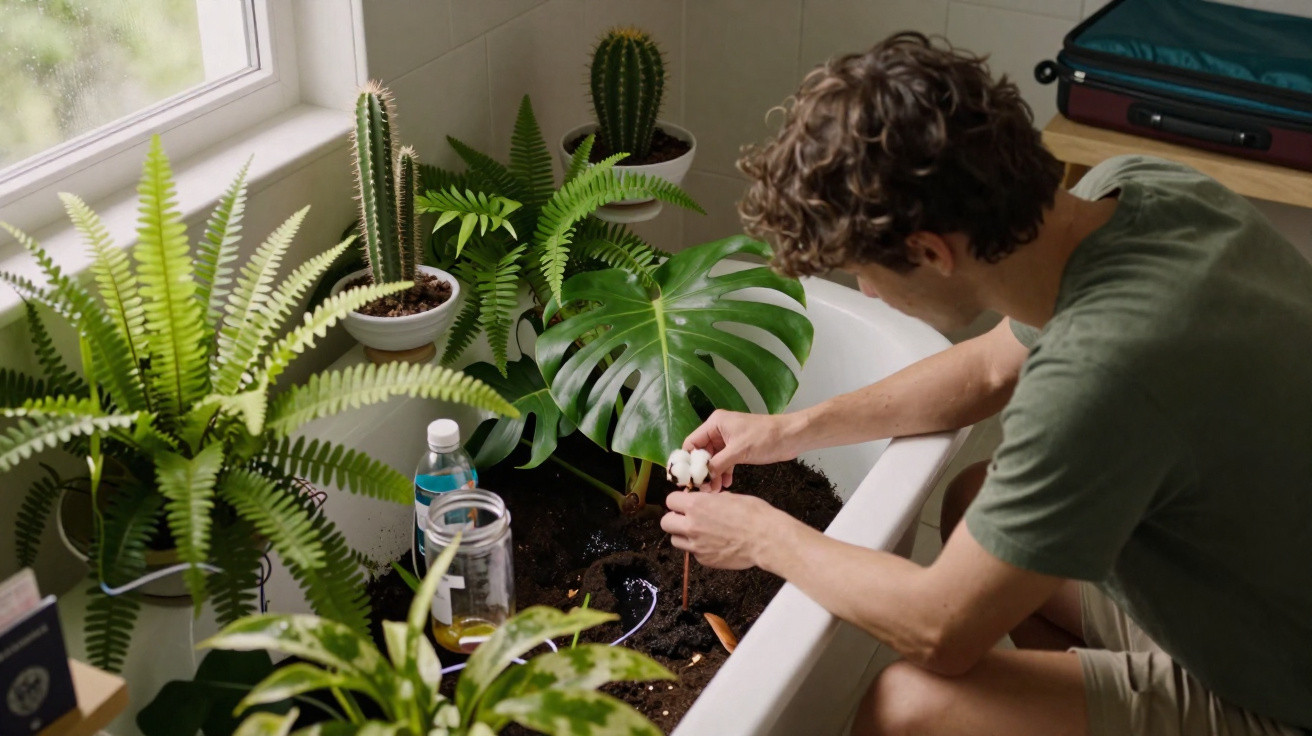
The monstera’s new leaves resemble cranes. As usual, the fern is making a performance of it. You pick up the watering can and try to seem unfussed, while remembering last summer’s break: you returned to parsley like crisps and a pothos that appeared to have been ironed. Where water splashed onto the coir, the air carries a faint, sweet earthiness. No neighbour is available to drop by, there is no plant sitter, and no miraculous service speaks fluent philodendron. It is only you, a suitcase and a small jungle with no concept of Airplane Mode. You glance at the windows and the fierce afternoon rectangle of sun on the rug, then ask yourself: could the house keep them alive while you are away?
Quick plant triage before the taxi comes
Plants respond to your absence differently. Cacti and snake plants will grumble and carry on, whereas ferns and calatheas would send emotional emails if they could. Carry out a small, no-fuss pre-holiday assessment. Identify plants in little pots that dry out fast, those in terracotta that draws moisture away like a sponge, and any that are already in a mood. It may feel rather harsh, as though you are deciding which cousin deserves your best umbrella, but it beats returning to a botanical wake.
This is not the moment for an impulsive repotting session or guilt-driven overwatering. Water every plant deeply, until water runs clear through the drainage holes, and allow it to drain completely afterwards. Take a moment to see the drips slow down: that is when you stop. While you are on the beach, plants do not want their roots sitting in a swamp. They need moisture retained around their roots, plus a way to avoid losing it all by Wednesday.
Everyone has whispered “please behave” to a ficus, as though it can read a calendar. Talk to them if you wish; it is your kitchen. But the genuinely useful move is to arrange your home rather than rely on hope. The aim is to create conditions that leave even the biggest drama queens with nothing to protest about.
Create a microclimate rather than a shrine
Plants positioned separately lose water faster. Bring them together as you would mates at the bar, and they form a more humid pocket that reduces evaporation. Move them away from radiators and from any stretch of floor blasted by afternoon sunshine like a heat lamp. Slightly overlapping leaves share moisture in the air, while the compost stays damp for longer. Gathering them in feels unexpectedly affectionate, like taking a group photograph before leaving.
Set the group on a base that helps. Use a large tray, baking sheet or shallow storage box filled with pebbles, keeping the pots above a shallow layer of water that can evaporate around them. The quiet click of ceramic on stone tells you that you have made a modest but useful island. This is not intended to be a spa treatment, merely an area where moisture disappears more slowly. When you later lift the tray, you can almost imagine its cool, damp mineral smell.
A bathtub rainforest for thirsty houseplants
If you have a bath, it can become a windowless conservatory. Place an old towel in the tub, wet it thoroughly, wring it out until it no longer drips, then sit moisture-loving plants on it rather than in standing water. Leave the blind slightly open for bright indirect light, keep the door ajar, and the room should maintain soft, consistent humidity. Cacti and succulents are not invited to this gathering; they will object. Leave them in a bright, drier room, as befits the hardy types they are.
The north-facing safehouse
Where your home receives intense sunshine, move plants back one or two metres from the windows. While you are away, north-facing windowsills are a safer choice than south-facing ones because their cooler light will not make plants drink themselves dry. Initially, it can seem as if you are giving your monstera a time-out. The useful principle soon becomes clear: reduced light slows growth, and slower growth requires less water. This is not a punishment; it is setting their metabolic thermostat to “holiday mode.”
Self-watering methods that work
Wicking is perhaps the simplest low-tech spell available. Fill a jug or bowl with water, position it above the pot, then place a cotton shoelace or a strip cut from an old T-shirt between the reservoir and the soil. Capillary action handles the rest. During your flight, the soil takes up what it needs, while the wick sits there looking quietly brave, like a miniature bridge. Try it the evening before departure: a damp wick tip means the water is flowing.
The bottle method can also work, provided you set it up carefully. Make a pinhole in a plastic bottle cap, fill the bottle, replace its cap and insert the neck into the soil at an angle. Water drips out steadily and simply, like a leaking tap you do not resent. A medium-sized pot gets days rather than weeks from one bottle, so for longer holidays place the pot on capillary matting, with one end of the mat hanging into a small water reservoir. It may resemble a school science experiment, which is not a disadvantage.
Plants don’t need a babysitter; they need consistent moisture and less stress. A regular trickle is much more useful than a flood, and your plants may repay it by avoiding collapse while you are gone. Saturate the compost first, arrange the slow supply, then leave it alone. There is a particular satisfaction in setting up a system that does not require your constant attention.
Soil, pruning and feeding: quiet preparation
A good potting mix should act like a camel rather than a sieve. If yours is repelling water, mix in a little fresh compost or a small amount of coco coir a week before departure, then water thoroughly to “teach” it to retain moisture. Cover the surface with a fine layer of bark, coir or clean pebbles to reduce evaporation. Trim a few soft young shoots that would consume water, and remove any crisp growth that could attract fungus gnats. You are reducing the strain on the plant’s plumbing, not giving it a dramatic new haircut.
Fertiliser encourages growth, and growth is not the story you need at this point. Stop feeding two weeks before you go. It is less thrilling than buying a self-watering pot on impulse, but it is the measure that pays off. Honestly, hardly anyone manages this every day. If you remember it two weeks beforehand, that gives the plant just enough time to slow down and settle.
Keep an eye on saucers. When they collect water after watering, empty them ten minutes later so the roots are not left in a puddle. After that, resist any grand gestures. Wiping dust from a few leaves with a damp cloth helps them breathe more easily while you are away. It is ordinary and mildly tedious, like putting out socks for Tuesday, which is exactly the sort of energy plants benefit from.
Light controls thirst, not devotion
It is easy to assume light equals love, but excess light creates thirst. Draw sheer curtains or angle blinds so harsh rays become a softer glow. Take heat-sensitive plants out of the sun-laser that appears at 3pm. You are not taking away their happiness; you are easing their pace. Bright days can return when you do, much as running feels best when you resume it after a week of proper naps.
Online forums may insist that plants should never be moved, as if they are temperamental celebrities. In reality, plants can adapt to gradual changes in light. Shift them one or two days before leaving, and they will adjust like a commuter choosing a different bus seat. Sudden glare and a radiator switching on are what unsettle them. That gentle hiss is your prompt to move the group farther away.
No-sitter solutions using household items
Ordinary items around the house can be remarkably helpful. Balance a transparent takeaway lid over a small fern and it becomes a mild cloche, holding enough humidity to calm demanding fronds. Tape chopsticks into a triangle to support a loose plastic-bag tent over a thirsty pot, piercing the bag with holes for ventilation. It can look faintly absurd, like a DIY greenhouse in witness protection, but it helps leaves remain perky. Keep the entire arrangement out of direct sunlight, unless you want to steam lunch by accident.
Old baking trays can serve as pebble trays, cake stands can become tiered humidity shelves, and a folded bath mat beneath a cluster reduces heat loss through the floor. Terracotta watering spikes give a standard bottle a useful job. Attach the spike, push it into the soil, and walk away with the calm confidence of somebody who has planned ahead. If the arrangement appears slightly silly, that is often a sign it works.
Lower hanging plants that are difficult to wick. Put them on a table near the main group so their soil can behave in the same way as everyone else’s. Clean the leaves, inspect the hooks and ensure that no plant can swing towards a hot window in a breeze. A small adjustment now avoids creating a crisp poster of what was once a string of pearls.
Skip these ideas, regardless of what TikTok says
The viral “gel beads” trend may look entertaining, as if you are giving your pothos jewellery, but it is more performance than practical help. The beads release water inconsistently and can develop an unpleasant slick while you are away. Filling the bath with several centimetres of water is another poor choice: roots submerged for too long become unhappy, rot and then submit their formal complaint through yellowing leaves. Plants do not need drama; they need a gradual, dependable approach.
Avoid sealing plants inside plastic with no ventilation. Condensation will fall like rain and promote marks that you do not want to find. Keep arrangements airy and shaded, and your plants will breathe a sigh of relief rather than gasp. When you unlock the door, you will be grateful that the flat smells of cool soil instead of a sealed gym bag.
The final walk-through for people who care
Put the kettle on, then make one relaxed circuit of the home. Feel the top centimetre of compost and remember which plants tend to become thirsty first. Position the wicks, refill reservoirs and jiggle the pebble tray level. Adjust curtains for gentle light, and close any vents blowing heat towards the plants. It takes ten minutes, yet gives the flat an unusual stillness, like the held breath in a theatre before the lights rise.
Switch off fans, programme a light timer if you use one, and leave a damp towel in the bathroom rainforest if that is your chosen method. Rinse a few saucers too, as stagnant water is an invitation to a gnat party. Then take one final look. The leaves seem glossy, the soil looks settled, and you can close your suitcase without imagining a dried flower arrangement. Before you water after your holiday, check the soil, not your guilt.
Your first morning home: rescue without panic
Once you are back, your suitcase may slump by the door while you head straight for the plants. Some foliage will droop, some leaf tips may be a little crisp, and other plants will behave as if nothing occurred, because that is simply how plants are. Do not soak everything immediately. Water the driest plants gently, wait ten minutes, then water again so the compost can properly absorb it. Put the most stressed plants in shade for one or two days. Remove growth that is truly dead, but leave anything limp that is still green.
Take out any wicks or bottles you used, and move plants back to their normal places gradually. On that first day, open the curtains slowly rather than flinging them wide in a sunrise festival. Wipe one or two leaves and notice the faint scent of wet stone and coffee in the room. Perfection was never the objective; you created a margin. That is why the home still feels alive.
A holiday tests systems rather than love. You arranged the home to offer support, slowed growth and provided water that behaves properly. What remains is patience. The next time you book flights, you will know which plant can manage the front row and which one favours the cheap seats. As you shut the door, there will be only your keys, and the quiet confidence of a home that knows what to do in your absence.

Comments
No comments yet. Be the first to comment!
Leave a Comment