
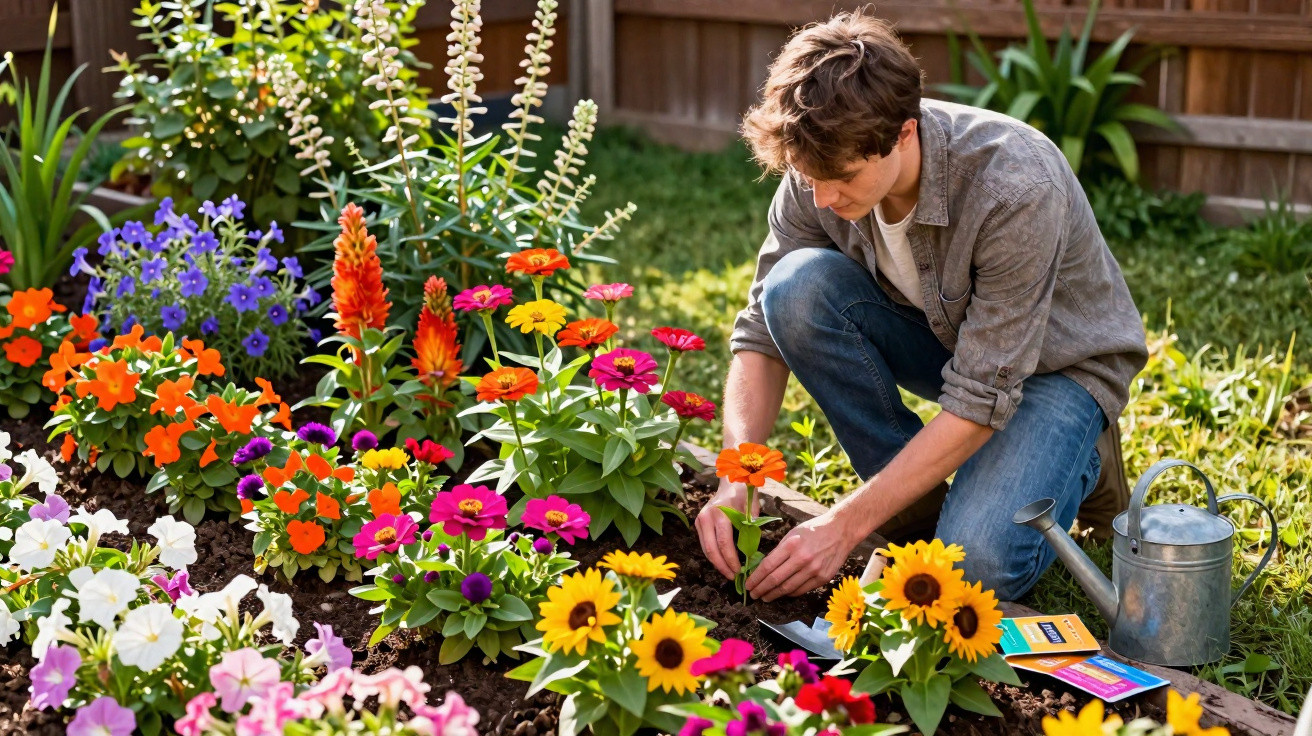
Choose the right varieties now and bare soil can become a lush sea of flowers. Nine annual flowers grow at a pace that will satisfy even impatient amateur gardeners: from seed to full bloom in just a few weeks, whether planted in a border or a pot on the balcony.
Why fast-growing flowers are the best choice now
Between the final frosty nights and the first warm days, many gardens contain little more than brown earth and a few tired remnants of perennials. Fast-growing annual flowers bring much-needed energy. They germinate promptly, develop into compact plants and produce flowers in an almost uninterrupted marathon.
Fast-growing annuals fill gaps in borders, add colour in a short time and are perfect for anyone who does not want to wait long.
The key is to sow into containers or directly into the ground from March or April, depending on your region. Wait until the soil is frost-free, then give the plants a sunny spot with good drainage. Within 45 to 90 days, a sparse patch can turn into a dense, colourful frame around the house.
How to get your spring flowers off to the right start
For an earlier start, sow many species indoors first. From mid-May, once the risk of frost has passed, the young plants can be moved outside. In milder areas, some varieties can also be sown straight into the border as soon as the soil has warmed up.
- Sow thinly so seedlings do not compete with one another
- Press the seeds lightly into place rather than burying them deeply
- Thin seedlings after germination so every plant has sufficient light and air
- Keep the compost or soil evenly moist during the first few weeks, while avoiding waterlogging
- Choose a sunny or partially shaded position according to the species
With fast-growing flowers in particular, it pays to sow generously and thin out later. Plants growing too closely together become weak and flower less freely.
An overview of the 9 fast-growing flowers
The right combination creates a garden-magazine look without complicated planning. These nine species offer speed and abundance:
Zinnias: a colourful carpet in record time
Zinnias are prime examples of rapid growth. Sown under glass or on a windowsill in March, they can be planted into the border from May. If sown directly outdoors, they also get going quickly, covering beds with bold, often multicoloured blooms.
Taller varieties make excellent cut flowers for a vase, while shorter cultivars suit containers, window boxes and border edges. Zinnias thrive in full sun and nutrient-rich soil, and regular deadheading of faded flowers rewards you with an ongoing supply of buds.
Gomphrena: long-flowering plants with globe-shaped heads
Also known as globe amaranth, this flower produces small, firm, spherical flower heads that last throughout summer. It copes remarkably well with heat and brief dry spells, making it a good option for urban balconies and hot locations.
Gomphrena adds structure in both pots and borders, as its rounded flower heads provide attractive accents among other shapes. At the end of the season, many gardeners dry the blooms for long-lasting dried arrangements.
French marigolds: easy gap-fillers
French marigolds (Tagetes) are classic border-edge plants. They germinate quickly, remain compact and flower tirelessly in shades of yellow, orange and red. As well as their appearance, they stand out for requiring little care and for their spicy scent.
Fine-leaved varieties form low, cushion-like plants and are especially suitable for narrow strips, vegetable gardens and window boxes. Gardeners with slugs also value them because they are usually left alone.
Sunflowers: instant height and drama
After only a few weeks, sunflowers rise from the border like small masts. Depending on the variety, you can choose anything from a compact container plant to an impressive giant sunflower beside a fence.
They immediately give a planting scheme clear structure: use them as a backdrop at the rear of a border, or along fences and walls as a living privacy screen. They also provide food for bees and, later in the year, feed for birds.
Borage: a flower bar for insects
Borage is among the annuals most frequently visited by insects. Its blue, star-shaped flowers are irresistible to bumblebees, solitary bees and other beneficial insects. It grows rapidly, branches generously and fills spaces between taller perennials.
The plants prefer fairly nutrient-rich soil and can be allowed to look a little wilder. Borage works particularly well in wildlife-friendly gardens and near vegetable beds because it supports ecological balance.
Nasturtiums: let them climb or cascade
Nasturtiums visibly grow from day to day, either climbing over fences and trellises or spilling as a decorative “waterfall” over walls and window boxes. Their round leaves and vivid trumpet-shaped blooms lend every garden a playful character.
Sowing directly from April or May is entirely sufficient. They suffer somewhat during very hot summers, so the plants are happier in slightly sheltered spots that do not become too dry.
Celosias: fiery splashes of colour
With their cockscomb- or flame-like flowers, celosias can look almost artificial because their form and colour are so intense. They grow compactly, are highly suitable for pots and add structure to mixed planting schemes.
They are especially striking when paired with plants that have simple foliage. Full sun intensifies their colouring, while a well-fertilised growing medium encourages lush growth.
Petunias: classics for balconies and border edges
Petunias are among the best-known summer flowers. Used well, however, they are far more than simply a standard choice. Their trailing or semi-trailing stems rapidly cover a large area and create the effect of a continuous carpet of flowers.
When planting pots and window boxes, it is best to begin with young plants raised in advance. In mild regions, petunias can also be grown from seed, but they need an early, warm start on a windowsill.
Spider flowers (Cleome): airy architecture in the border
Spider flowers form tall, lightly translucent clumps topped with exotic-looking blooms. Their long stamens give the plant its name and create an airy, almost graphic effect in the border.
They germinate reliably from seed, enjoy warmth and need free-draining soil. Combined with sunflowers and celosias, they create a layered display of height, colour and lightness.
How to combine the nine species for a lush display
The real skill lies less in choosing individual plants than in combining them. A few basic principles will quickly produce a harmonious overall effect.
| Area of the border | Suitable species | Effect |
|---|---|---|
| Background | Sunflower, spider flower | Height, structure, focal point |
| Middle zone | Zinnia, borage, celosia, gomphrena | Colour and abundance |
| Foreground / edge | French marigold, petunia, nasturtium | Neat finish, trailing or cushion-like forms |
Repeat the same combinations in pots on the patio or balcony to link the look around the house into one cohesive design. Even a small urban garden can then suddenly appear like a carefully composed project.
Practical tips for greater success with fast-growing flowers
To make the most of the short growing period, pay attention to a few details of care and positioning:
- Sow small batches every two to three weeks for continuous flowering
- Remove spent blooms so plants keep producing new buds
- Water more frequently in pots and support plants occasionally with liquid feed
- Tie in tall species such as sunflowers in advance when strong winds are forecast
Beginners in particular often underestimate how quickly a sunny balcony dries out. Larger containers with a water reservoir, or a morning watering routine that is genuinely followed every day, can help.
What terms such as “annual” and “free-draining” mean
Many plant descriptions use technical terms that are easy to skim over. Annual flowers live for only one season: they germinate, grow, flower, produce seed and then die. Their advantage is that they put all their energy into growth and flowering rather than permanent structures.
“Free-draining soil” means that water does not remain around the roots for a long time. Improve heavy, compacted soil with sand, fine gravel or compost. In pots, create this effect with a drainage layer of expanded clay and good-quality potting compost.
Why these flowers are more than just decoration
Growing these nine species brings more than colour to the garden. Many of the flowers listed provide food for pollinators, offer shelter to beneficial insects and also improve the microclimate immediately around the house.
A dense carpet of blooms shades the soil, reduces evaporation and helps prevent erosion. Rapid growth also makes minor mistakes at the beginning less serious: if one sowing fails, simply sow a second batch, as the season is long enough.
Whether you are planting just one window box or filling an entire border, zinnias, borage, nasturtiums and the rest can give you a lively, dense and surprisingly professional-looking garden display in an astonishingly short time, without years of planning or expensive collections of perennials.





Comments
No comments yet. Be the first to comment!
Leave a Comment