
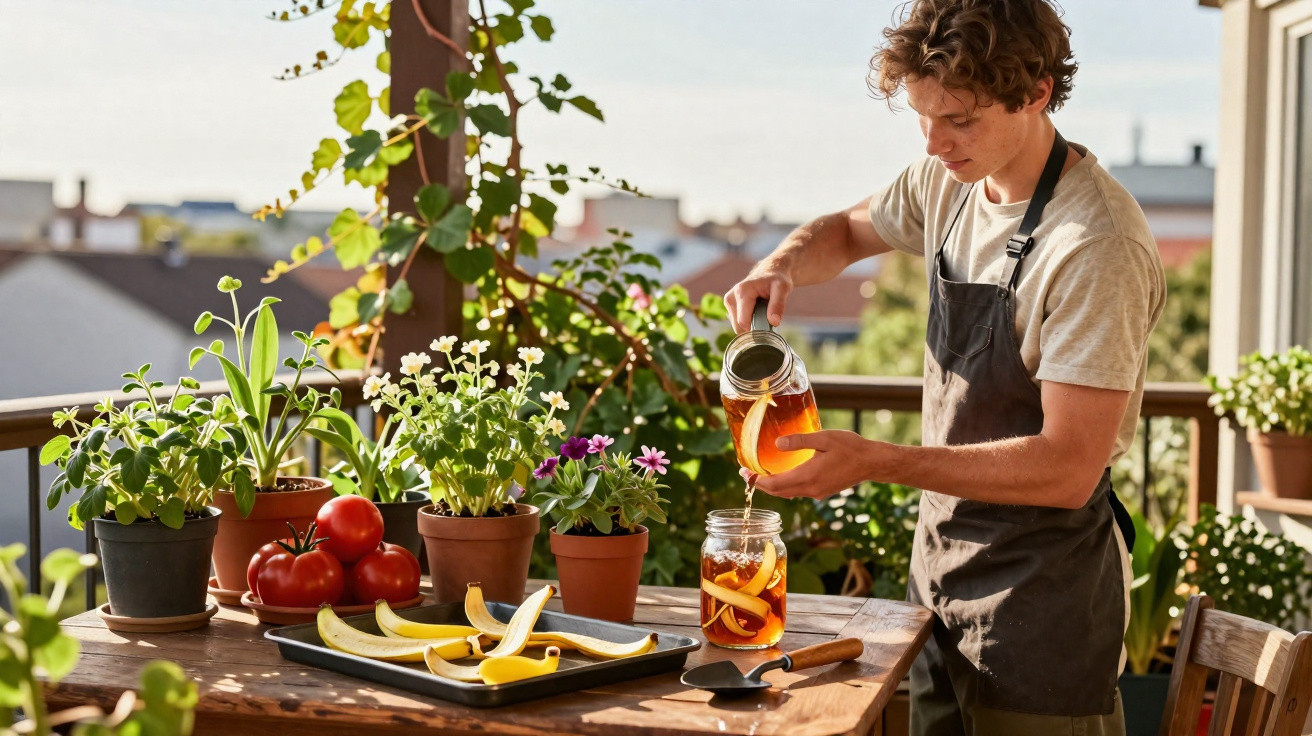
Anyone who enjoys eating bananas will know the problem: the peel is left behind and usually ends up in the general waste, or at best in the food-waste bin. Yet it holds remarkable potential for balcony plants, gardens and houseplants. Experienced gardeners have long relied on banana peels as a natural fertiliser – provided they are used correctly.
Why banana peels are so valuable for plants
Banana peels contain more than just cellulose. They are rich in minerals, particularly potassium. In the plant world, this nutrient serves a role similar to the one it plays in our bodies: it supports stability, resilience and healthy growth.
Banana peels supply potassium above all else – a key nutrient for sturdy stems, strong roots and abundant flowering.
Potassium helps plants regulate water more effectively, reinforces their cell walls and makes them less vulnerable to disease and pests. The peel also contains smaller quantities of magnesium, calcium and trace elements, which stimulate soil life and can contribute to a loose, fertile growing medium over time.
Flowering plants, fruit trees and vegetables such as tomatoes, peppers and roses are especially fond of potassium. Using banana peels selectively can visibly benefit them.
Never push raw banana peels straight into the soil
Tempting as it may be, pressing a fresh banana peel directly into a border or flowerpot is not a good idea. The peel breaks down relatively slowly, starts to rot and can therefore attract unwelcome visitors.
Common issues include:
- fruit flies and other insects;
- mice or rats attracted by the peels;
- unpleasant smells in pots and planters;
- mould forming on the soil surface.
Anyone wishing to use banana peels should therefore prepare them first: dry them, compost them or turn them into the basis for a liquid fertiliser. This ensures the nutrients reach where they are needed – the roots rather than the pests.
Banana peels in compost: the classic gardeners’ method
The simplest and safest option is to put banana peels onto a compost heap or into a compost bin. There, microorganisms and other soil organisms gradually break them down.
For best results, there is one useful intermediate step: roughly chop the peels. This increases their surface area and noticeably speeds up decomposition. If you have a worm composting bin with compost worms, the pieces can be added directly.
In a worm composting bin, banana peels become nutrient-rich humus – genuine fuel for plant roots.
The finished compost or worm humus can then be:
- spread in a thin layer over beds;
- mixed into the soil of container plants;
- incorporated into the growing medium when repotting houseplants.
The benefit is that nutrients are released gradually. Rather than receiving a “fertiliser shock”, plants get a steady supply over weeks and months.
Dried banana peels become a slow-release fertiliser
If you do not have compost, or have a balcony rather than a garden, banana peels can also be made into a solid fertiliser. The process is straightforward and easy to fit into everyday life.
How to make dried banana peel fertiliser
- Rinse the peels thoroughly with water after eating the banana to remove residues.
- Cut them into strips and lay them out somewhere warm and dry – on a baking tray, plate or rack.
- Wait until the peels are completely dry and brittle. Depending on the indoor conditions, this can take several days.
- Grind the dried peels into coarse or fine pieces using a pestle and mortar, food processor or blender.
This powder can be mixed straight into the soil or lightly worked into the top layer. If preferred, scatter a thin layer around the root area of plants and water it in thoroughly afterwards.
Dried and chopped banana peels release their nutrients slowly and steadily into the soil – ideal for balcony and potted plants.
The results will not appear overnight, but with regular use, plants often seem more vigorous, develop stronger leaves and flower for longer.
Liquid banana peel fertiliser: “banana tea” for your plants
For anyone looking for a quicker effect, homemade liquid fertiliser is a suitable option. Online, it is often called “banana tea”. The smell takes some getting used to, but its effect is surprisingly good.
Instructions for banana peel liquid fertiliser
- Finely chop one or two banana peels.
- Put them in a large jar or bottle and cover them with water.
- Cover the container loosely and leave it at room temperature for two to three days.
- Briefly bring the liquid to the boil to reduce germs, then allow it to cool.
- Strain out the peel pieces – the liquid fertiliser is ready.
Before use, dilute this brew with water at roughly a ratio of 1:3. It can be used for watering or applied to leaves with a spray bottle.
Important: use it sparingly on houseplants and no more often than every few weeks. In the garden, roses, tomatoes and other heavy-feeding plants can tolerate this banana brew somewhat more frequently during the growing season.
Where banana peels work particularly well – and where they do not
Not every plant responds in the same way. Some species love potassium-rich care, while others gain little from it. Here is a broad overview:
| Plant type | Recommendation for banana peel fertiliser |
|---|---|
| Roses | Very suitable; encourages flowering and strong shoots |
| Tomatoes, peppers, chillies | Well suited, particularly while fruit is forming |
| Fruit trees and berry bushes | Useful when worked into the root area |
| Flowering balcony plants (geraniums, petunias) | Suitable as a supplement to regular fertiliser |
| Foliage-only plants (some green houseplants) | Use in moderation, as excessive flowering may be undesirable |
| Succulents and cacti | Generally unsuitable, as they require very few nutrients |
Pesticides and organic bananas
One issue that often causes uncertainty is residue on the peel. Conventionally grown bananas are heavily treated in many producing regions. Some of these substances remain on the peel.
If you want to use the peels in the garden or on the balcony, organic bananas offer greater peace of mind. With all other bananas, it is worth rinsing the peel thoroughly under warm water and scrubbing it with a brush before further use. Although contamination cannot be ruled out entirely, it can be reduced significantly.
Practical everyday tips for bananas and plants
Over time, many hobby gardeners establish regular routines. Here are a few practical ideas:
- Collect peels and store them in the freezer until you have enough to make a larger batch of fertiliser.
- Choose a fixed “fertiliser day” each month to prepare banana brew and water heavy-feeding plants with it.
- Put small portions of dried powder into a screw-top jar and mix one to two teaspoons per pot into the soil when repotting.
Anyone who already enjoys eating bananas can save on fertiliser from the garden centre while reducing their food waste. At a time of rising prices, this simple method is likely to appeal to many readers.
How banana peels can be combined with other household remedies
Banana peels are not a cure-all, but they combine well with other natural helpers. Coffee grounds add nitrogen to the soil, while eggshells provide calcium. Together, they make a fairly balanced homemade nutrient mix for many plant types, particularly in the vegetable garden.
Despite all the enthusiasm, hobby gardeners should watch how their plants respond. If leaves suddenly turn yellow or become soft, too much fertiliser may have been applied. In that case, fertilise less often and occasionally flush the soil with clear water to wash out excess salts.
Those who proceed step by step, test small quantities and keep an eye on their plants will soon see just how useful banana peels can be in everyday life. A simple kitchen leftover can become a valuable aid – and many flowers, tomatoes and roses will repay it with vigorous growth and lavish blooms.





Comments
No comments yet. Be the first to comment!
Leave a Comment