
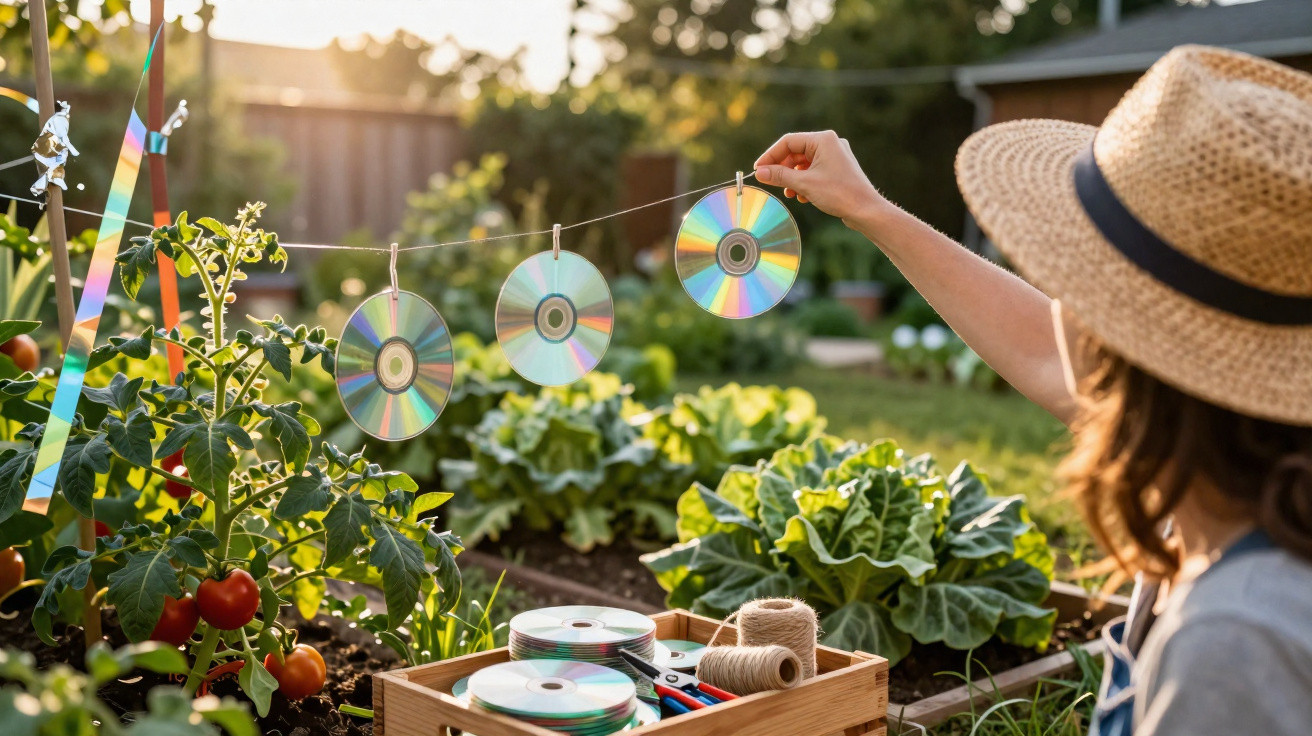
In many households, old CDs and DVDs still turn up, forgotten in drawers. Rather than sending them straight to the bin, these discs can be given a new purpose in the garden: when hung near plants, they help deter certain pests in a simple, chemical-free way by using nothing more than reflected light and movement in the breeze, while also encouraging the reuse of materials.
Why does hanging old CDs in the garden help to protect plants?
The idea behind using CDs outdoors is mainly visual. Their reflective surface throws out “beams” of light when the sun hits it. As the wind makes the CD sway, those reflections shift quickly, creating bright flashes and uneven shadows that unsettle birds and some insects, prompting them to avoid the area.
In vegetable plots and orchards, CDs are commonly used to discourage birds that peck at fruit, tender shoots and newly planted seeds. They are not a replacement for other forms of management, but they can act as an inexpensive, eco-friendly extra. How well they work depends on the type of pest, how bright the site is, and how often the animals visit.
How should you hang CDs in the garden for the best results?
For CDs to make a noticeable difference, pay attention to both height and how they sit in relation to the sun. As a rule, it is best to hang them above the plant canopy or from simple supports such as stakes, lines, fences or higher branches-always in places with strong light and enough airflow for the discs to move.
In a small home vegetable patch, around 5 to 10 discs are usually enough, whereas orchards may require more. The practical steps below help keep results more consistent day to day:
- Tie string, nylon line or thin wire through the CD’s central hole.
- Leave the disc loose enough to spin and swing in the wind.
- Secure the line to sturdy stakes, branches, fences or pergolas.
- Place them in full sun and vary the hanging heights.
- Move the discs from time to time so birds do not get used to them.
Which parts of the garden benefit most from this simple trick?
Hanging CDs tends to work best in open areas with little shade from buildings or dense trees. Low raised beds, young orchards and lawns are typical examples where the reflections spread more easily, offering the most protection to seeds, fruit and delicate new growth.
Places where birds often land or pass through deserve extra thought when positioning the CDs. Certain zones of a plot can gain even more from the approach and are worth prioritising when putting up reflective discs.
- Plot edges: creating a reflective “visual barrier” around the perimeter helps discourage approach.
- Near the most targeted plants: tomatoes, strawberries, maize, sunflowers and fruit trees are strong candidates.
- Above newly planted beds: freshly scattered seed attracts birds; suspended CDs can reduce scratching and digging.
- Along internal paths: people moving about combined with flashes of light increases the visual disturbance.
What other simple objects can work like CDs in the garden?
As well as old CDs, other household items can be adapted to protect plants using reflection, movement and sometimes a light rattle. The aim is to make the area less inviting to birds and some insects, without harming important pollinators such as bees.
Metallic ribbons, aluminium cans and small, well-secured pieces of mirror are among the most common alternatives. Used alongside practices like crop rotation, protective netting and encouraging natural predators, these simple measures form a practical set of habits that can help keep a vegetable patch productive and more sustainable.




Comments
No comments yet. Be the first to comment!
Leave a Comment