
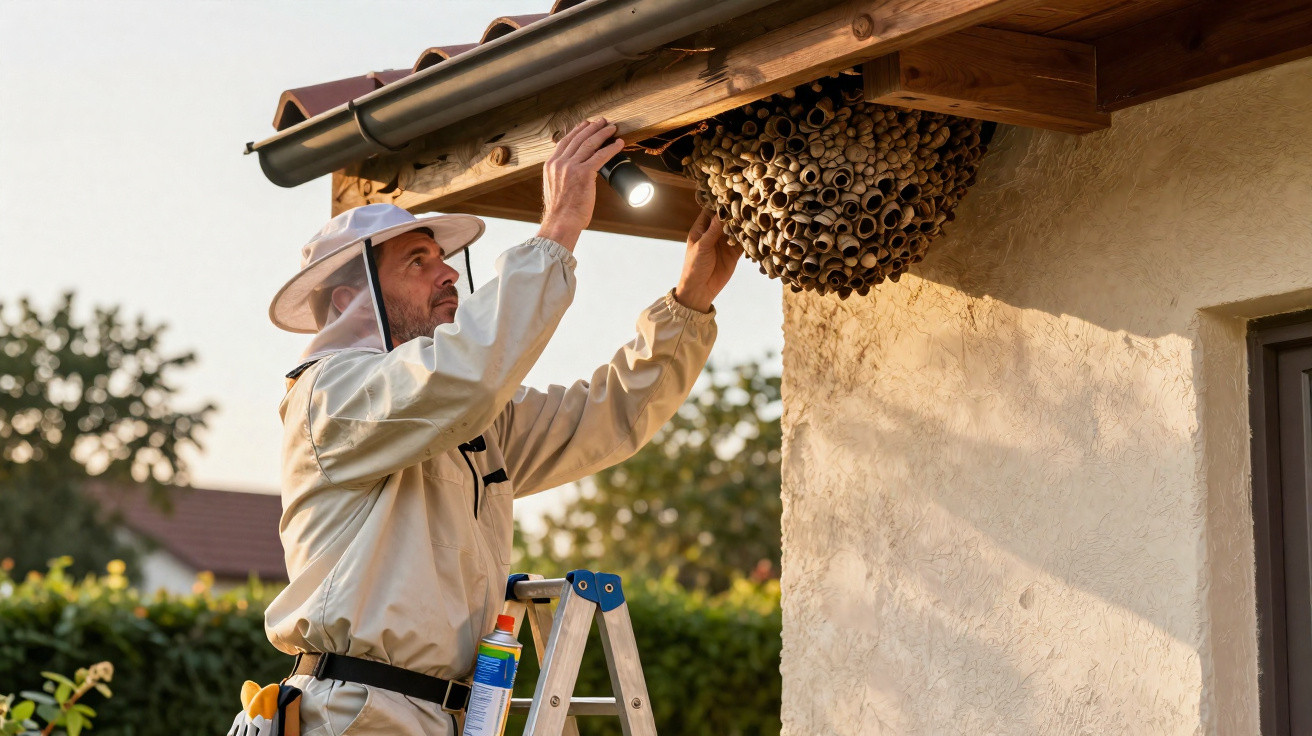
Those who know where to look can prevent a great deal of trouble.
With the first mild days of the year, Asian hornets begin building nests out of sight – often directly on homes or in garden sheds. These inconspicuous spheres are small, well hidden and therefore frequently go unnoticed for months. That is precisely what makes them so risky: the “ping-pong ball” of spring can become a large, fiercely defended nest by summer.
Hidden spring danger: why the Asian hornet is becoming active now
From mid-February, and no later than March, overwintering Asian hornet queens emerge. They quickly seek out a warm, sheltered location – preferably close to people. There, they construct what is known as a primary nest: the first small nest in which they raise their initial brood.
This primary nest is tiny, usually just three to five centimetres across – roughly the size of a table-tennis ball. Its surface resembles grey, marbled paper. Because it is so easy to miss, the hornets can establish their colony undisturbed, until summer arrives and action may suddenly be too late.
“Anyone who spots a nest in spring can often prevent a huge colony in summer – and substantially reduce the risk of stings.”
The nest expands with every new generation. What begins as a small sphere becomes a structure the size of a handball, or even larger. By then, there is constant flight activity, and disturbance nearby can provoke aggressive attacks. The situation becomes especially critical from late summer into autumn, when the colony reaches its peak.
Common hiding place: beneath the eaves and on the house façade
The most frequent location for a primary nest is directly on the house. You have a good chance of finding one by deliberately scanning upwards from ground level – without climbing a ladder.
How to check your roof safely from the ground
- Stand a short distance away from the house, ideally at least three to five metres.
- Inspect the eaves, roof overhangs, exposed boards and cladding.
- Concentrate on sides that receive plenty of sun, such as south- or west-facing façades.
- Watch for one hornet repeatedly flying back and forth to a fixed point.
This regular approach pattern can reveal a nest even when it is not yet clearly visible. A quiet, steady buzzing near the same spot is another warning sign. Do not move any closer; viewing it from below is sufficient.
The nest is often attached directly beneath the roof soffit. The queen fixes the small sphere to the lower edge, close to the eaves board or fascia board. Its entrance usually faces downwards or sideways, reducing exposure to rain and wind. This sheltered position gives the hornet warmth, peace and nesting material, as the nest “paper” is made from chewed wood.
Garden sheds and carports: favourite sites for the first nest
Anyone with a shed, carport or small garden building should be particularly alert. Nests are often positioned at eye level in these places, yet can still be overlooked.
Typical hiding places in a garden shed
The following locations are particularly popular:
- The junction between ceiling beams and the roof
- Dark corners that are rarely examined
- The undersides of roof panels or wooden cladding
- Close to the door but slightly screened off, for example behind shelving
A common scenario is this: in April, the garden shed is used again after winter. Someone reaches for a rake or ladder, comes close to a grey sphere and fails to notice it. If the queen feels threatened, she may sting immediately. Simply making a conscious habit of looking upwards beforehand considerably reduces this risk.
Checking safely without taking risks
Simple equipment is enough for a quick inspection. Use:
- A torch to illuminate the ceiling and dark corners
- Binoculars, if available, for checking the roofline outdoors
Always keep your distance. Inside a garden shed, it is often enough to stand in the doorway and look upwards without walking far inside. Outdoors, a few minutes of observation from a safe distance will suffice.
“Look for a small, grey paper sphere and the repeated flight of a single hornet to that exact point.”
If there is no movement for several days, that does not necessarily mean the nest has been abandoned. A brief change in weather or lower temperatures can temporarily halt flight activity. Check again at a different time of day instead.
What to do if you find a nest
If you discover a possible nest, deliberately move away – without panicking, but with care. Keep children and pets away from the location. Treat the area of the garden as a no-go zone.
These mistakes put you in real danger
You should strictly avoid the following actions:
- Knocking the nest down with a stick, broom or jet of water
- Using fire, smoke or barbecue lighting fluid nearby
- Spraying household insecticides or other products onto the nest
- Sealing entrance holes or blocking up the nest
- Mowing the lawn or drilling immediately beside the site
Many situations escalate precisely because of such attempts. The insects defend their nest and may attack as a swarm. Several stings at once can be serious even for healthy adults, while for allergy sufferers they can be life-threatening.
The right response: document, report and keep clear
Instead, follow these three straightforward steps:
- Move away and avoid the area.
- If possible, take a photograph from a safe distance, using zoom and no flash.
- Report the situation to the local council or the responsible public order or environmental authority.
In many areas, the authorities will refer reports to trained pest-control professionals. Describe the position as precisely as possible, for example: “beneath the eaves on the south side” or “in the garden shed, directly on the ceiling beam to the left of the door”. This allows the team to assess the level of risk quickly and determine what equipment is required.
Why the Asian hornet is a problem for people and nature
The Asian hornet is not native to Central Europe; it was introduced. It is spreading rapidly because it has few natural predators here. For people, this chiefly means more encounters in residential areas and gardens.
There is also a further impact on nature. These insects hunt other insects intensively, especially honeybees. Near large nests, entire apiaries can come under pressure because foraging bees are intercepted in front of their hives. This weakens colonies and may affect crops and wild plants over the longer term.
How to identify the Asian hornet
Knowing what the species looks like makes it easier to distinguish from native insects. The Asian hornet appears darker than the native European hornet. Its typical features include:
- A dark brown to black body
- A broad orange band on the rear section of the abdomen
- Bright yellow legs
The native European hornet is beneficial and protected. It has a more pronounced yellow-and-black pattern on its abdomen and is generally lighter in appearance. A well-founded suspicion that you have seen an Asian hornet always warrants a report to the relevant authorities, especially if a nest is suspected close to a house.
Practical spring routines for homeowners
A few simple habits can reduce the risk of noticing a nest too late:
- Check roof edges from ground level once a month in March and April
- Look upwards deliberately when entering the garden shed for the first time each year
- Watch for conspicuous flight routes while relaxing on the patio or balcony
- Keep an eye on hornets that repeatedly fly to the same location
These brief checks take very little time, yet can prevent a large colony from developing unnoticed. Acting early saves both you and your neighbours stressful call-outs in the height of summer.
Anyone living in an area where the Asian hornet is known to be established can also seek advice from local beekeeping associations or nature conservation bodies. Many organisations collect reports to build a picture of the species’ spread. The more accurately nests are reported, the better countermeasures can be planned – from protecting bees to ensuring safe removal from buildings.






Comments
No comments yet. Be the first to comment!
Leave a Comment