
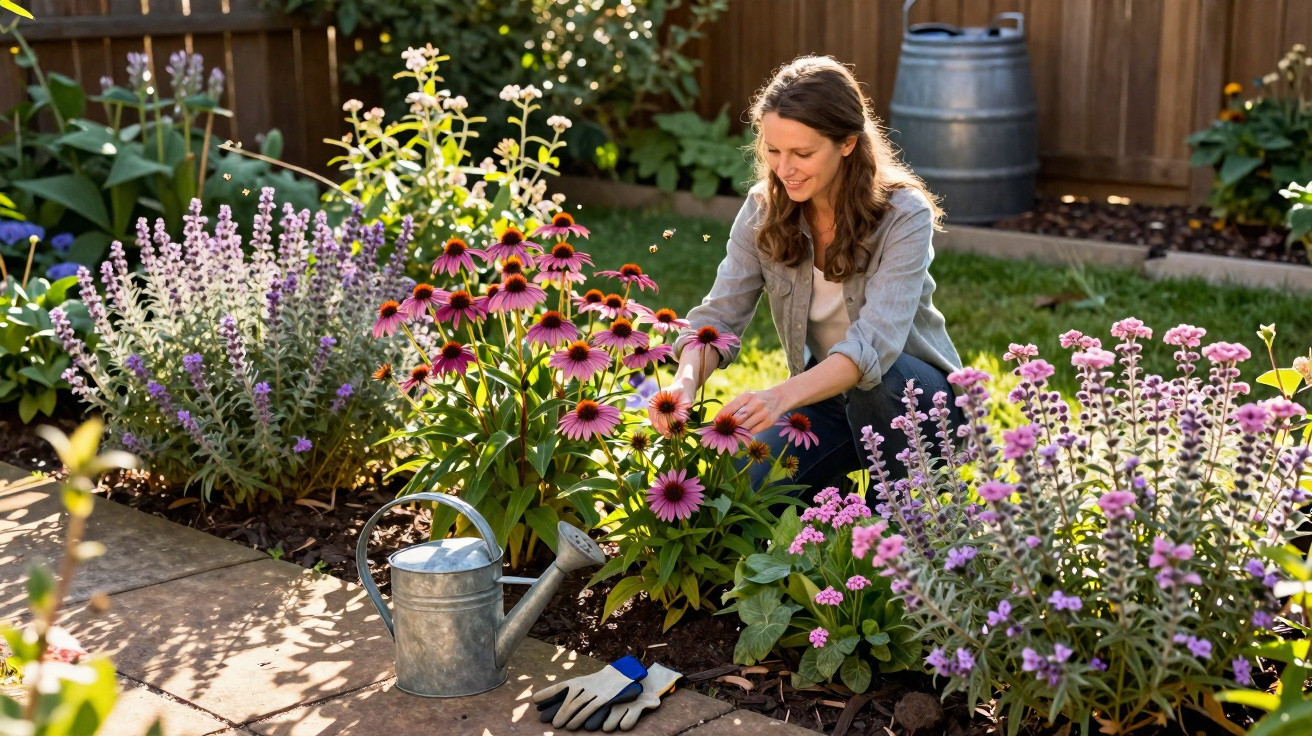
Many keen gardeners know the pattern: planting with enthusiasm in spring, finding everything dried out by high summer, then starting all over again in autumn. Yet some plants are barely troubled by erratic weather, return reliably every year and need very little attention. Tough perennials are the quiet workhorses of the border – and they are the focus here.
Why tough perennials are in such demand now
The past few years have demonstrated just how unpredictable the weather can be: prolonged dry spells, followed by torrential rain and late spring frosts. Many traditional garden plants respond badly to these conditions. Perennials that tolerate heat, wet weather and changing temperatures are therefore becoming increasingly important.
Choosing resilient perennials saves water, time and frustration – while still creating a garden display that flowers year after year.
Their appeal comes down to three main benefits:
- Less work: plant once and enjoy them for many years.
- A more resilient border: robust species are more likely to withstand extreme weather.
- More wildlife in the garden: many of these perennials attract bees, butterflies and other beneficial insects.
1. Yarrow – the indestructible long-flowering perennial
Yarrow is among the toughest perennials available. Reaching roughly 80 to 90 cm in height, it produces delicate, fern-like foliage and dense, flat flower heads in white, yellow, pink or red, depending on the variety.
Its great strength is its ability to cope remarkably well with both persistent rain and weeks without rainfall. Even when the soil briefly becomes almost waterlogged, it often carries on flowering without any apparent concern. During extended droughts, it survives with very little water.
- Position: full sun to light partial shade
- Soil: preferably lean and free-draining
- Care: remove faded flower heads; it will often produce a second flush of blooms
2. Coneflower (Echinacea) – a magnet for bees and butterflies
Coneflower, often simply called by its botanical name Echinacea, brings the look of a colourful summer meadow to a border on a smaller scale. Its flowers resemble large daisies with a distinctive central cone, appearing in white, yellow, orange, pink or purple.
Although it looks delicate, this plant is actually exceptionally tough, particularly in warmer areas. Various species and cultivars originated in North America, where they adapted to substantial temperature fluctuations.
Many Echinacea species are also excellent at attracting insects. It is therefore an excellent choice for anyone creating an insect-friendly border.
Choosing the right coneflower for your garden
It is worth checking which coneflower species are considered suitable for the site or native to your own area. They will usually cope better with local weather extremes and have greater resistance to disease.
| Species | Height | Special feature |
|---|---|---|
| Purple coneflower | 80–120 cm | classic purple flowers, very insect-friendly |
| Yellow coneflower | 60–90 cm | bright yellow blooms, ideal for prairie-style borders |
| Modern cultivars | up to 70 cm | compact habit, many colours, often ideal for small gardens |
3. Solomon’s seal – an elegant perennial with staying power
At first glance, Solomon’s seal appears almost delicate, with arching stems, silvery-green leaves and bell-shaped flowers that are often white or violet-toned. However, in a border it proves far hardier than its appearance suggests.
It grows back reliably from spring through to autumn, copes with warmth and requires only moderate amounts of water. It is an ideal gap-filler for a lightly shaded place beneath trees and shrubs or beside a fence.
- Position: partial shade, ideally at the edge of trees or shrubs
- Soil: humus-rich, moist but not overly dry
- Care: cut the stems back close to ground level in autumn
4. Catmint – a fragrant cushion plant that simply returns
Catmint is one of those plants that is easy to overlook until it suddenly flowers and fills the air with scent again. Many gardeners say they barely noticed it for months, only to be surprised by a lush, fragrant carpet of blooms.
This perennial forms grey-green, lightly hairy leaves along with masses of small, usually blue or violet flowers. It is particularly well suited to edging borders, rock gardens or informal ground cover.
Catmint is a prime example of a plant that can almost be forgotten after planting – yet it still returns reliably year after year.
There is another advantage: bees and bumblebees are strongly drawn to it, while cats are often attracted to it as if by magic. If that is not wanted, place it at the edge of a border by the street or away from seating areas.
5. More tough perennials that need very little care
Alongside the plants already mentioned, there are several other reliable performers well suited to low-maintenance gardens. Here are eight that work well in many borders:
- Yarrow – tolerant of heat and rain, with a long flowering period
- Coneflower (Echinacea) – richly coloured, insect-friendly flowers
- Solomon’s seal – an elegant choice for partial shade
- Catmint – a long-flowering fragrant cushion plant
- Daylily – exceptionally robust, producing fresh flowers every day
- Lady’s mantle – covers bare ground and also enjoys rainy conditions
- Cranesbill – ideal ground cover with a long flowering season
- Sedum (stonecrop) – the perfect choice for dry, sunny spots
How to plan a low-maintenance perennial border
Anyone who wants to keep work to a minimum should not only select resilient species, but combine them thoughtfully. The aim is to cover as much soil as possible. Bare ground dries out more quickly and is soon taken over by weeds.
Useful basic rules include:
- Layer plant heights: position tall perennials at the back and lower ones at the front.
- Plant densely: use one extra plant rather than too few, so that the soil is eventually hidden.
- Mix flowering times: combine spring, summer and autumn-flowering plants so that the border always has some colour.
Save water with the right plants
Once established, many tough perennials manage with surprisingly little water. During the first few months after planting, they still need regular support. Afterwards, watering is generally only necessary during longer periods of drought.
A mulch layer of bark mulch or shredded prunings is especially worthwhile on light, sandy soils. It keeps moisture in the ground for longer and suppresses weeds. Yarrow, catmint and stonecrop benefit particularly from this.
Important terms explained briefly
Perennial: a plant that lives for several years; its above-ground growth usually dies back in autumn, while the rootstock overwinters in the soil and produces new growth the following year.
Hardy: plants able to survive the typical winter temperatures of an area outdoors without protection. What counts as hardy varies according to climate zone.
Free-draining soil: soil through which water can drain away easily. Waterlogging harms many perennials more than brief dry spells do.
How to combine tough perennials effectively
A successful low-maintenance border needs more than toughness alone; appearance also matters. Yarrow and coneflower work well together because they have similar site requirements and complement one another in colour. Lower-growing cushions such as catmint or lady’s mantle can fill the gaps between them.
For partially shaded areas, consider combining Solomon’s seal, cranesbill and different hostas. This creates a permanently dense, low-maintenance area of greenery that remains attractive without daily watering.
If you would prefer to start small, create just one perennial border first, observe it for a season and add further plants where needed. Gradually, this builds a garden that largely looks after itself – leaving you more time to enjoy it than to water it.


Comments
No comments yet. Be the first to comment!
Leave a Comment