
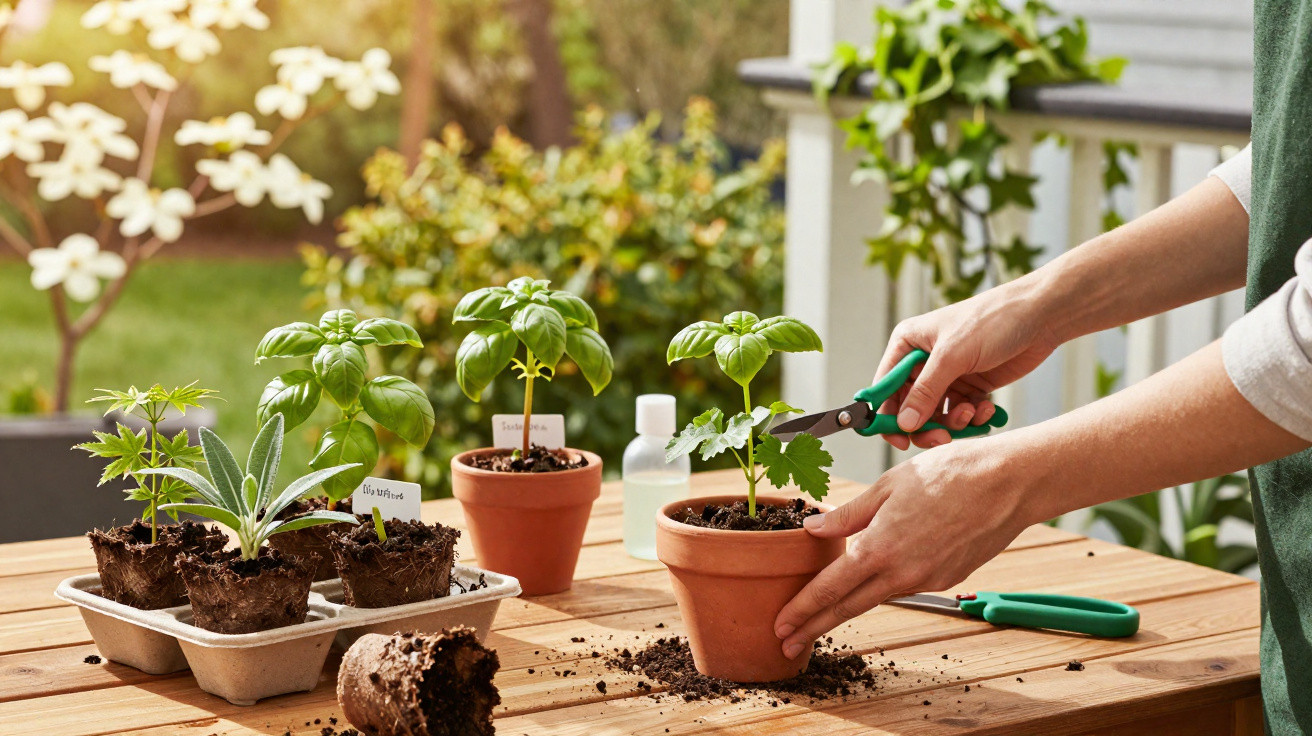
If you want to fill your beds, containers and window boxes without wincing at the garden-centre checkout, now is the time to pay attention. April gives amateur gardeners a valuable opportunity: many popular ornamental and edible plants can be multiplied from cuttings with very little effort – cheaply, quickly and with a surprisingly high success rate.
Why April is such a valuable month for cuttings
By April, the garden is visibly moving into its growing phase. Sap is rising, daylight hours are increasing and many plants are producing soft, fresh shoots. These young sections, which have not yet become woody, make ideal cuttings.
“Soft spring wood takes root considerably faster than older, hard shoots from summer.”
The combination of fresh plant tissue and moderate temperatures offers several benefits:
- Rapid wound healing: Cut surfaces seal quickly, leaving less opportunity for germs to enter.
- Plenty of energy in the shoots: The plant is directing its strength into growth, which is ideal for root formation.
- Reduced moisture loss: The air is not yet as hot and dry as it is in high summer.
- A gentle beginning: New roots have several weeks to establish before the heat arrives.
Anyone who starts taking cuttings now will usually have sturdy young plants by early summer – precisely when many other gardeners are only beginning to buy expensive young plants from retailers.
These 7 plants should definitely be propagated in April
The following selection covers almost every part of the garden, from balcony planting and aromatic herbs to hedges and a Japanese-style corner. All can be propagated very successfully from cuttings in April.
1. Geraniums: a classic for balconies and windowsills
Geraniums – more accurately known as pelargoniums – are especially rewarding plants to grow from cuttings. Overwintered parent plants can produce dozens of new young plants in spring within a short time.
Here is how to do it:
- Cut non-flowering shoots measuring around 8–12 cm.
- Remove the lower leaves, leaving just a few at the top.
- Allow the cut end to dry for 1–2 hours.
- Insert the cutting into loose, well-drained compost and keep it only lightly moist.
After a few weeks, new leaves will appear. This shows that the roots are functioning and the plant is ready for window boxes and hanging baskets.
2. Japanese maple: delicate structural plants for shade
Japanese maples are often expensive to buy. If you already have a tree in the garden, or can access one, you can try propagating it from cuttings in April.
Points to keep in mind:
- Choose young, freshly leafed shoots measuring 10–15 cm.
- Remove the lower leaves so that nothing rots in the compost.
- Place them in sterile, free-draining compost, preferably with some sand or perlite.
- Keep them somewhere bright but shaded beneath a cover, such as a mini greenhouse or plastic film.
Not every Japanese maple cutting will root, but every successful one can save real money, especially with unusual varieties.
3. Basil: from a bunch of herbs to a long-lasting plant
There is no need to keep buying basil afresh. A few cuttings can turn one supermarket bunch into a whole collection of potted plants.
It could hardly be easier:
- Snip off a healthy shoot tip just below a leaf node.
- Place that node in a glass of water.
- Change the water regularly and position it somewhere bright, but out of harsh direct sun.
Fine roots often appear after around a week. The cutting can then be moved into small pots filled with low-nutrient compost and kept somewhere warm – ideal for a windowsill or sheltered balcony.
4. White dogwood: free colour accents for winter
White dogwood stands out in winter thanks to its brightly coloured stems. If you would like this burst of colour along your own garden boundary, begin with cuttings in April.
For reliable results:
- Cut young shoots and remove all lower leaves.
- Place them in pots filled with moist, free-draining compost.
- Cover with clear plastic film to maintain high humidity.
Allow the young plants to grow on in pots initially, before moving them to their permanent position along the boundary or in a perennial bed.
5. Ornamental sweet potato: cascades of trailing foliage from one shoot
Ornamental forms of sweet potato create impressive curtains of foliage in window boxes and hanging baskets during summer. One shoot can soon provide several new plants.
The short version:
- Cut off a section of shoot and remove its lower leaves.
- Leave one node sitting in water until roots develop.
- Then pot it up and place it somewhere bright.
This approach is particularly worthwhile for lush window boxes: rather than purchasing many individual plants, one parent plant in March or April is enough to get started.
6. Ornamental sage: more flowers for bees and beds
Ornamental sage creates dense clouds of purple flowers in perennial borders and acts as a magnet for insects. Cuttings taken in April can quickly turn one plant into a small group.
The important points are:
- Select strong basal shoots growing close to the ground.
- Plant them in a highly free-draining mix and avoid waterlogging at all costs.
- Keep them only slightly moist; misting is better than watering.
This produces additional plants to fill sunny spots in the border, while making the garden more appealing to wild bees and bumblebees.
7. Box: an affordable alternative to bought edging
Box hedges and small formal borders can easily cost several hundred pounds to buy. The same effect can be grown from cuttings – provided you have a little patience.
To begin:
- Cut a short shoot from the current year’s growth.
- Remove leaves from the lower section.
- Insert it into a sandy, very free-draining mix.
- Choose a partially shaded location and maintain even moisture.
Box takes its time to form roots, but in return it provides adaptable, evergreen structure in the garden for years to come.
What you really need for successful spring cuttings
A simple set of basic equipment is enough to get started; costly specialist kits are unnecessary.
“Clean cutting tools and airy compost are often more important than any rooting hormone.”
Essential equipment:
- Sharp, disinfected secateurs or a sharp knife
- Several small pots with drainage holes
- Light potting compost mixed with sand or perlite
- A spray bottle for gentle watering
- A clear cover, freezer bag or mini greenhouse
- Labels showing the plant name and date
More important than expensive products is understanding moisture and temperature. Cuttings prefer consistently light moisture rather than soaking-wet compost, and temperatures of 15–22°C instead of stifling heat.
The most common mistakes when taking cuttings
Many setbacks in propagation occur repeatedly in gardens. Knowing these pitfalls can increase your success rate considerably.
Common stumbling blocks include:
- Taking flowering shoots: The plant directs its energy into flowers rather than roots.
- Using compost that is too dense and wet: Oxygen is lacking, and the base soon rots.
- Placing cuttings in full sun beneath plastic: The shoots overheat and the leaves can effectively scorch.
- Checking too often: Impatient gardeners pull cuttings up, tearing off the roots.
Choosing partially shaded positions, airy compost and restrained watering instead will prevent plenty of frustration – and result in far fewer lost plants.
How long the April window really remains open
The opportunity for soft spring cuttings is limited. It shifts slightly according to region and weather, but as a general guide, the chances are good from early April to around early May.
After that, many shoots become more woody and temperatures rise noticeably. Cuttings from firm wood can still work, but they need different methods and considerably more patience. Anyone wanting to expand their garden quickly and cheaply should therefore use these particular spring weeks.
Practical tips for everyday gardening and planning
If time is limited, the process can be organised easily. For example, inspect and mark the parent plants one evening, take the cuttings the following day, then add labels on the third day and plan their future positions in the garden or on the balcony.
It can also help to make a short list showing where each plant should go:
| Plant | Suitable position | Typical use |
|---|---|---|
| Geranium | Sun to partial shade | Window boxes, hanging baskets |
| Basil | Warm, sheltered from wind | Kitchen windowsill, herb bed |
| Ornamental sage | Sunny, free-draining soil | Perennial border, insect magnet |
| Box | Partial shade, humus-rich soil | Edging, small hedges |
This makes it easier to keep track and place your new young plants purposefully later on, rather than scattering them randomly around the garden.
Once you have seen a whole stock of strong plants grow from just a few cut shoots, you view the garden differently. Suddenly, every healthy shoot becomes a form of “green start-up capital” – and your own bed becomes a small plant workshop, without an empty wallet after a visit to the garden centre.





Comments
No comments yet. Be the first to comment!
Leave a Comment