
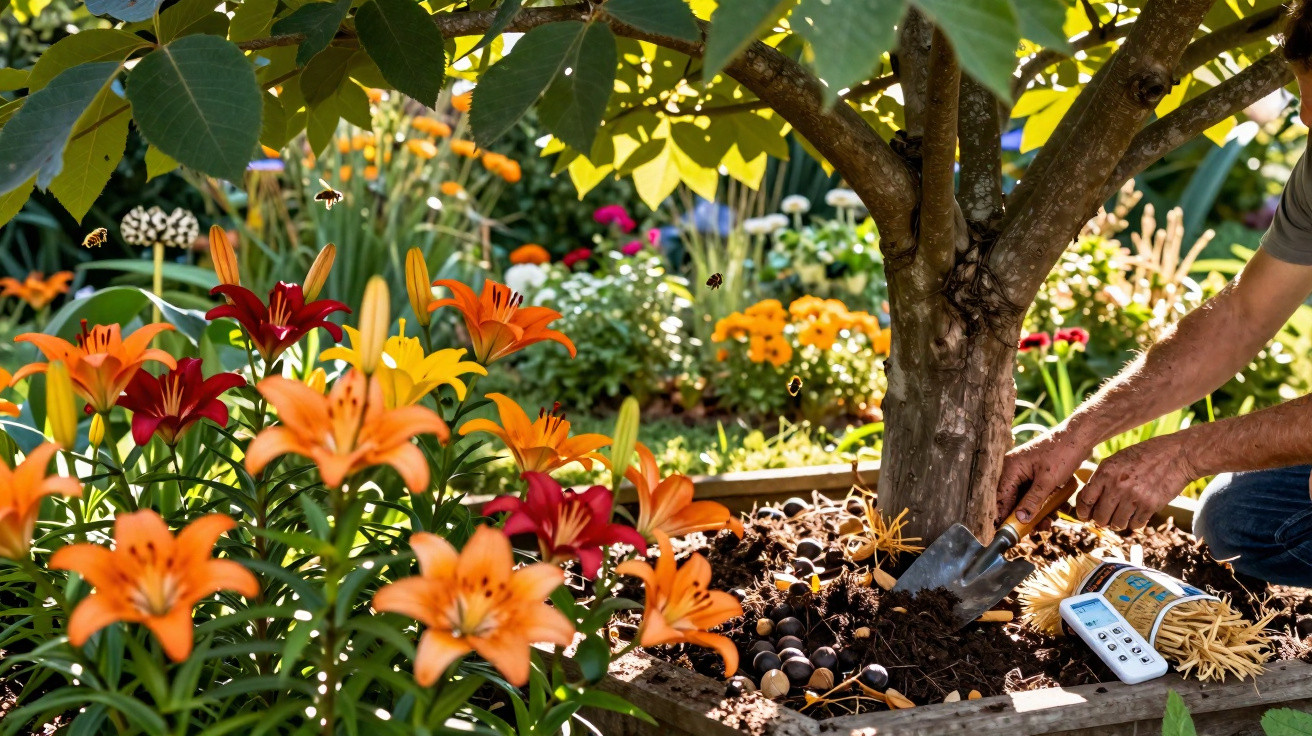
Anyone with a black walnut tree in the garden will know the issue: many plants struggle, while some simply die off. The cause is juglone, a naturally occurring toxin found around the trees’ roots. Asiatic lilies are particularly interesting in this respect, as these popular flowering plants appear to cope remarkably well with this chemical challenge.
What juglone does in the garden
Black walnut trees release juglone into the soil through their roots, leaves and green husks. The substance acts rather like a biological weapon, reducing nearby competition so that the tree can retain more water and nutrients for itself.
The area beneath the canopy is especially affected, extending roughly 15 to 18 metres from the trunk. This is where the toxin accumulates in the soil. Sensitive plants respond quickly, with symptoms including:
- sudden wilting despite adequate watering
- yellowing foliage and brown leaf edges
- halted growth, followed eventually by plant death
The intensity of juglone’s effects depends on several conditions: the season, soil moisture, soil life and pH level. Concentrations peak in summer, when the walnut is growing vigorously. Fallen leaves and husks continue to release juglone for months afterwards.
| Juglone tolerance level | Typical symptoms | Likelihood of surviving |
|---|---|---|
| Highly tolerant | no visible damage | 95–100 % |
| Moderate tolerance | slight yellowing, reduced growth | 60–80 % |
| Sensitive | severe wilting, leaf drop | 10–30 % |
| Extremely sensitive | rapid total collapse | 0–5 % |
“Juglone ruthlessly filters plants out: only species that are genuinely adapted will survive permanently within the root zone of black walnut trees.”
Asiatic lilies: remarkably tough despite toxins in the soil
This is where the encouraging news begins: based on experience to date, Asiatic lilies clearly belong among juglone-tolerant plants. Amateur gardeners and trial sites have reported for years that the bulbs thrive without difficulty, even when planted directly within the root zone of black walnut trees.
Typical garden observations include:
- normal leaf growth without the usual poisoning symptoms
- sturdy stems reaching from 60 to well over 120 centimetres
- vivid flower colours from early summer into midsummer
- reliable performance over several years without declining flowering
Why these lilies cope so well has not yet been fully established. Specialists are mainly investigating two possible explanations:
- The plants may produce enzymes that chemically break down juglone.
- Their cell membranes may be difficult for juglone to penetrate, limiting the resulting damage.
A combination of both mechanisms is probably involved. What matters to gardeners is the practical evidence: Asiatic lilies perform well where many other perennials have long since failed.
“Anyone wanting colour in a bed beneath a black walnut will sooner or later turn to Asiatic lilies.”
How to plant Asiatic lilies near black walnut trees
Even with their tolerance, these plants still need suitable growing conditions. Juglone alone does not determine success or failure; the site remains important.
Choosing the best position
Asiatic lilies enjoy light but do not cope well with relentless summer heat. The ideal location offers:
- morning sun and light shade in the afternoon
- gaps in the black walnut canopy that allow in sufficient light
- a position away from the trunk, preferably towards the outer root zone
The further the bulbs are planted from the trunk, the lower the juglone concentration and the easier their establishment will be.
Preparing the soil without increasing juglone levels
Lilies dislike waterlogged soil. Beneath black walnut roots, the ground is often compacted, so thorough preparation is worthwhile:
- loosen the soil deeply and remove stones and thick roots wherever possible
- work in plenty of well-rotted compost to improve structure and nutrient availability
- mix in sand or fine grit where the soil is heavy clay
Most importantly, do not use fresh walnut leaves or green walnut husks as mulch or in compost. Both add further quantities of juglone directly around the roots.
“The more free-draining and humus-rich the soil, the more confidently Asiatic lilies can withstand the chemical pressure from black walnut trees.”
Planting depth, care and monitoring
Plant the bulbs around 15 to 20 centimetres deep, approximately twice their own height. This helps them form strong roots and prevents the stems from toppling later. Water thoroughly after planting to close any air pockets.
Keep a close watch while the plants are becoming established:
- water regularly but moderately during prolonged dry spells
- if problems first appear, such as severe wilting, check moisture and soil conditions before immediately blaming juglone
- cut back faded stems so that energy goes into the bulb rather than seed production
- lift and divide overcrowded clumps every three to four years
Plants that pair well with Asiatic lilies
To create a reasonably harmonious garden area beneath a black walnut, it is best to choose a range of juglone-tolerant species. Asiatic lilies fit well into these planting schemes.
A succession of flowers from spring into summer
Several bulbous plants are also considered resilient to juglone, creating an unbroken run of flowers:
- Spring: daffodils and certain Allium species
- Early summer: early ornamental onions and the first Asiatic lilies
- Midsummer: the main flowering season for lilies in a wide range of colours
With careful cultivar selection, even the shade cast by this giant walnut can support a lively, dependable flower garden.
Beneficial insects: how appealing are Asiatic lilies?
Many gardeners are placing increasing importance on insect-friendly planting. Asiatic lilies do not provide a continuous food source in the way that some wild perennials do, but they are visited by bees, hoverflies and occasionally butterflies. Anyone wishing to make the area beneath the black walnut tree more of a pollinator refuge can add compatible tolerant plants, such as:
- certain hardy cranesbill species
- selected nectar-rich ornamental onions
- suitable ground-covering perennials with simple flowers
Managing juglone in everyday gardening
For many home gardeners, juglone remains an abstract term. A practical approach is more helpful in day-to-day gardening:
- keep sensitive plants, including tomatoes, many vegetables and some fruit shrubs, as far as possible from the walnut area
- collect walnut leaves separately in autumn rather than digging them into beds
- use small trial areas for new planting, setting out individual specimens and observing them for one or two seasons
Asiatic lilies make excellent test plants. If they grow well within the black walnut’s root zone, the prospects for other juglone-tolerant species in the same area are considerably better.
Anyone who uses the space beneath black walnut trees intelligently can ultimately gain an advantage. While others complain about ‘dead zones’ in the garden, it is possible to create a specialised, comparatively low-maintenance planting of robust species that remain stable for years, with Asiatic lilies as the brightly coloured centrepiece.





Comments
No comments yet. Be the first to comment!
Leave a Comment