
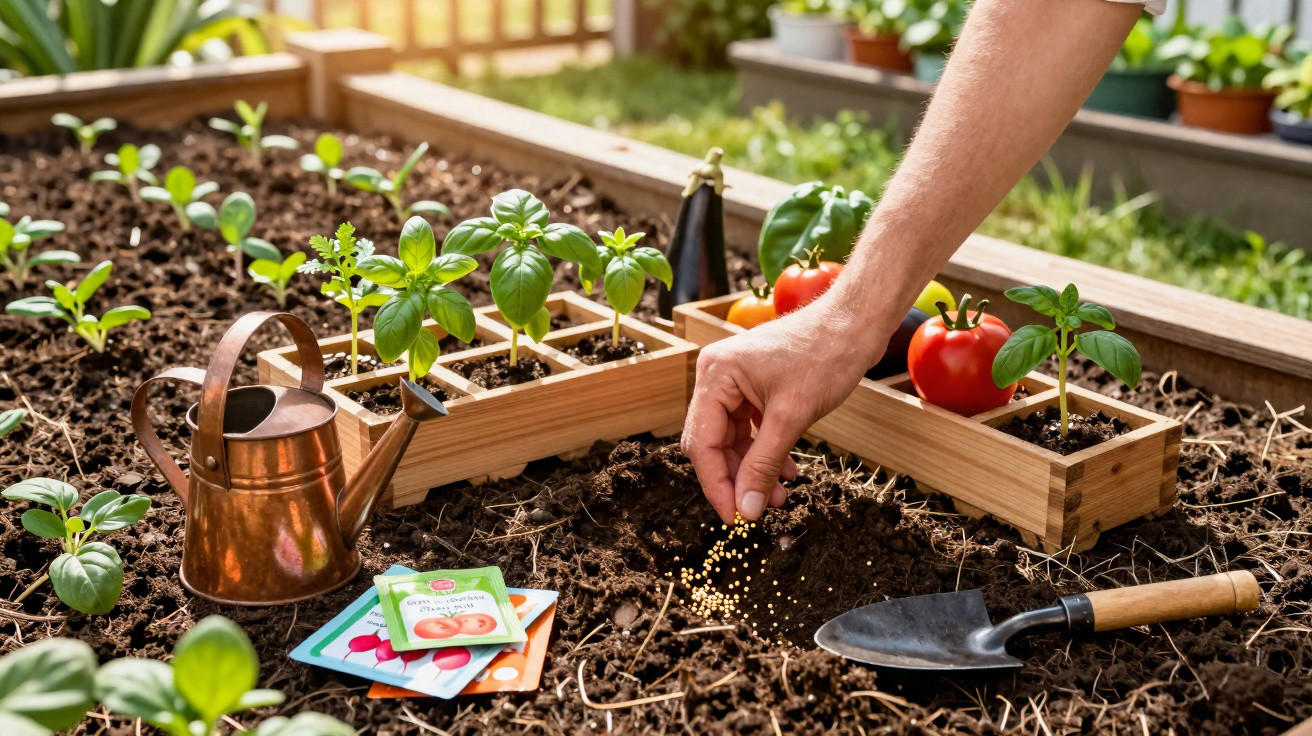
If you merely wait now, you lose weeks of harvesting time: a few inconspicuous sowings in March already determine how abundant your summer vegetables will really be.
Many home gardeners do not begin until the weather is properly warm outside. Yet the real advantage comes much earlier in the year. Sowing the right reliable favourites in late winter and early spring lays the foundations for bowls full of tomatoes, radishes, carrots and more – without chemicals or costly specialist varieties.
Why March determines your summer garden
By the calendar, gardeners often wait until mid-May, when the last night frosts have passed. It is practical, but it also wastes valuable time: plants can easily lose four to six weeks of growth. Starting in March – indoors or outdoors, depending on your region – brings the entire harvest forward.
Early sowing means: stronger roots, healthier plants, and an earlier, longer harvest – with the same space and effort.
The chief benefit is below ground. Plants that germinate in March create a dense root network before heat, drought and pests reach their peak. They take up water more effectively, cope more easily with aphids and fungal diseases, and remain steady in storms or hail.
The three essentials for vigorous young plants
Sowing always relies on the same basic formula: warmth, consistent moisture and sufficient light. When all three are right, almost any seed will germinate reliably.
- Warmth: Most Mediterranean vegetables prefer around 20°C or slightly more.
- Moisture: The growing medium should be moist but never waterlogged – standing water is fatal.
- Light: A bright windowsill or supplementary lighting prevents long, thin and weak shoots.
There is no need for expensive propagation stations. Empty yoghurt pots, supermarket fruit trays or old plant pots all work very well. The only essentials are drainage holes at the base and a loose, fine seed compost that will not compress the delicate roots.
Sun lovers: tomatoes, peppers, aubergines and basil
Tomatoes, peppers and aubergines: delicate but productive
Few vegetables represent summer as clearly as tomatoes, peppers and aubergines. They enjoy hot conditions outdoors, but are rather sensitive when germinating. Temperatures below 18°C slow germination considerably, while just over 20°C suits them perfectly.
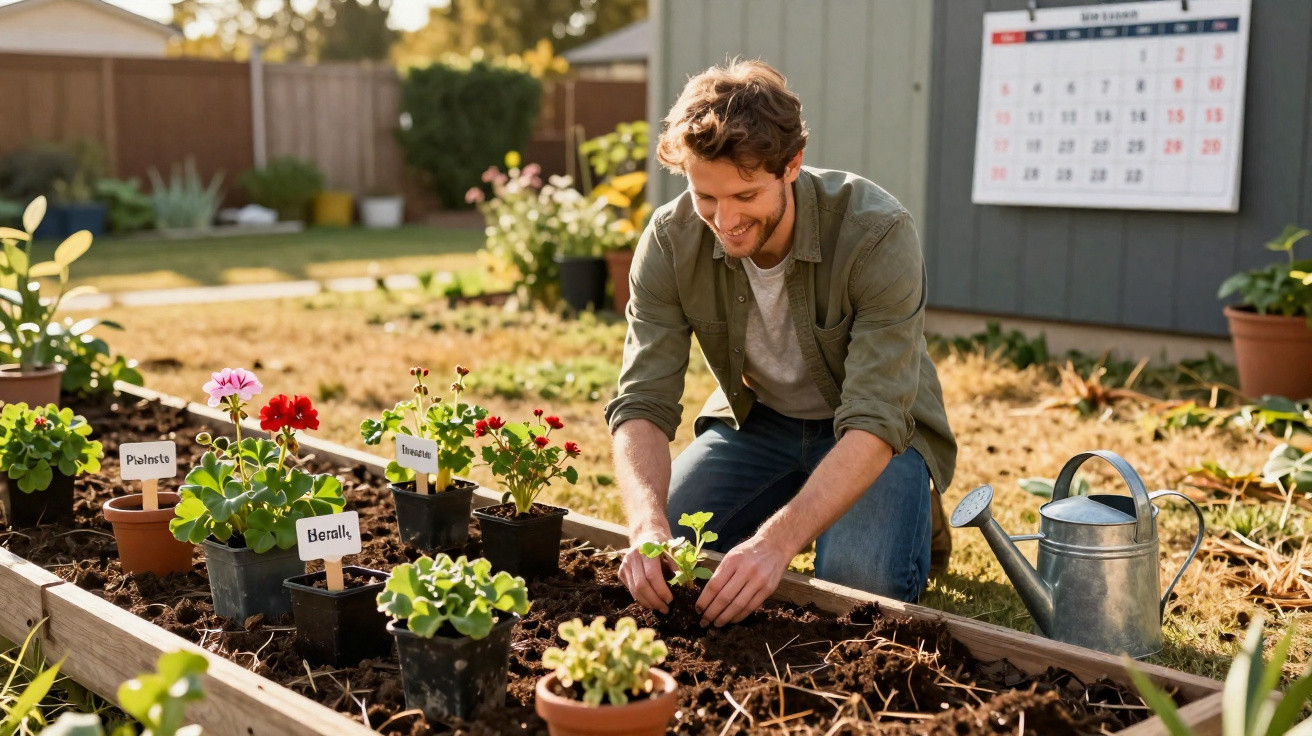
Their ideal starting point is a bright, warm windowsill indoors or a heated greenhouse. Cover the seeds only lightly with compost, keep them moist, and ventilate regularly to prevent mould. The first seed leaves usually emerge after one to two weeks.
Anyone who sows these classics outdoors only in May gives away almost half the tomato season.
Basil: fast summer fragrance for the windowsill
Basil needs conditions similar to tomatoes: warmth, brightness and no draughts. This makes it ideal for sowing densely in a pot. Press the seed in lightly rather than burying it deeply. Basil needs light to germinate, so too much compost over the seed prevents germination.
Within just a few weeks, small green bushes will be growing on the windowsill, ready to move into the bed among tomatoes later on. It is a suitable partnership: basil can confuse certain pests and provides aromatic leaves nearby for salads and pasta.
Hardy direct sowing outdoors: what can go out in March
Radishes and carrots: a clever bed-sharing pair
The outdoor season begins as soon as the soil is no longer saturated or frozen. Carrots favour loose, deep soil, while radishes grow quickly and use their roots to loosen the upper layer.
One tried-and-tested approach is to mix carrot and radish seeds in the same row. Radishes germinate within a few days, open up the soil, and are generally harvested before the carrots truly need the space. This uses the area twice without exhausting the soil.
Peas and spinach: cold starters with plenty of leafy growth
Spinach and peas are barely troubled by cold soil or cool nights. They are among the first crops that can be sown directly outdoors. Peas climb readily up a simple fence or a few canes, while spinach quickly covers the soil with sturdy leaves.
- Peas: Sow in rows and remember to provide support for climbing.
- Spinach: Broadcast sow or sow in rows, harvesting regularly while the leaves are young and tender.
Both crops can tolerate the occasional cold night. Spinach in particular supplies plenty of vitamins while the rest of the garden is still getting started.
Helping young plants through the delicate early stage
Watering and thinning correctly: gentle care rather than constant soaking
Many plants die not from too little water, but from too much. In small pots especially, too much from the watering can is enough to rot the fine roots. A better method is to use a spray bottle or add water to the saucer underneath, allowing the compost to draw it up gradually.
When seedlings are growing shoulder to shoulder, thinning is the only answer. Carefully remove the weaker specimens so the stronger ones have more light, air and room. This produces robust individual plants rather than a tangled mat in which diseases can spread easily.
Hardening off: moving from windowsill to bed without shock
The major transition from a warm home to an open garden is stressful for young plants. Moving them directly outside can quickly cause scorched leaves or a sudden halt in growth.
The answer is to proceed gradually. At first, put the pots outside for a few hours on mild days in a sheltered position; later, expose them to gentle wind and sunshine as well. After around ten days, tomatoes, peppers and similar plants are usually strong enough to stay in the bed permanently.
Gardeners who harden plants off patiently avoid much of the frustration caused by limp, scorched or dead seedlings.
Planning your harvest from spring to late summer
When each crop reaches your basket
March sowing is reflected later in the harvest calendar. Those who get started in good time can broadly expect the following timetable:
| Vegetable | Sowing (approx.) | Harvest period |
|---|---|---|
| Radishes | March–April | From mid-April to June |
| Spinach | March–April | April to May |
| Peas | March–April | Late May to June |
| Carrots | March–April | June to August |
| Tomatoes, peppers, aubergines (started indoors) | Late February–March | June to August |
| Basil | March–April | From May to September |
The professionals’ trick: staggered sowing and mulch
Sowing every seed on the same day means harvesting almost everything at once. A few weeks later, gaps appear both in the bed and in the fridge. Experienced gardeners therefore make follow-up sowings of radish, lettuce or spinach-type crops every two to three weeks. That way, a new generation is always ready.
Mulch also has a key role. A layer of grass clippings, shredded prunings or straw protects the soil from drying out and retains moisture for longer. Roots stay cooler, watering intervals become longer, and soil organisms can continue their work undisturbed.
Practical advice for beginners and balcony gardeners
Which seeds are worthwhile in small spaces
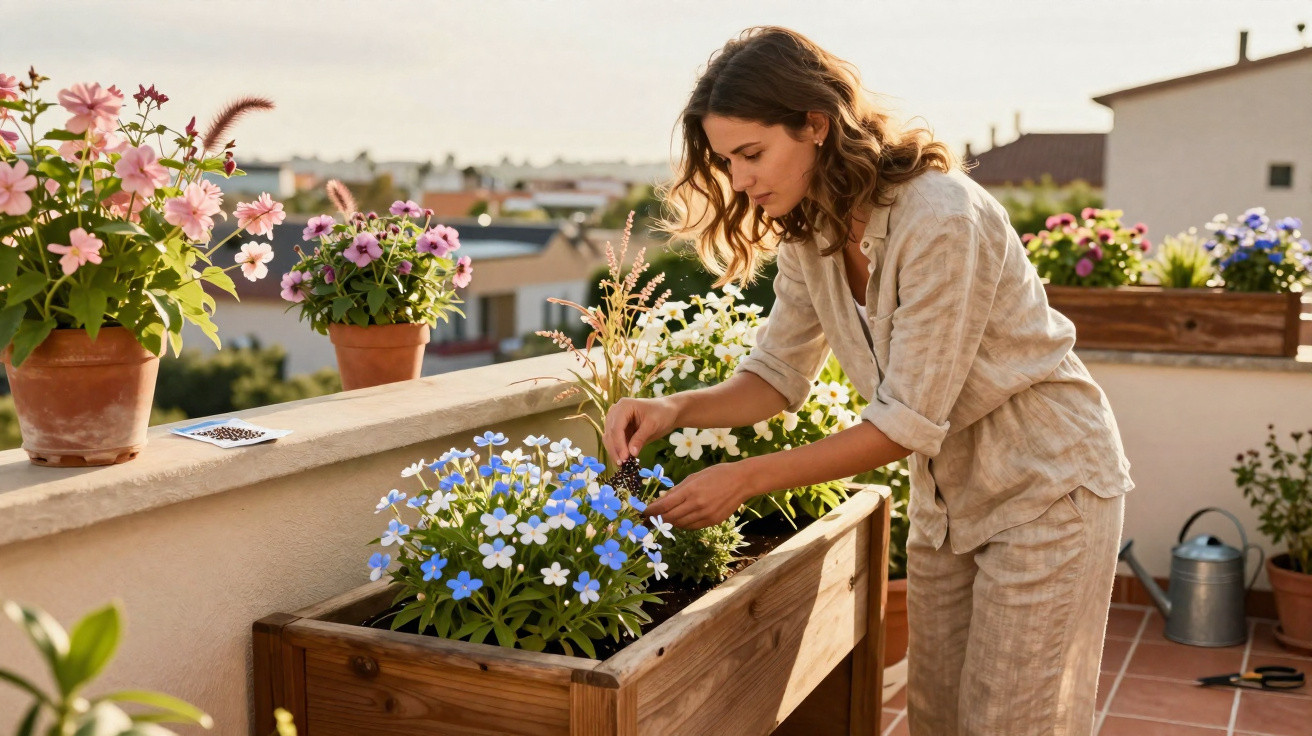
Anyone with only a balcony or a tiny plot should focus above all on crops that produce quickly and reliably:
- Radishes in window boxes
- Spinach or cut-and-come-again lettuces in shallow containers
- Bush tomatoes in large pots
- Basil, parsley and chives on the windowsill
Carrots need relatively deep containers, while peas can be grown effectively along a railing or trellis. Even a few square metres can therefore yield a surprisingly large harvest.
Risks that many people underestimate
Three issues commonly lead to disappointment: sowing too densely, watering incorrectly and planting outside too impatiently. If seed is scattered too thickly, radical thinning is needed later – otherwise every plant remains small. Permanently wet soil, particularly at low temperatures, encourages rot. And anyone who puts young plants into the bed too early risks having all their work ruined by a late frost.
Checking the weather forecast, putting a finger into the soil to see whether it feels cold and damp, and keeping a watchful eye on the small pots are usually enough to avoid these pitfalls.
Those who shape their March days around this rhythm – starting warmth-loving varieties indoors, sowing hardy types outside and making regular follow-up sowings – will be rewarded from early summer onwards. Bowls will then fill with home-grown vegetables, and every bite will recall that it all began with a few unassuming seeds in a still-cool spring.

Comments
No comments yet. Be the first to comment!
Leave a Comment