

Increasingly prolonged heatwaves and occasional hosepipe restrictions leave amateur gardeners asking the same question: how can a garden remain attractive when the tap is virtually turned off in summer? The solution depends less on costly technology than on timing, plant choice and one straightforward method that should be completed by the end of March.
Why 31 March is the deadline for your summer garden
In spring, the garden gradually emerges from its winter dormancy. This transition period determines whether perennials can later manage on rainfall alone or constantly demand water in July.
The period up to 31 March makes the best use of residual soil moisture and gives new roots a head start before hot weather arrives.
During March, the soil is generally still thoroughly moist. Temperatures are rising, yet intense heat has not arrived. At this point, perennials produce fine root hairs that grow deep into the ground. This gives them access to water reserves they would no longer be able to reach in June or July if planted later.
Once temperatures climb beyond around 25°C, newly planted perennials face two pressures at once: transplant shock and heat stress. The result is limp foliage, scorched shoots and a substantial need for watering. To avoid this, plant in good time – not for decorative reasons, but for purely biological ones.
These 5 “camel perennials” will get through summer with hardly any watering
For a dry border, robust perennials that can cope with sun, wind and poor soils are especially suitable. Five species are considered particularly dependable when the water meter is standing still in summer.
- Perovskia (Russian sage) – Delicate silvery-grey foliage loses very little moisture, while a cloud of blue flowers appears in late summer. Perovskia thrives in full sun, copes with impoverished soil and tolerates drought exceptionally well.
- Sedum ‘Autumn Joy’ – Its thick, fleshy leaves act like small water tanks. This perennial flowers late in the year and draws bees and butterflies when much else has already faded.
- Gaura lindheimeri (beeblossom) – It develops a deep taproot that can still find moisture in lower soil layers. Its delicate blooms resemble small butterflies dancing above the border throughout summer.
- Echinops ritro (globe thistle) – Once established, it forms strong roots and is well suited to dry, calcareous soils. Its rounded blue flower heads create bold accents and are popular with insects.
- True lavender species – A classic source of fragrance for beds and borders. Lavender needs sunshine and freely draining soil, but can then withstand extreme drought. Standing winter wet, by contrast, causes rot.
All five choices have one thing in common: they dislike “wet feet”. A freely draining position in full sun matters more than continual watering.
Geraniums: the secret weapon for awkward corners
Hardy geraniums make excellent companions in a dry border. They are frost-hardy, forgiving of varying light levels and establish reliably in many soil types. There is almost always a suitable variety for troublesome garden corners.
Their care requirements are modest: at the end of winter, dried plant material can simply be pulled away by hand. The remaining growth will naturally emerge afresh.
The right March planting method: save hundreds of litres of water in summer
Future water use is shaped not only by planting time but also by planting technique. Careful work in March requires a little time once, then saves many watering sessions in the summers ahead.
- Soak the root ball
Place each container-grown plant in a bucket of water for around 15 minutes, until air bubbles stop rising. This ensures that the entire root ball is saturated. - Dig generously sized planting holes
Make the hole roughly three times the width of the pot. Loosen the soil beneath it thoroughly so new roots can grow easily into the surrounding ground. - Improve heavy soil
In loamy or clay soil, mix in around 20 per cent coarse sand or gravel. This prevents waterlogging and encourages roots to grow deeply. - Water in thoroughly at the start
Immediately after planting, water in each perennial with around 10 litres of water – even if it rains that day. This settles the soil closely around the roots. - Loosen the root ball
Lightly roughen the root ball so that roots grow more quickly into their new surroundings. - Apply mineral mulch
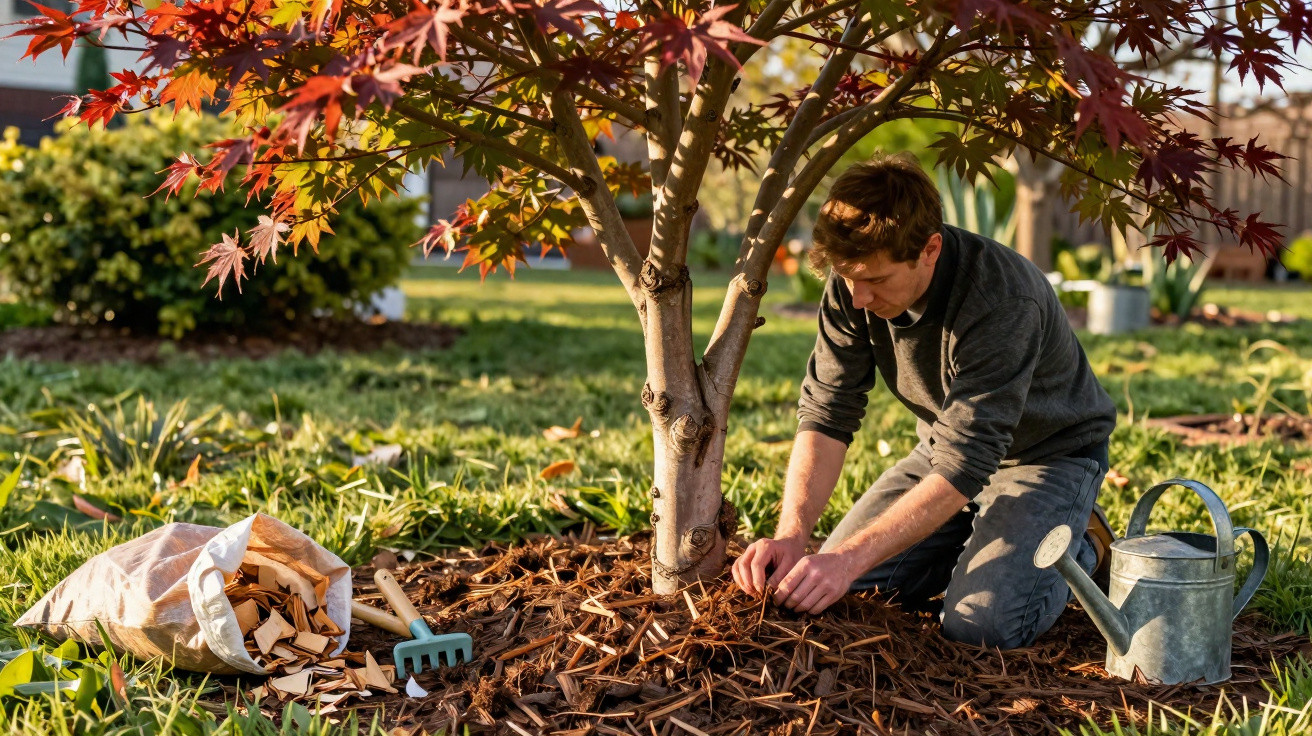
A layer around 7 centimetres deep of grit, gravel or volcanic rock reduces evaporation, keeps the soil looser and is ideally suited to drought-loving perennials.
Anyone who plants and mulches thoroughly in March noticeably reduces watering needs in hot summers – not only in the first year.
How much early planting really affects water consumption
A practical example illustrates how large the difference can be: a beeblossom planted only in mid-May often needs watering every two days during a hot July. Over the course of the season, this can add roughly 200 litres per plant compared with planting in March.
Early planting therefore does more than take advantage of natural soil moisture; it also helps prepare for possible summer watering restrictions. Those who plant early can comply more easily with potential local authority rules while easing their own water bill.
What if you cannot start until April?
Garden schedules do not always go to plan. The good news is that a drought-tolerant border can still be created in April, although it requires a little more effort during its first season.
Late-planted specimens need occasional “emergency watering” in the first warm months. A sunny site and uncompacted soil remain essential. Generously mixing heavy ground with sand or grit, then adding mineral mulch immediately after planting, will help.
Anyone beginning in April should watch the forecast closely. At the first spells of heat, it is better to check one time too many whether young perennials are drooping and reach for the watering can promptly if they are. By the second year, they usually make up for their slower start.
How to arrange perennials in the border for an easy-care overall look
A dry border should not only be practical; it should also look appealing. A clear layout helps the garden feel calm and well ordered.
- Background: Globe thistles and Russian sage work perfectly at the back of the border, providing height and structure.
- Middle: Beeblossom and sedum fill the central area, bringing colour and a long flowering period.
- Foreground: Lavender creates a fragrant edge alongside paths or border margins.
- Gaps: Hardy geraniums fill spaces and connect the individual groups into a cohesive overall design.
With this arrangement, a cut-back and a little tidying in late winter are enough to ensure the border begins the new year looking attractive again.
Background: why drought-loving perennials work so well
Many of these species originate from sunny locations with poor soil. Over the course of evolution, they have developed ways to use every available trace of moisture: deep root systems, small or hairy leaves that evaporate less water, or fleshy plant parts that store water.
These characteristics can be put to use in the garden when the site is appropriate. Planting such perennials in heavy, constantly wet soil forces them into conditions for which they are not adapted. Loose, relatively poor soil with plenty of sunshine is far closer to their natural habitat.
Practical additions for an even more resilient dry border
Those wishing to go a step further can improve the soil’s ability to take up water through regular mulching. Mineral mulch layers prevent surface crusting, allowing rain to soak in more slowly and evenly. Organic matter such as leaves can still rot down in the gaps, supporting soil life over the long term.
Combining the planting with deep-rooted shrubs, such as certain ornamental woody plants, can also be useful. They draw on different soil layers from the perennials and therefore compete less for water. Over the years, this creates a stable planting system that copes with heatwaves more calmly than a traditional thirsty garden.


Comments
No comments yet. Be the first to comment!
Leave a Comment