
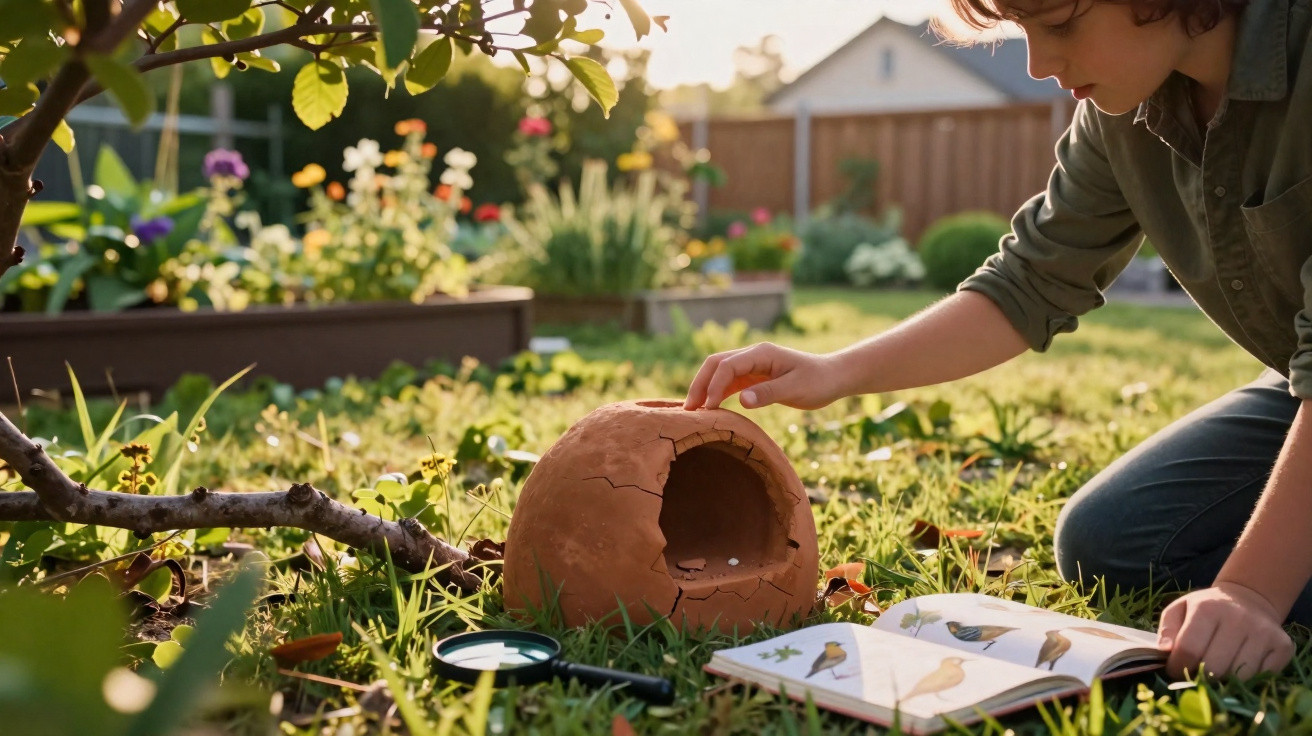
Coming across a rufous hornero nest on a tree, wall, post, or a structure close to your home usually means the bird has found a stable place to breed. Its presence can also point to nearby mud, available food, and a reasonably calm environment, while also supporting the garden’s biodiversity.
What does it mean to find a rufous hornero nest in the garden?
A nest like this indicates that a pair has found at least the basic conditions needed to build and raise chicks. It is not a definitive measure of environmental quality, but it does suggest the site provides dependable support, suitable building material, and access to the small invertebrates that make up much of the bird’s diet.
- There is damp mud or clay-rich soil nearby
- There are trees or sturdy structures able to support the nest
- There is a supply of insects and other small invertebrates
- The area offers some degree of quiet while building takes place
- The garden connects with local wildlife in the wider area
Why can this be a good sign for the garden?
The rufous hornero forages mainly on the ground, where it catches ants, termites, earthworms, and other invertebrates. In doing so, it plays a role in balancing the food chain and can contribute to natural control of certain populations-although its presence does not replace targeted measures against infestations.
A rufous hornero nest in the garden can also be a chance to watch the behaviour of a native bird in its natural setting. The pair typically works together, carrying small amounts of mud and defending the immediate area around the structure.
How does the rufous hornero build such a tough nest?
Furnarius rufus combines wet mud with straw, small twigs, plant fibres, and other materials found locally. The finished structure is rounded-much like a small oven-and includes an internal partition that separates the entrance from the chamber where the eggs and chicks remain.
- The pair selects a base strong enough to take the nest’s weight
- Small loads of mud are carried back repeatedly
- The mixture is shaped in layers until the walls are formed
- An internal divider shields the incubation area
- Fibres and dry materials are used to line and prepare the interior
- As the mud dries, the structure gradually hardens
What should you do if you find an active nest near the house?
The safest approach is to watch from a distance and avoid touching it, opening it, moving it, or blocking the entrance. You should also keep pets away, avoid spraying chemicals, and postpone pruning or building work very close to the site while the pair is still using the nest.
Brazilian environmental law sets penalties for anyone who alters, damages, or destroys wild animals’ nests without authorisation. If the nest is in a genuinely risky location-such as on electrical equipment or an unstable structure-the appropriate step is to contact the environmental authority or the environmental police, rather than trying to remove it yourself.
Should an abandoned nest be removed from the garden?
Even after the rufous hornero has left, the nest may still have ecological value. Disused nests are often taken over by other birds and can also provide temporary shelter for small animals, increasing the number of safe spots available in urban areas.
Removal should only be considered once you are certain the nest is not being used and there is a clear reason, such as a risk of falling or damage to a structure. If it remains secure and causes no issues, leaving it in place is a simple way to support local biodiversity and keep in the garden one of the most distinctive nests associated with Brazilian wildlife.

Comments
No comments yet. Be the first to comment!
Leave a Comment