
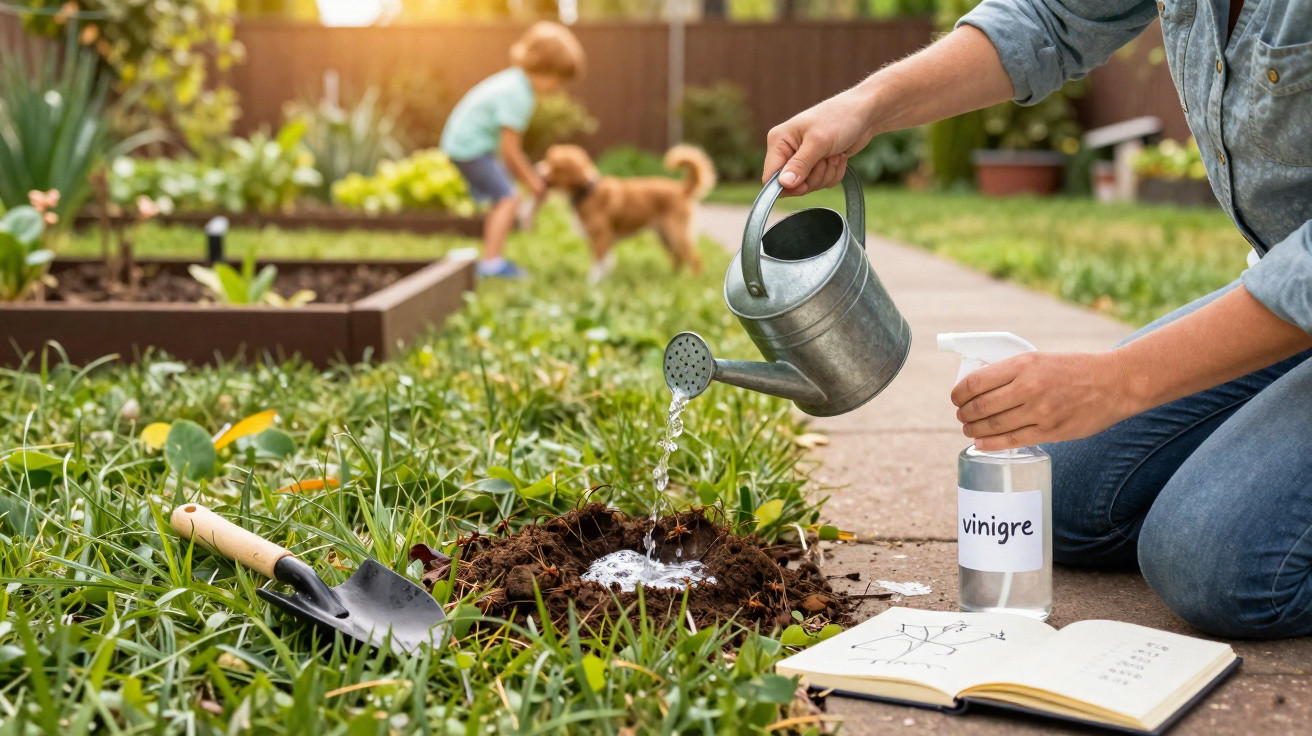
Getting rid of ant nests in the garden takes more than levelling the soil or blocking the visible opening. The mound is simply the outer sign of a colony containing tunnels, worker ants and one or more queens. Lasting control requires removing food and water sources, monitoring trails and treating the source without harming plants, pets or the soil.
Why does an ant nest return after the mound has been flattened?
Raking over or treading on a mound changes only its surface. Ants can reopen the entrance because most of the colony remains sheltered underground, including its chambers, larvae and queens.
Some ant nests can also damage a lawn by covering grass blades, shifting soil and disturbing roots. Before taking action, watch the insects' movements and check whether several entrances are connected to the same nest.
What makes a garden less appealing to ants?
The first measure is to remove what keeps the colony going. Food scraps, ongoing dampness and sheltered spots can encourage ants to remain in the garden even after control has been attempted.
- pick up ripe fruit that has fallen to the ground;
- put away dog and cat food after feeding;
- clear up spilled seeds around bird feeders;
- keep bins closed and free from waste on the outside;
- repair leaking taps, hoses and sprinklers;
- avoid leaving wood, leaves and mulch permanently damp.
Do vinegar and soapy water destroy the entire colony?
Diluted vinegar may temporarily remove the scent trails that ants follow, but it will not usually reach the queen. Its acidity can also scorch leaves and damage areas of lawn, so it should not be sprayed directly onto plants.
Soapy water works on insects it hits directly, although it generally controls only surface activity as well. Incorrect concentrations may harm ornamental plants and grass without reaching the deeper chambers of the ant nest.
When must treatment reach inside an ant nest?
If mounds keep returning, trails are widespread or the ants pose a stinging risk, treatment needs to reach the colony itself. Suitable baits act gradually because workers carry the material back to the nest, but an adult should select and apply them according to the label, or a specialist company should be used.
- do not dig into the nest with your hands or try to find the queen;
- keep children and pets away from the treated area;
- do not combine household remedies with insecticides;
- use only products approved for gardens and outdoor spaces;
- seek professional pest control if the ants are aggressive or there are numerous nests;
- follow the specific guidance for vegetable plots, fruit trees and animals.
Long-term control relies on prevention and monitoring
No method can permanently prevent new ants from arriving, as other colonies may move into the garden. Once activity has reduced, the area should still be kept free of food remnants, leaks and damp hiding places that encourage new nests.
The most effective approach combines cleaning, correcting garden conditions and using targeted treatment when required. This means ant nests in the garden are not merely removed from the surface, but controlled with less risk to the lawn, plants and pets.

Comments
No comments yet. Be the first to comment!
Leave a Comment