
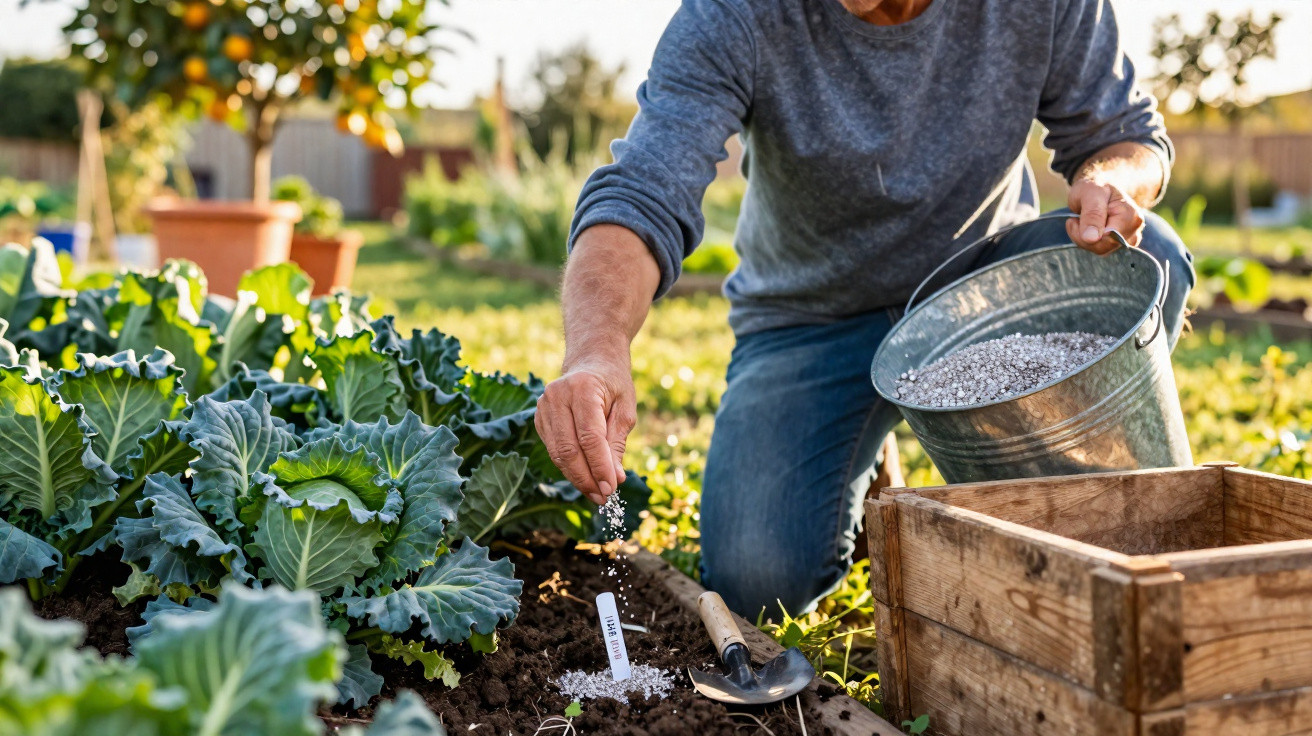
Many amateur gardeners enthusiastically scatter fireplace ash over their beds – without realising they may be doing more harm than good to the soil.
Heating with wood is increasingly popular, and every evening by the fire adds more grey ash to the bucket. It sounds like free fertiliser, doesn’t it? Yet an experienced nursery owner made it clear to me that, in most gardens, wood ash causes more damage than benefit. It only makes sense in two very specific places – and even there, only in tiny quantities.
Why wood ash can quickly become a garden hazard
Wood ash may look harmless, but chemically it is anything but. It is highly alkaline, with a pH value often ranging from 10.5 to 12.8. That puts it in the same range as diluted household cleaners.
When larger amounts of this ash reach the soil, its pH rises noticeably. This is particularly problematic in soil that is already calcareous, heavy or clay-rich, where the balance can easily be disrupted.
“Too much ash makes the soil more compact, less full of life and troublesome for many crops.”
Typical consequences of a persistently excessive pH value include:
- The soil becomes compacted and loses its crumb structure.
- Microorganisms and earthworms retreat.
- Water drains away less effectively, increasing the risk of waterlogging.
- Nutrients such as iron and phosphorus become difficult for plants to access.
Vegetables such as potatoes are especially sensitive: scab, yellowing leaves (chlorosis) and weak growth are common signs. Many gardeners then add even more fertiliser, worsening the issue instead of considering the ash as the cause.
The only two places where wood ash genuinely helps
Despite all these risks, ash does not automatically have to go in the bin. It can be useful in two parts of the garden, provided it is applied very deliberately and in strictly controlled amounts:
- on clearly acidic, light soils
- in the compost heap
Outside these two uses, it is best not to spread it at all. Do not scatter it “just in case”, and do not dust lawns, beds or paths with ash.
Place 1: Gently balancing acidic soil
Among other nutrients, wood ash contains calcium and potassium. On strongly acidic, sandy soil, this combination can help to stabilise conditions and improve nutrient availability for vegetable plants.
How to tell whether your soil can tolerate ash
You cannot tell whether the soil beside the patio is acidic simply by looking at it. Anyone planning to use ash can hardly avoid testing first.
- Buy a basic soil-testing kit, often available for under £10.
- Take soil samples from several parts of the garden.
- Mix the samples thoroughly, then test the pH value.
Only the result should determine what you do next:
| pH value | Meaning | Is ash useful? |
|---|---|---|
| below 6.0 | clearly acidic | possible in small amounts |
| 6.0–7.5 | neutral to slightly alkaline | do not apply ash |
| above 7.5 | distinctly alkaline, calcareous | strictly avoid ash |
“Spreading ash without a pH test is like flying blind – the consequences often become visible only years later.”
Dosage: two handfuls rather than full buckets
Even with acidic soil, less is more. Experienced gardeners recommend around 80 to 100 grams of ash per square metre each year. That is roughly equivalent to two loose handfuls.
- Do not exceed 80–100 g/m² per year.
- Apply it preferably in winter or very early spring.
- Spread it thinly and evenly rather than tipping it into piles.
- Work it lightly into the upper soil layer.
A whole bucket of ash applied simply because it costs nothing has a blunt-force effect: pH levels rise sharply, calcium and potassium accumulate, and many crops can no longer take up nutrients properly.
Practical examples from the vegetable garden
On sandy, nutrient-poor soil, the following plants may benefit from a cautious application of ash:
- tomatoes that remain pale and weak in acidic ground
- carrots that produce only thin, short roots
- part of a traditional vegetable garden containing spinach, cabbage or leeks
The situation is very different on calcareous soils, which occur in many areas of southern and western Germany. Here, extra ash can quickly lead to iron and phosphorus deficiencies. Plants turn yellow, remain small, and produce markedly fewer flowers and fruits.
Place 2: Using ash wisely in compost
In a compost heap, wood ash acts as both a pH corrector and a mineral source. Compost often becomes somewhat acidic over time, especially when it contains plenty of grass clippings and other fresh green waste.
A small amount of ash:
- buffers acidity
- supplies calcium and potassium
- is distributed and diluted effectively by the organic material
The microorganisms in the compost can then continue working without disruption, keeping decomposition active. Later, the ash reaches the beds in a heavily diluted form, which is far more tolerable than applying it directly from the bucket.
How much ash can compost handle?
Use this simple rule of thumb: add one cup of ash, around 250 millilitres, to roughly a ten-centimetre layer of material.
- Layer compost materials such as grass clippings, kitchen waste and leaves.
- Scatter a scant cup of ash loosely over the layer.
- Mix everything together using a garden fork or compost aerator.
“In compost, ash is more of a seasoning than a main ingredient – a pinch is entirely sufficient.”
If dense grey layers of ash start to appear in the compost, you have used too much. Such layers slow decomposition, prevent water from draining properly and can quickly create foul-smelling areas.
What must never happen with ash in the garden
Not every type of ash is safe. Even pure wood ash is unsuitable for every plant. Anyone who carelessly uses everything risks introducing pollutants into the beds in the worst case.
- Never use ash from treated, varnished or glued wood.
- Strictly avoid ash from engineered wood, chipboard or old furniture.
- Only use pellet and briquette ash when its origin and ingredients are known; if in doubt, dispose of it.
- Do not apply ash around plants that prefer acidic soil, including:
- hydrangeas
- rhododendrons
- azaleas
- camellias
- blueberries
Many people swear by ash barriers to deter slugs. For a short time, the ring dries the animals out, but the protection disappears after the next rainfall. Repeatedly topping it up quietly adds substantial amounts of ash to the soil, with all the resulting effects on pH and soil life.
Where should all the fireplace ash go?
Homes heated with wood produce more ash than an ordinary garden can sensibly absorb. Spreading it widely may seem tempting, but in the long term it creates problem areas.
More sensible ways to deal with surplus ash include:
- Allow ash to cool completely, then collect it in a lidded metal container.
- Give it to acquaintances with definitely sandy, acidic soil.
- Use it gradually through the year for the limited applications in compost and acidic beds.
If the buckets are still full and there are no suitable areas for it, disposing of most of the ash with household waste is the better long-term option. It may feel wasteful, but it protects soil structure and yields.
How to handle ash better straight away
A few simple steps can bring order to the issue and prevent common mistakes:
- Test the pH value instead of relying on instinct.
- Restrict ash strictly to acidic beds and the compost heap.
- Follow the recommended amounts: around 80–100 g/m² in the garden, and one cup for every ten-centimetre compost layer.
- Consistently discard ash from questionable sources.
Why gardeners use ash at all
Wood ash is neither a miracle product nor a poison; it is a powerful concentrate of natural minerals. In the past, farmers used it deliberately because few other fertilisers were available. Today, compost, organic fertilisers and green manures offer gentler, more controllable alternatives.
Ash remains of interest if you already heat with wood and know the quantities you are producing. It can fill specific gaps, for example where potassium is lacking or soil has become too acidic. Treating it as a free, all-purpose fertiliser, however, can quickly result in missed opportunities in the vegetable garden.
Combining methods while keeping risks in view
Ash becomes particularly interesting when combined with other measures. Sandy soil that is regularly supplied with compost, mulch and a little ash can gradually develop a noticeably more stable structure. The soil retains water better, and plants cope more easily with hot spells.
Problems arise when several pH-raising factors occur together: ash, calcareous watering water and additional lime fertiliser in spring. Values can then climb rapidly, putting even robust plants under stress. Anyone who tests regularly and keeps an eye on soil life – earthworms, crumb structure and smell – can manage these risks effectively.


Comments
No comments yet. Be the first to comment!
Leave a Comment