
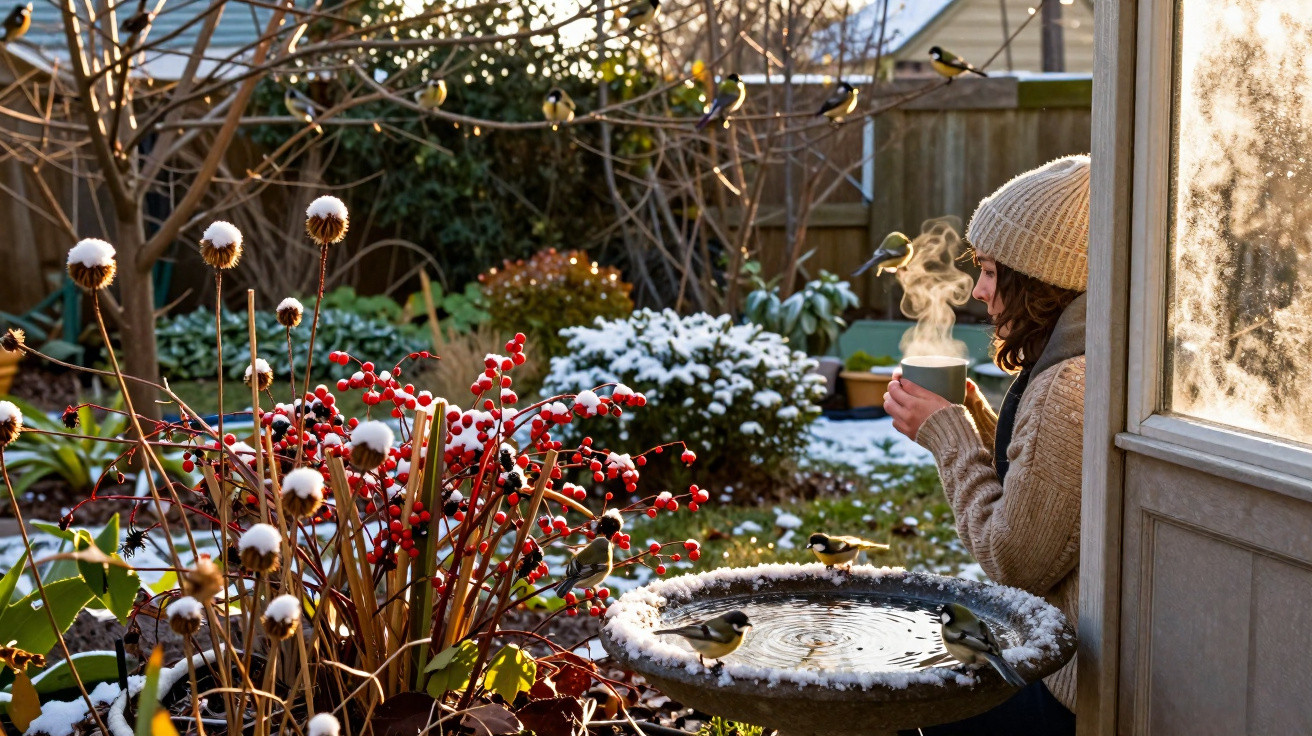
Those birds appearing at first light are more than a pleasant part of the scenery. By choosing to settle, eat and stay in your garden, they are giving a live indication of just how wildlife-friendly it is - particularly when winter food is limited and every calorie counts.
Why your garden has become a morning hotspot
Birds cannot afford to squander energy during winter. As the temperature falls, they make hard choices about the places where they will feed and shelter.
Your garden is on their shortlist because, from a bird’s perspective, it looks safe, sheltered and worth the effort.
A perfectly neat, freshly swept garden might look impressive on Instagram, yet it can be a biological desert. Exposed borders, raked lawns and tightly pruned shrubs provide minimal shelter and even less to eat.
When tits, robins and blackbirds visit first thing in the morning, you have probably got at least three things right, whether or not you intended to:
- You have left some leaves, stems or seedheads in place.
- You have allowed a few “untidy” areas to stay wild.
- You have grown shrubs or hedges that retain their shape through winter.
For birds, these features amount to refuge. Your garden softens the impact of freezing winds, gives them rapid routes away from predators and supplies enough cover for a brief moment of relaxed feeding.
The hidden buffet: seeds, insects and berries you barely notice
By January, much of the garden has lost its colour, so it is easy to assume that little is going on. Birds see it differently. What may appear lifeless or messy is, for them, a well-provisioned larder.
Seedheads that quietly feed flocks
Old stems and spent flowerheads can retain a remarkable supply of food. Finches and tits carefully pick through them for seeds left behind after the autumn clear-up. Particularly useful plants often include:
- Sunflowers and coneflowers, with dried heads that remain full of seed.
- Hydrangeas, where faded flowers may still offer cover to tiny insects.
- Ornamental grasses, which scatter fine seeds over the ground.
Keeping these plants standing until late winter extends the feeding period well beyond the point when their petals have fallen.
Leaf litter: where the protein hides
Beneath a thinning carpet of leaves is a substantial source of protein. Beetles, spiders, worms and insect larvae overwinter within the upper few centimetres of soil and among rotting plant material.
When a blackbird flicks through leaves or a thrush works a mulched bed, they’re tapping into a living store of calories built from your gardening choices months earlier.
Avoiding aggressive autumn tidying and using fewer chemical treatments lets this small ecosystem flourish. As a result, birds can still locate live prey when frozen ground makes feeding difficult elsewhere.
Winter berries: bright life rafts in a lean season
Fruit-bearing shrubs can often determine whether birds view a garden as worthwhile. Cotoneaster, pyracantha, holly and comparable plants hold on to their berries far into winter. Their fruit is sugary, energy-rich and quick to take between flights.
A mixed hedge containing berries that ripen at different times can sustain birds from late autumn through to early spring, when insects eventually return in greater numbers.
How your planting structure keeps birds alive
The plants you grow are only part of the picture. Their arrangement is equally important, because birds assess a garden in three dimensions.
From soil level to treetop, the more layers your garden has, the more useful it becomes as a survival zone.
The power of dense hedges and scruffy corners
Thickets, mixed hedges and evergreen shrubs create natural “corridors” through the garden. They allow birds to travel between feeding areas without having to cross wide, exposed ground where cats or sparrowhawks may attack.
Climbers such as ivy growing over an old wall, along with thick evergreen shrubs including viburnum and laurel-tin, can provide winter dormitories. Within their protected tangle, the air can be slightly warmer and far less windy than in an open position. On a bitterly cold night, that small difference may determine whether a small bird survives until morning.
Vertical variety: from ground cover to canopy
A garden that earns high marks from birds generally includes:
| Layer | Examples | Why birds use it |
|---|---|---|
| Ground | Leaf litter, low perennials, mulch | Foraging for worms, beetles, seeds |
| Mid-height | Hedges, shrubs, brambles | Cover, nesting, quick hiding spots |
| Upper canopy | Trees, tall climbers | Lookouts, roosting, escape routes |
When birds move from a low shrub to the middle of a hedge and then to a higher branch, they are using this layered garden structure exactly as it is meant to be used.
What different bird species say about your garden
Every familiar visitor acts as a kind of ecological inspector, approving a different aspect of your garden’s conditions.
- Tits (like great tit or blue tit): These birds commonly stay around healthy shrubs and trees, collecting insects and larvae from twigs and bark. Their presence indicates a reasonable invertebrate population and comparatively limited pesticide use.
- Robins: They favour partly shaded spots with fertile soil and plenty of shelter. A robin living in the garden suggests that your beds contain sufficient worms and that the undergrowth provides safe perches.
- Blackbirds: Leaf litter, lawns and berries are prime feeding areas for blackbirds. Their persistent rummaging is a sign of living soil and shrubs that are well supplied with food.
A busy early-morning mix of tits, robins and blackbirds in midwinter usually means your garden offers food, cover and varied habitats all at once.
This range of species benefits the garden later in the year as well. Many of the same birds will rear young in or near your garden, changing to a diet of mainly caterpillars and insects for their chicks. In doing so, they naturally reduce pest numbers before spring growth is damaged.
How to keep supporting birds as winter drags on
Late winter can be the most difficult period. Food reserves have dwindled, nights remain long and the next major rise in insect numbers is still several weeks away.
Water can be rarer than food
When bird baths freeze and gutters run dry, fresh water can be in short supply. Birds require it not just for drinking, but also to keep their feathers in good condition.
A shallow dish of lukewarm water, refreshed each morning, can be as valuable as a feeder packed with seeds.
Set it close enough to cover for birds to flee quickly if alarmed, but avoid placing it immediately beside dense shrubs where a cat could hide unseen.
Resisting the itch to over-tidy
As days become slightly brighter, many gardeners feel tempted to pick up the secateurs. Waiting a little longer has genuine value. Keeping dry grasses, old seedheads and hollow stems in place until late March preserves both shelter and food for longer.
For a middle ground, tidy only the areas you use or most often view from the house, while allowing one quiet corner to mature naturally. From afar, it will look like a modest, intentional wild area. At close range, it is a refuge that can save lives.
Planning the next moves for an even richer bird haven
As you observe these lively early-morning visits, consider where your garden may still have gaps. If birds rarely use one side, think about what that part lacks: cover, berries or perhaps simply a way to enter and leave safely.
One additional berry-bearing shrub, a small tree or a native hedge can alter how birds use the entire garden. Pairing plants that fruit at varying times - for example, early hawthorn berries, mid-season cotoneaster and later holly - extends the available support over several months.
The same principles apply to small gardens and balconies, just on a reduced scale. A window box planted with seed-rich flowers, a berrying shrub in a pot and a hanging dish of water can transform a concrete edge into a stopping place for urban birds travelling between larger green spaces.
Two gardening habits that quietly change everything
Firstly, reducing pesticide and weedkiller use helps the bottom of the food chain recover. A greater number of insects and worms means more protein for birds, which then allows more chicks to be raised successfully in spring.
Secondly, allowing at least one area to stay messy all year provides continuity. Birds depend on places that remain stable and predictable. That modest tangle of bramble, leaves and stems can become the reliable anchor that brings them back morning after morning, long after the frost has disappeared.


Comments
No comments yet. Be the first to comment!
Leave a Comment