
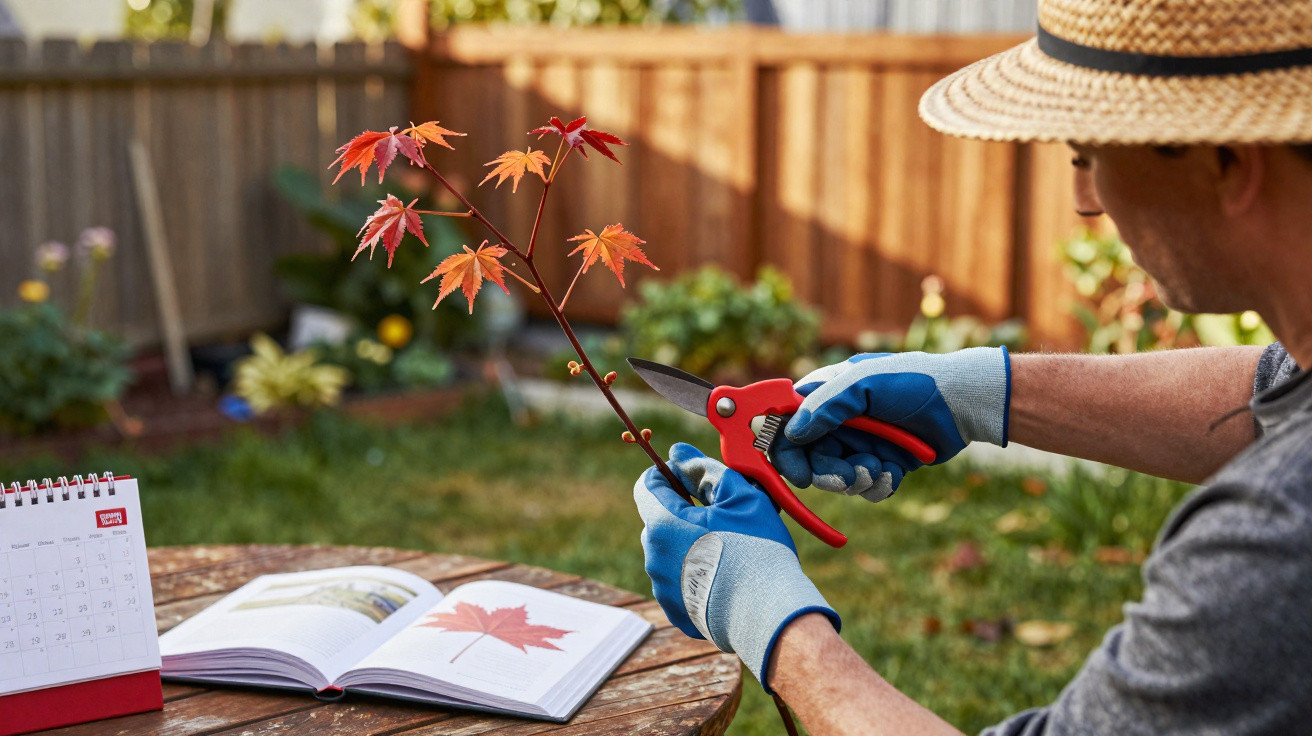
Many garden owners treat their Japanese maple as a prized possession. That is easy to understand: its delicate canopy, refined bark and, often, substantial purchase price make it a genuine status feature in the garden bed. This is precisely why it is worth paying close attention to the right timing and pruning method – one cut at the wrong moment can trigger heavy sap flow and cause lasting damage to the tree.
Why Japanese maple reacts so sensitively to pruning
The classic Japanese maple (Acer palmatum) grows slowly, develops relatively thin bark and struggles to seal larger wounds. This makes it considerably more sensitive than many native woody plants. Once sap pressure begins to rise in late winter, the tree is under pressure as water and nutrients surge from the roots into the crown.
If a more substantial cut is made at this stage, the tree often responds by “bleeding” heavily. Although the escaping fluid may look harmless, it depletes the maple's energy reserves and extends the time needed for the wound to heal. While the wound remains open, fungi and bacteria can establish themselves easily.
The later pruning is carried out in winter, the greater the risk that the Japanese maple will bleed heavily from the wound and become weakened over time.
Garden experts therefore advise pruning during the deepest dormant period. Late autumn through to midwinter is regarded as the safest window, provided there is no severe frost. During this period, the tree's metabolism has slowed significantly, sap pressure remains low, and it can cope better with minor interventions.
February: a delicate boundary – last opportunity or already too late?
In German-speaking countries, February is considered the month when many amateur gardeners feel drawn to pick up the secateurs. They want to “get everything in order” before the new season begins. With Japanese maple, however, this routine can be risky.
Tree-care specialists, including British arborist Ned Cromack, warn against delaying pruning too far into late spring. Once buds begin to swell noticeably, sap pressure rises sharply. Cutting any larger branch can then result in a real flow of plant sap, often continuing for hours.
A careful approach is therefore needed in late winter. In February, specialists recommend:
- removing only dead, brownish twigs or clearly dead shoot tips;
- postponing all more substantial work until the following winter;
- watching the buds closely: as soon as they become visibly rounded, put the secateurs away;
- working on frost-free days and avoiding pruning when temperatures are below freezing.
As soon as the buds are clearly swollen or the first leaves appear, pruning on a healthy tree should be kept to an absolute minimum. Gardening professionals consistently postpone major work until the following winter.
Essential rules for safe winter pruning of Japanese maple
Anyone wishing to care for a Japanese maple gently should approach pruning as if it were a surgical procedure. Careful preparation and a degree of restraint are crucial.
Tools and technique: less is more
Sharp, clean hand secateurs are essential. Blunt blades crush the wood and increase the size of the wound. Make each cut just above the branch collar, the slight swelling at the base of a side shoot. Never cut flush against the trunk, as this creates a large wound that heals poorly.
Using electric hedge trimmers is strictly unsuitable. They create countless small, ragged cut surfaces that the tree cannot seal cleanly. It is far better to remove individual branches selectively than to “give it a trim”.
A good rule of thumb: remove no more than a quarter of the living crown in any one season – anything more places considerable stress on the tree.
What can genuinely be removed in winter
While the tree is dormant, the main focus should be on:
- dead, grey or hollow branches;
- clearly diseased shoots showing discolouration or fungal infection;
- branches that cross or rub against one another;
- shoots growing steeply inwards that disrupt the balanced shape of the crown.
Rather than trying to “tidy up” the tree, pruning should gently support its natural outline. Japanese maples are valued for their airy, flowing silhouette. Excessive thinning removes exactly that appeal while placing the tree under stress at the same time.
What if the ideal pruning time has been missed?
Many amateur gardeners only notice in March or April that certain branches are poorly positioned. In that case, remain calm. Heavy pruning during the period of new growth causes far more harm than benefit.
In this situation, specialists recommend two approaches:
- Remove only safety hazards: Dry or break-prone branches that could fall onto paths or seating areas may be shortened carefully.
- Strengthen the tree instead of pruning: Clear weeds from the root area, apply a thin mulch layer and water regularly but moderately during dry conditions.
Larger corrections should only be planned for the following winter, once the tree is fully dormant again. Pruning heavily in spring risks not only sap loss but also frost damage to fresh wound edges during late cold spells.
Common mistakes that ruin Japanese maples
Many problems can be avoided by following a few straightforward principles. The following mistakes are especially serious:
- Cutting back large branches in late winter: the thicker the branch, the heavier the sap flow and the slower the healing process.
- Pruning in frosty weather: cold can split tissues weakened by cutting, causing cracks.
- Removing too much at once: the tree must supply an entire new crown and often produces weak emergency shoots.
- Regular “shape trimming”: the natural structure is lost, wood ages prematurely inside the crown, and fungi gain points of entry.
Avoiding these errors creates the right conditions for a long-lived, resilient maple that retains its distinctive, elegant character for many years.
How to support the tree after pruning
Gentle pruning is only the first part of its care; attention must then shift to the root zone. Loose, weed-free soil helps the tree close wounds faster and produce strong new growth.
Lawn should not extend right up to the base of the trunk. A better option is an open tree circle covered with a thin layer of bark mulch or fine woodchip. This layer retains moisture, protects the roots from temperature fluctuations and suppresses unwanted growth.
| Care task | Recommended period |
|---|---|
| Light pruning / removal of dead wood | Late autumn to midwinter, on frost-free days |
| Checking the crown for broken branches | Late winter and after storms |
| Mulching the tree circle | Late autumn or early spring |
| Checking water supply | Especially during hot spells in summer |
How to recognise a weakened maple
Not every mistake becomes visible straight away. Some damage only emerges one or two years later. By monitoring the tree closely, you can take action in good time.
Warning signs include:
- an increasing amount of dead wood within the inner crown;
- stunted leaves or leaf sizes that are noticeably smaller than usual;
- cracks in the bark, resin seepage or dark discolouration around old pruning wounds;
- bare areas on one side of the crown.
If these signs appear after heavy pruning, it is worth seeking a professional assessment from a tree-care specialist. In many cases, a careful corrective prune during the next dormant period can help stabilise the tree again.
Why less intervention is often the best protection
Japanese maples are naturally beautifully shaped trees. Many specimens manage for years without extensive pruning when their position and care are right. A sheltered, partially shaded spot, humus-rich slightly acidic soil and even moisture are often more important than any pair of secateurs.
A useful guiding principle for amateur gardeners is therefore: observe first, then decide. Those who remove only dead wood, resolve crossing branches and otherwise trust the natural growth habit will usually make the safest choice. This keeps a favourite garden tree not only visually striking but healthy in the long term.

Comments
No comments yet. Be the first to comment!
Leave a Comment