
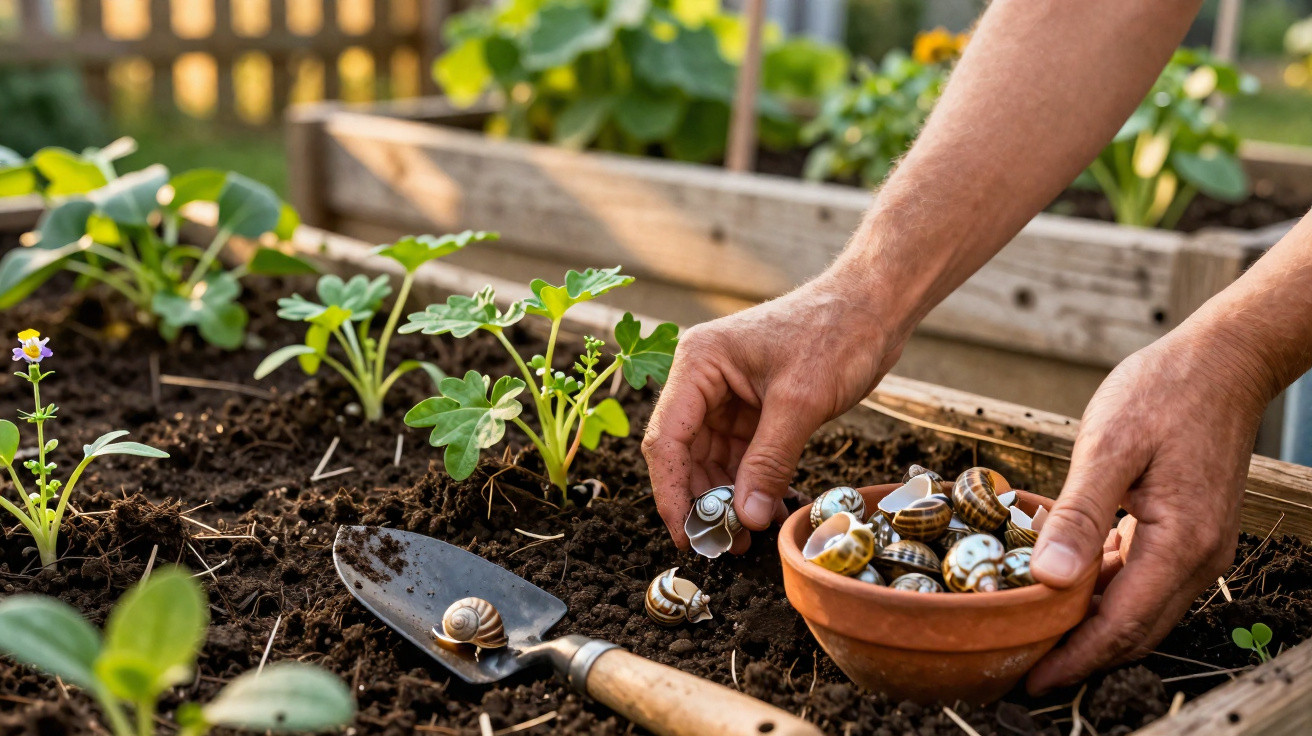
Hobby gardeners may be throwing away a surprisingly valuable resource.
In spring, amid the first sowings, tender seedlings and damp garden soil, empty snail shells are everywhere. Most are simply tossed into the garden waste bin. Yet these unremarkable calcium spirals contain nutrients that can strengthen beds over the long term – especially when tomatoes, courgettes and fruit trees are meant to thrive.
Overlooked treasure in the bed: what snail shells can really do
Most gardeners are frustrated by slugs and snails, but overlook the fact that their shells become a quiet aid to the soil after the animal has died. The white shell consists almost entirely of calcium carbonate: lime in a form that plants can use remarkably well.
“Empty snail shells provide readily available lime, loosen the soil and strengthen sensitive crops more precisely than many a shop-bought fertiliser.”
Unlike coarse garden lime or thick eggshells, snail shells break down relatively quickly in the soil. They release calcium gradually, acting not as a drastic pH booster but as a gentle, long-term nutrient source.
Calcium – the underestimated key element in the garden
When considering plant nutrition, many hobby gardeners first think of nitrogen, phosphorus and potassium. Calcium often goes unnoticed, despite being essential for healthy plant structures. It reinforces cell walls, aids root growth and helps to stabilise fruit.
When calcium is lacking, the plant’s water balance is disrupted. Roots absorb water and nutrients less effectively, fruit stays soft or rots more quickly, and leaves become more vulnerable to stress – creating ideal conditions for disease.
Why calcium from snail shells works so well
The calcium in snail shells occurs in a form that soil organisms can break down effectively. The fragments are firm enough not to turn instantly into dust, yet porous enough for microorganisms to act on them and release minerals.
- it is released over weeks and months
- it spreads directly through the root zone
- it mechanically improves soil structure
- it encourages active soil life
This makes snail shells an excellent, subtle springtime boost for hungry crops during their early growth stage.
Tomatoes, courgettes and fruit trees: the biggest calcium lovers
Certain vegetables and fruit trees respond extremely sensitively to calcium deficiency. Anyone growing these plants should not sweep empty snail shells into the garden waste bin, but put them to targeted use.
Spotting typical deficiency signs early
Calcium deficiency does not show up as one clear sequence of symptoms, but rather through several small warning signs:
- leaf tips turn brown and dry out
- new leaves remain small and become distorted
- fruit rots from the blossom end
- tomatoes develop the familiar “blossom end rot”
- growth visibly slows despite sufficient water
These issues often arise during sudden heat, heavy evaporation or irregular watering. The plant then barely transports any calcium into the fruit, even if the soil contains enough of it.
Which crops benefit most
The following are particularly grateful for additional calcium sources:
- tomatoes and peppers
- courgettes, pumpkins and cucumbers
- aubergines
- apple and pear trees
- peaches and apricots
- berry bushes expected to produce high yields
Regularly working empty snail shells into the soil around these plants stabilises fruit and noticeably reduces typical storage and rot damage.
How to use snail shells correctly in the garden
Turning an “unpleasant find” into a valuable soil helper is straightforward, although a few clear steps are needed.
Collecting and preparing: a small routine with a big effect
The best time to gather shells is early spring after wet spells or following heavy summer storms. At these times, many shells are clearly visible on paths, beneath shrubs or in vegetable beds.
- Take only empty, dry shells, with no slimy remains.
- Rinse them briefly under clean water.
- Leave them to dry on newspaper or kitchen paper.
- Store them somewhere airy and dry, such as in a bucket or jar.
If you have cooked Roman snails in autumn, the cleaned shells can also be kept after washing. It is important that no flesh remains attached, otherwise they may attract rats and other unwanted visitors.
Break them up rather than grinding them: the ideal particle size
The shells should not be processed into powder. Pieces measuring between three and five millimetres are ideal. Proceed as follows:
- place the shells in a sturdy bag or beneath a kitchen towel
- roll firmly over them several times with a rolling pin or glass, or strike them with a hammer
- press down any larger pieces once more by hand
Material that is too fine behaves almost like ordinary garden lime and can raise the pH level quickly. Coarser fragments release calcium more slowly while also improving the soil’s crumb structure.
How much snail shell can the soil tolerate?
Even natural materials can cause harm when used in excessive quantities. Calcium always influences soil pH and the interaction between other nutrients.
Recommended amount per square metre
For heavy-feeding crops in vegetable beds, a rough guideline is around 150 grams of broken snail shells per square metre per season. This is roughly one well-filled handful for a larger tomato plant.
| Area | Amount per season | Note |
|---|---|---|
| Tomato / courgette bed | approx. 150 g/m² | scatter once or twice in spring |
| Fruit tree root zone | one to two handfuls per tree | spread around the outer canopy area |
| Herb or flower bed | considerably less, only in selected spots | depends on the plant’s lime requirements |
Scatter the pieces loosely around the base of the plants and lightly work them into the top layer of soil during the next hoeing. If you are unsure, divide the amount into two or three smaller applications over the course of spring.
Where restraint is needed
Some crops prefer acidic soil. Too much lime can quickly cause problems in these areas. Typical examples include:
- potatoes
- carrots and parsnips
- blueberries and lingonberries
- rhododendrons and azaleas
It is better to avoid snail shells in these places, or use only minimal amounts well away from the roots. Anyone with very sandy or already lime-rich soil should test the pH level from time to time before applying generous quantities.
More than fertiliser: how snail shells change soil over time
Calcium is only part of the story. These persistent fragments also have a physical effect on the soil.
Looser soil, happier roots
The small lime fragments act like miniature support structures. They stop heavy soils from collapsing into a dense mass. Water can drain in more effectively, air reaches deeper into the soil, and roots can find their way more easily.
Soil organisms benefit too: earthworms prefer to burrow through loose soil, while microorganisms work more actively when there is sufficient air and suitable moisture. This improves natural fertility without chemical aids.
More stable fruit and fewer losses
In trials involving vegetable and fruit crops, several effects were observed after snail shells had been used for several years:
- more resilient fruit skins in tomatoes and peppers
- less internal rot damage in stored apples
- lower susceptibility to so-called physiological disorders that are unrelated to fungi or bacteria
Gardeners see this in practical terms: less waste, more even harvests, fruit that splits less often and remains firm for longer in storage.
Snail shells in a circular garden: turning waste into a resource
Anyone who uses their shells automatically starts viewing “waste” in the garden differently. What seemed unpleasant only moments earlier suddenly becomes a valuable raw material.
What else can go into the soil
Alongside snail shells, several other kitchen and garden leftovers can be used purposefully:
- Eggshells: also rich in lime, but slightly slower acting
- Wood ash: supplies potassium as well as calcium; apply only sparingly
- Coffee grounds: mildly acidic, adding organic matter and some nitrogen
- Banana skins: provide potassium; best chopped up and buried
The key is to tailor the mixture to your own soil and the plants you are growing. An allotment with heavy clay soil needs different additions from a raised bed filled with loose compost-rich soil.
Risks and sensible limits
Those who spread everything that appears “natural” without question can quickly disrupt the soil balance. Too much lime blocks trace elements, excess coffee grounds compact the surface, and overly thick layers of wood ash can scorch seedlings.
A practical approach is to begin with small quantities, watch how plants develop, check the soil structure in your hand and adjust if necessary. Snail shells are particularly suited to this gradual approach because they do not act abruptly.
In the end, a few broken shells can have a remarkable effect: less waste, livelier soil and more robust harvests – all without expensive specialist fertilisers from the garden centre.
Comments
No comments yet. Be the first to comment!
Leave a Comment