
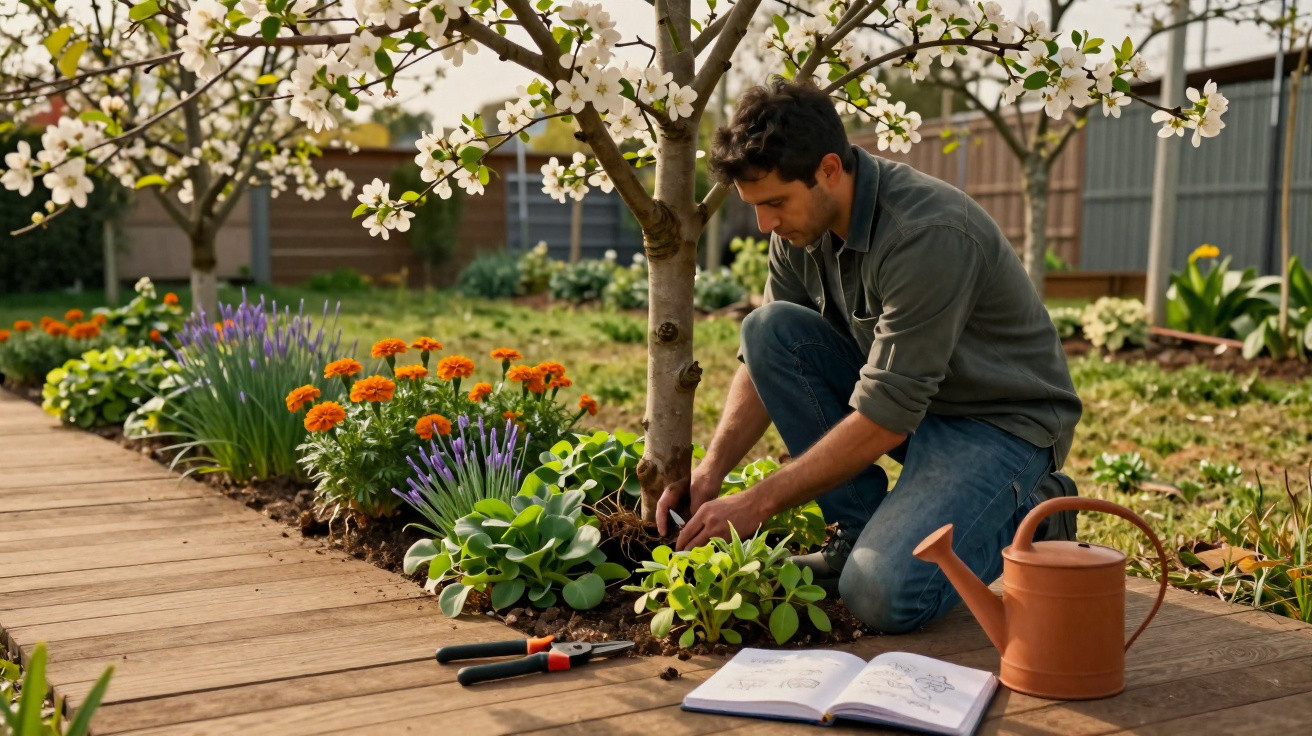
A sluggish beginning or a riot of blossom: gardeners insist the difference lies in what grows under, alongside and just beyond the trees. The unassuming plants you put in place this season shape April’s display.
At dawn, I crossed a small orchard, my boots pressing into the soft thatch of clover woven between the trees. Apple buds remained closed, yet bumblebees were already probing the first crocuses, like shoppers looking through a shop window before opening time. A robin pulled a worm from a rye cover crop, while the soil gave off the warm scent of life returning.
The grower gestured towards the understory as though introducing old friends. “This is the crew,” he said, tapping comfrey leaves, a ring of chives and a strip of yarrow. “I plant these, I sleep better.” It was not a boast; it was relief. The orchard buzzed along without fuss or new technology. Its secret was neither in a spray tank nor on a spreadsheet, but in roots, flowers and microscopic life.
That secret had been sown months earlier.
The orchard guild that works while you sleep
In every healthy spring orchard, the same arrangement appears: fruit trees surrounded by low-growing living companions. Picture clover flowing between the rows, garlic and chives clustered at the base, comfrey standing guard with broad leaves, borage and phacelia drawing in early bees, and yarrow prepared to nourish ladybirds. There is nothing elaborate about it. This team works through winter before surging into action as soon as the days begin to lengthen.
Gardeners use the term “guild” because every plant has its role. Nitrogen fixers provide nourishment. Dynamic accumulators draw up minerals. Pollinator-friendly flowers span the lean weeks before blossom. Combined, they reduce pressure on the trees, because stressed trees are less generous with blossom and fruit set.
Consider Lucy’s 0.8-hectare orchard on an exposed slope. In autumn, she sowed crimson clover and winter rye, planted narcissus bulbs around each trunk, and added comfrey crowns and thyme mats. By the following spring, bloom density had increased by a third, while her records showed fewer aphid hotspots than in the preceding year. It was not magic, simply a connected system that kept the orchard together when the weather switched from mild to bitter within a day.
Over three sunny April mornings, she counted bee visits. The guild rows surpassed the bare rows by a long chalk, with fruit set following the same pattern. When a neighbour asked what she had sprayed, Lucy simply shrugged and indicated the soil.
The reason it works is that a guild expands the orchard’s metabolism. As temperatures gradually rise, clover fixes nitrogen. Alliums planted at the base deter nibblers and fungal trouble. Borage and phacelia bloom early and for a long period, encouraging beneficial insects to remain rather than move elsewhere. Comfrey sends its roots deep down for potassium and calcium, bringing them nearer the surface when you chop and drop its leaves. The orchard wakes fastest where the ground never goes bare. This living cover moderates moisture, supports soil life and softens spring’s ups and downs.
It also distributes the risk. Should frost catch one flush of flowers, the pollinator feast remains available. Bees and hoverflies continue their rounds. Once the main display begins, they are already in place, like a team that knew the venue doors were about to open.
Five essential plantings to secure a lush spring orchard
Begin with an autumn-to-early-spring pairing: crimson clover under-sown with winter rye. Scatter the seed in late autumn or during a thaw. Rye protects the soil before slowing as daylight increases, while clover gathers pace and supplies nutrients. Within each tree’s drip line, make a ring of chives or garlic. About 30 cm outside that ring, place comfrey crowns at three or four evenly spaced points, like the positions on a clock face. Finish the row edge with thyme or creeping chamomile for fragrant living mulch.
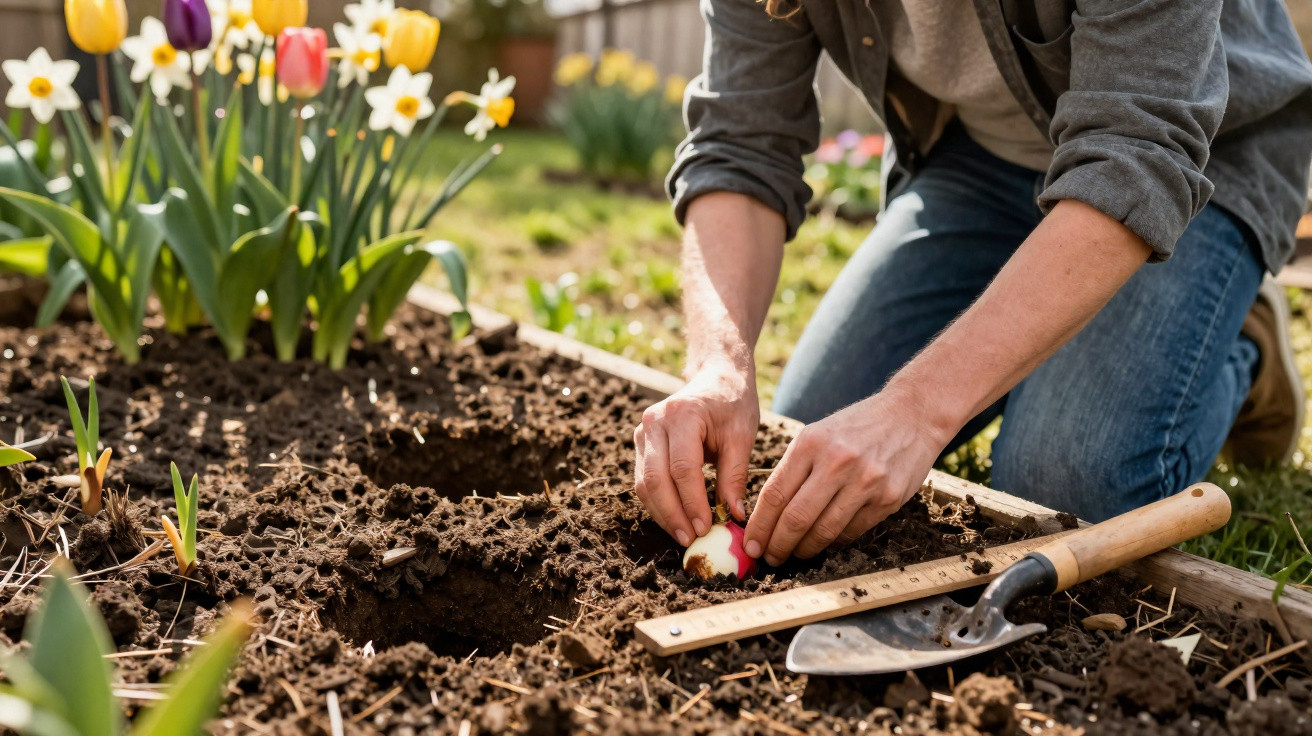
Then build in the pollinator plants. Phacelia emerges in cool ground and flowers quickly. Borage comes later and continues throughout the season, so the two extend the flowering period together. Bulbs follow: narcissus and ornamental alliums around trunks offer nectar during the early hungry gap and make voles hesitate. On an exposed site, unite the planting with an informal hedgerow of hawthorn, willow and elder, providing a windbreak, pollinator support and wildlife corridors at once.
There are a few frequent mistakes. One is crowding the trunk so heavily that young trees are deprived of resources; leave the first 15 cm around the bark open. Another is relying solely on spring-flowering plants. Keep beneficial insects around in May and June by adding yarrow, fennel or lavender. Then there is the avalanche of mulch. Wood chips are useful, but not when applied as a smothering layer. Add light, renewable layers instead, allowing living roots to do much of the work. Let’s be honest: nobody really does that every day.
Timing is less important than maintaining a steady rhythm. Sow cover crops once the soil can be walked on without leaving deep footprints. Spread bulb planting over two weekends rather than one ambitious afternoon. Water transplants in once, then leave them to settle. Plant these now, and spring will feel inevitable. If something is missed, the system remains forgiving when it has been designed with overlap in mind.
One grower told me, “I stopped thinking of it as landscaping and started thinking of it as logistics.” By that, he meant blossom logistics, root logistics and insect logistics. An orchard is not a stage set but a small city. Create transport routes for bees, affordable homes for predators and a pantry for the trees, and it largely manages itself.
“When the understory is humming, I sleep instead of refreshing the forecast. The plants are my night shift.” - Marta D., backyard orchardist
- Crimson clover + winter rye: sow in autumn for spring nourishment and cover.
- Allium ring: use chives, garlic or Welsh onion around trunks.
- Comfrey stations: place three to four around each tree for chop-and-drop mulch.
- Pollinator strip: sow phacelia now, add borage next and use yarrow for lasting cover.
- Bulb belt: plant narcissus and ornamental alliums to discourage nibblers.
- Hedgerow spine: use hawthorn, willow and elder for wind protection, nectar and habitat.
Beyond blossom: resilience beneath your feet
We have all experienced a warm March week that fools the orchard, only for a harsh frost to arrive and spoil the display. Resilience is rooted in what was planted months before. A living understory holds warmth close to the soil. Hedgerows take the edge off the wind. Successive flowers sustain pollinators through unsettled spells, so fruit set is not dependent on one cloudless day.
There is enjoyment in the process as well. As you kneel to cut comfrey leaves, thyme brushes against your sleeve and the low debate of bees fills the air. It is not mechanical work; it resembles tuning an instrument. When the soil stays active in winter, spring becomes less unpredictable. These plantings do more than direct energy into blossom: they also calm your nerves. They turn a story about the weather into a garden story, which is always gentler.
For a young orchard, begin by creating one tree guild properly. In a mature orchard, start by adapting the edges and aisles. Combine annual sowings with perennials, ensuring every year includes some easy successes alongside longer-term investments. Certain seasons will become exuberant, and that is perfectly fine. A flourishing spring is not one isolated result, but a chain reaction that can begin today.
| Key point | Detail | Benefit for the reader |
|---|---|---|
| Layered guild | Clover + alliums + comfrey + pollinator strip | A straightforward formula that works across climates |
| Bulb belt | Narcissus and ornamental alliums at every trunk | Early nectar and rodent deterrence |
| Hedgerow spine | Hawthorn, willow and elder along the windward edge | Wind protection, habitat and a longer flowering window |
FAQ
- What should I plant first if I’m starting late? Go with phacelia and borage, then a quick ring of chives. They establish fast and bridge you to blossom time.
- Will comfrey take over my orchard? Choose sterile Bocking 14, plant in fixed stations, and cut it twice a season. Treated this way, it behaves and pays rent.
- Do I still need mulch if I use cover crops? Yes, but think thin and living. Use light chip top-ups in paths and let clover and thyme handle the tree lanes.
- Which bulbs are safest around fruit trees? Narcissus and ornamental alliums. They don’t compete hard, they feed pollinators early, and rodents dislike them.
- Can I do this in a tiny backyard? Absolutely. One dwarf apple with a one-metre ring of chives, thyme, comfrey, and a phacelia patch will change your spring.





Comments
No comments yet. Be the first to comment!
Leave a Comment