
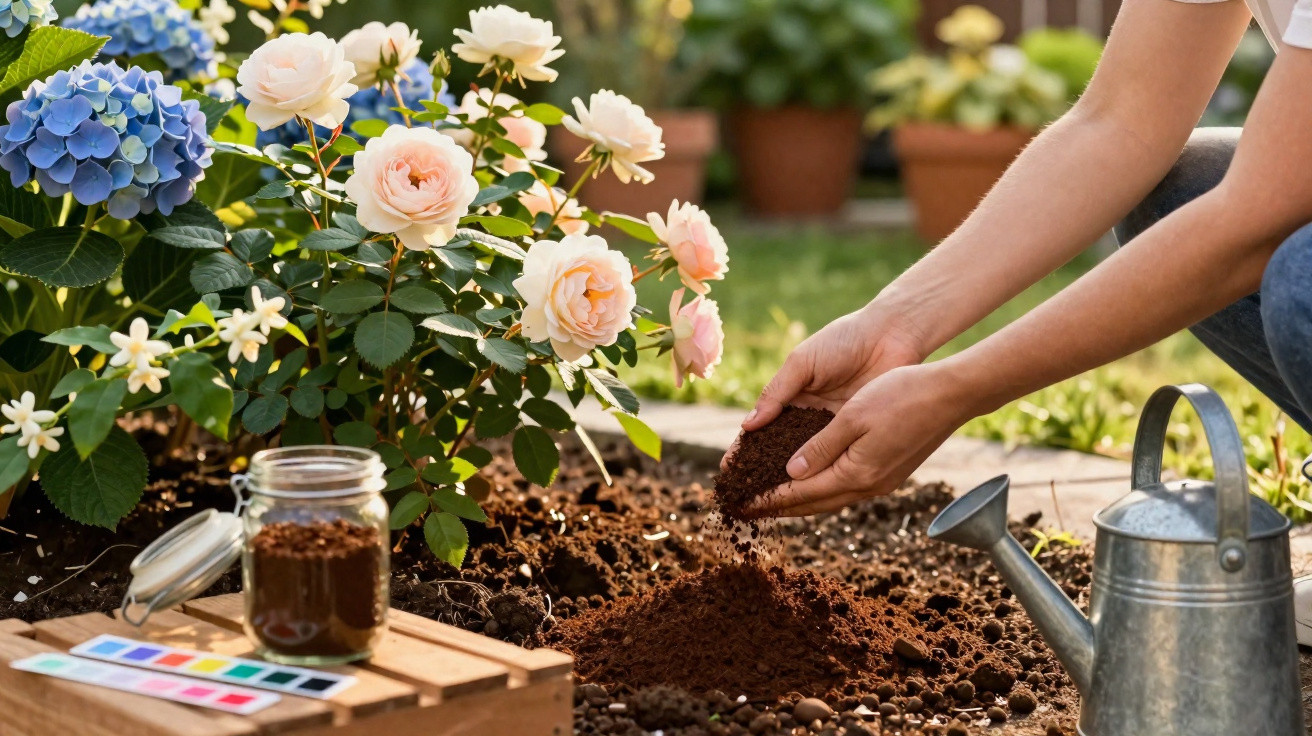
Roses, hydrangeas and jasmine all respond particularly well to rich, living and carefully maintained soil. One kitchen leftover that can support this is used coffee grounds, provided they are applied sparingly. They are not a miracle fertiliser, but they add organic matter and can gradually improve soil structure, encouraging healthier roots and more vigorous plants.
Why can coffee grounds benefit roses, hydrangeas and jasmine?
Coffee grounds contain organic material and small amounts of nutrients which, as they break down, nourish life within the soil. This matters because roses, hydrangeas and jasmine need robust roots to support their leaves, new growth and flowers.
They are also linked with pH management, although care is needed here. Used coffee grounds do not change soil quickly or dramatically. Their impact is gentler, especially when they form part of a composting routine or a gradual programme of soil improvement.
How does pH affect roses, hydrangeas and jasmine?
Soil pH affects how plants take up nutrients. Hydrangeas are the best-known example, as some varieties can change flower colour according to the soil's acidity. In more acidic soil, certain hydrangeas are likely to produce bluish shades; in more alkaline conditions, they may become pink.
Roses and jasmine also prefer balanced soil, usually slightly acidic to neutral, with good drainage and plenty of organic matter. Coffee grounds can therefore be useful, but they should not be treated as the sole way to adjust pH. For meaningful soil changes, it is best to test the soil first.
How should coffee grounds be prepared and applied?
The grounds should be cold, free from sugar and milk, and preferably dry. Adding a large amount of damp grounds directly on to the soil can create a compacted layer that restricts water and air from reaching the roots.
- Allow the coffee grounds to dry before using them;
- apply only a very thin layer around the plant;
- lightly work them into the soil surface;
- do not let the grounds touch the stem directly;
- water after application to settle the material.
For pots, use no more than one teaspoon per application. In flowerbeds, scatter a small amount around the plant, always mixing it into the soil or organic compost.
How often can coffee grounds be used without harming roots?
A small amount followed by observation is the best approach. For potted plants, once a month is enough. In larger flowerbeds, coffee grounds can be applied every 30 or 45 days, always in moderate quantities.
Too much can make the soil heavy, overly damp and less able to breathe. This undermines exactly what plants need most: healthy roots. If the soil becomes compacted, develops an unusual smell or shows fungi on the surface, it is a sign that too much has been used.
How can you tell whether the plants are responding well?
Positive results appear gradually. Leaves become firmer, new shoots emerge more strongly, and the plant retains a brighter green colour. For roses and jasmine, this can support more consistent flowering when accompanied by sunlight, proper pruning and balanced watering. For hydrangeas, well-maintained soil helps the plant support larger, longer-lasting blooms.
The key is moderation. Coffee grounds can be a useful way to reuse kitchen waste in the garden, but they work best as a supplement rather than a one-size-fits-all remedy. Used in small amounts alongside good drainage, suitable light and rich soil, they can help roses, hydrangeas and jasmine grow stronger and become better prepared to flower.
Comments
No comments yet. Be the first to comment!
Leave a Comment