
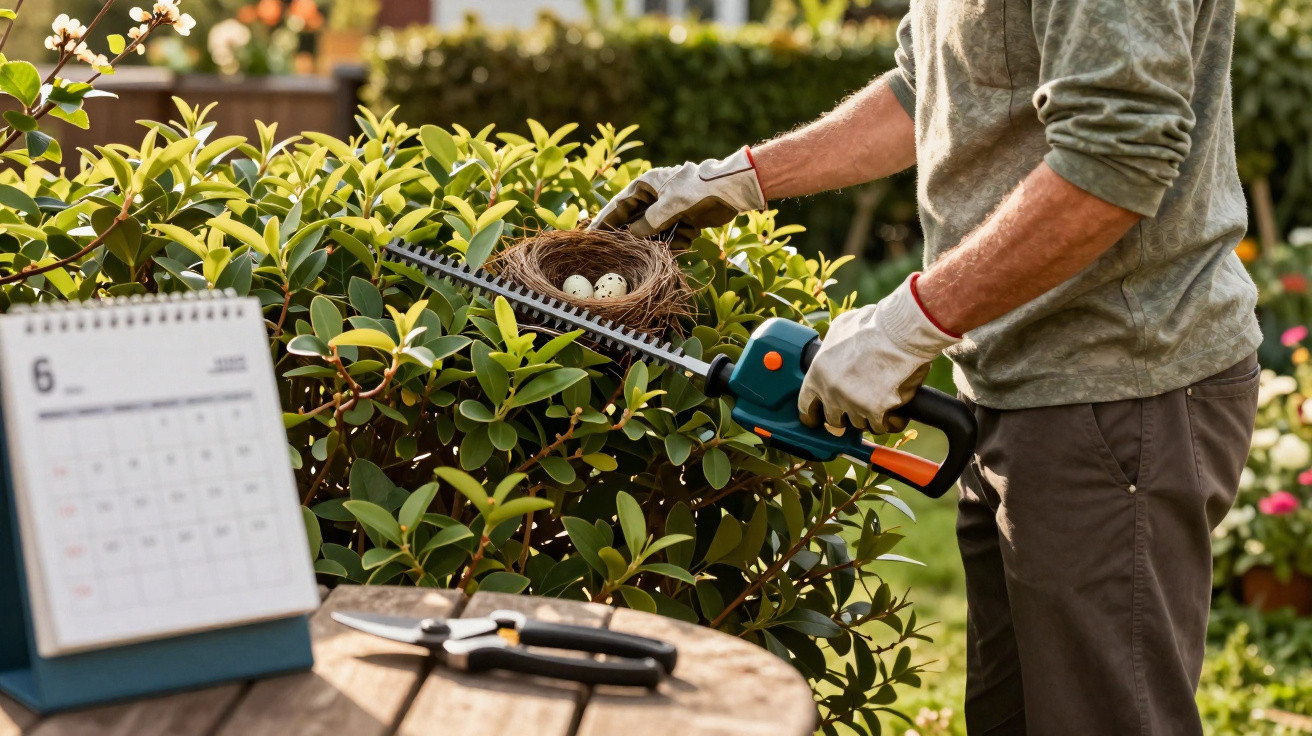
Many keen gardeners plan a major garden tidy-up in spring. What is often overlooked is that densely grown hedges contain more than old branches at this time of year: they may also shelter numerous bird pairs on the verge of nesting. Some countries therefore impose what is effectively a ban on cutting from March onwards – and the reasoning behind it applies equally to German gardens.
Why hedge cutting should pause now
For most native bird species, the main breeding season runs from March to July. During precisely these months, birds use hedges, shrubs and thick undergrowth as nurseries. Anyone reaching for a brushcutter or electric hedge trimmer can unknowingly destroy nests, eggs or chicks that have already hatched.
“Hedges are more than garden boundaries: they are vital refuges for birds, insects and small mammals.”
The position is clearly regulated in parts of Europe. Farmers face a mandatory closed season, usually from 1 April to 31 July, during which hedges must not be cut back or cleared. This stems from the EU’s Common Agricultural Policy, which is intended to safeguard biodiversity on agricultural land. Breaches can lead to substantial fines and even prison sentences.
Although rules for private gardens are often less strict, conservation organisations strongly advise following the same timetable. After all, destroying a nest in a front garden is just as fatal for the animals involved as destroying one in a field.
Which rules apply to whom
Farmers face strict oversight
Those using land for agriculture are particularly affected by hedge-cutting rules. The basis is EU requirements that apply to everyone receiving agricultural payments. In many countries, this means:
- no hedge cutting from 1 April to 31 July;
- no clearing during this period;
- exceptions only in clearly defined hazardous situations, such as when visibility on roads is obstructed.
The principle is straightforward: field hedges, banks and strips of shrubs provide sanctuary in agricultural landscapes that are otherwise often sparse. They supply birds with breeding sites and insects with food, while also creating corridors through which animals can move.
Private gardens: fewer laws, greater responsibility
In private gardens, much depends on local requirements. These can include:
- municipal or regional by-laws restricting hedge cutting during the breeding season;
- nature reserves where particularly stringent rules apply;
- guidance from bird and nature conservation groups, which strongly recommends stopping cutting from mid-March.
Anyone wanting to be certain should make a quick enquiry with their town, local authority or lower nature conservation authority before undertaking spring hedge cutting. It is also worth checking the garden itself. If birds are repeatedly flying into and out of a hedge, or quiet chirping can be heard from dense foliage, the message is clear: leave the shears in the shed until late summer.
The best times for hedge cutting
Hedges do, of course, need maintenance – but it should happen at the right time. Specialists recommend two key periods when cutting is useful and causes little disturbance to birds.
Late winter: best for shape and plant health
The traditional time for major cutting is late winter, roughly from late February until breeding activity begins. The benefits are:
- Plants are still dormant and generally tolerate pruning well.
- There are few, if any, occupied nests.
- The hedge produces fresh, dense growth in spring.
One important point: do not cut too early during severe frost. Hard sub-zero temperatures can damage fresh cut surfaces and weaken the plant.
Late summer: gentle maintenance after the breeding season
Late summer offers a second suitable window, once most young birds have fledged and moved away from the hedges. The typical period is from late August to September.
Lighter shaping and maintenance cuts are often enough at this stage. Anyone planning drastic pruning should check again that no late brood is still hidden in the hedge. Late nesting is entirely possible, especially among blackbirds and robins.
| Period | Cutting recommendation |
|---|---|
| December – February | Major pruning possible; choose frost-free days |
| March – July | Avoid cutting wherever possible; respect nests |
| Late August – September | Light maintenance pruning and shape corrections |
Hedges as nurseries: what happens among the branches
The breeding season is a stressful time for birds
From spring to high summer, hedges are exceptionally busy. Blackbirds, robins, finches and many other species:
- look for sheltered, dense spots for their nests;
- spend days building a sturdy structure;
- incubate their eggs for weeks;
- then feed their young almost constantly.
Mechanical cutting in the middle of this period can destroy several nests at once. Even if a brood narrowly survives, the parents often lose confidence in the location and abandon the attempt. Every successful brood matters for species already affected by habitat loss.
A few simple measures can make a major difference
Helping garden birds does not require anyone to become a biologist. Small changes are enough:
- Move hedge cutting to winter and late summer.
- Before every cut, carry out at least a basic check for concealed nests.
- Deliberately allow some areas to grow a little wilder.
- Do not cut entire hedges right back to the base where dense foliage is already present.
“Simply changing the cutting date can determine the success or failure of an entire breeding season.”
Plant species that genuinely support wildlife
Shrubs with a dual benefit: shelter and food
Not every hedge provides the same value for wildlife. Native species offering both protection and food are especially valuable. Suitable examples include:
- Lesser celandine and hawthorn: dense branching, small fruits and protection from predators;
- Black elder: valued by birds for its berries, while its flowers support insects;
- Viburnum species (guelder rose): provide spring flowers and autumn berries;
- Rosehip shrubs (wild roses): nesting places within dense branches and fruits for winter food.
Thorny plants such as firethorn or holly create secure retreats because cats and martens struggle to reach them. Structuring a garden with such plants supports several animal groups at once: birds, insects, hedgehogs and many others.
Why “tidy” is not always wildlife-friendly
Many garden owners want crisp edges, perfectly clipped hedges and as little leaf litter as possible. To wildlife, however, this style can resemble a concrete desert made of greenery. Tightly trimmed hedges with little structure provide barely any cover, no food and limited variation in microclimates.
A good compromise is to keep the roadside-facing area neat while deliberately leaving a looser zone at the back of the garden. Shrubs can grow taller there, some dead branches may remain standing, and leaves can lie on the ground as a protective layer. These are exactly the corners where many species settle that now find little room elsewhere in built-up areas.
Practical tips for the next hedge cut
To ensure the next use of the hedge trimmer is wildlife-friendly, a few everyday rules can help:
- Plan in winter which hedges will be reduced and by how much.
- Inspect the hedge from every side before cutting, ideally in calm weather.
- If nests are visible, leave the affected section entirely untouched and shape only adjoining areas.
- Do not remove leaves and cuttings directly beneath the hedge; instead, leave them in a pile in one corner.
- Replace noisy equipment with hand shears wherever practical – this creates less stress for animals and neighbours.
If there is any uncertainty about whether a nest is active, watch it from a distance. If adult birds arrive to feed within 20 to 30 minutes, the hedge should be left alone.
Do not underestimate the legal and ecological consequences
Anyone heavily cutting back hedges in protected areas, or during the breeding season in breach of clear by-laws, risks fines. The harm to local populations is even more serious. Gardens have become important replacement habitats, particularly in densely populated regions.
A mindful glance at the calendar and a brief inspection before cutting are enough to protect wildlife effectively. The plants benefit too: hedges pruned at the right time and with restraint stay healthier, produce denser growth and look far better maintained in the long term than green walls cut back drastically every year.





Comments
No comments yet. Be the first to comment!
Leave a Comment