
A simple rule of thumb can change things surprisingly quickly.
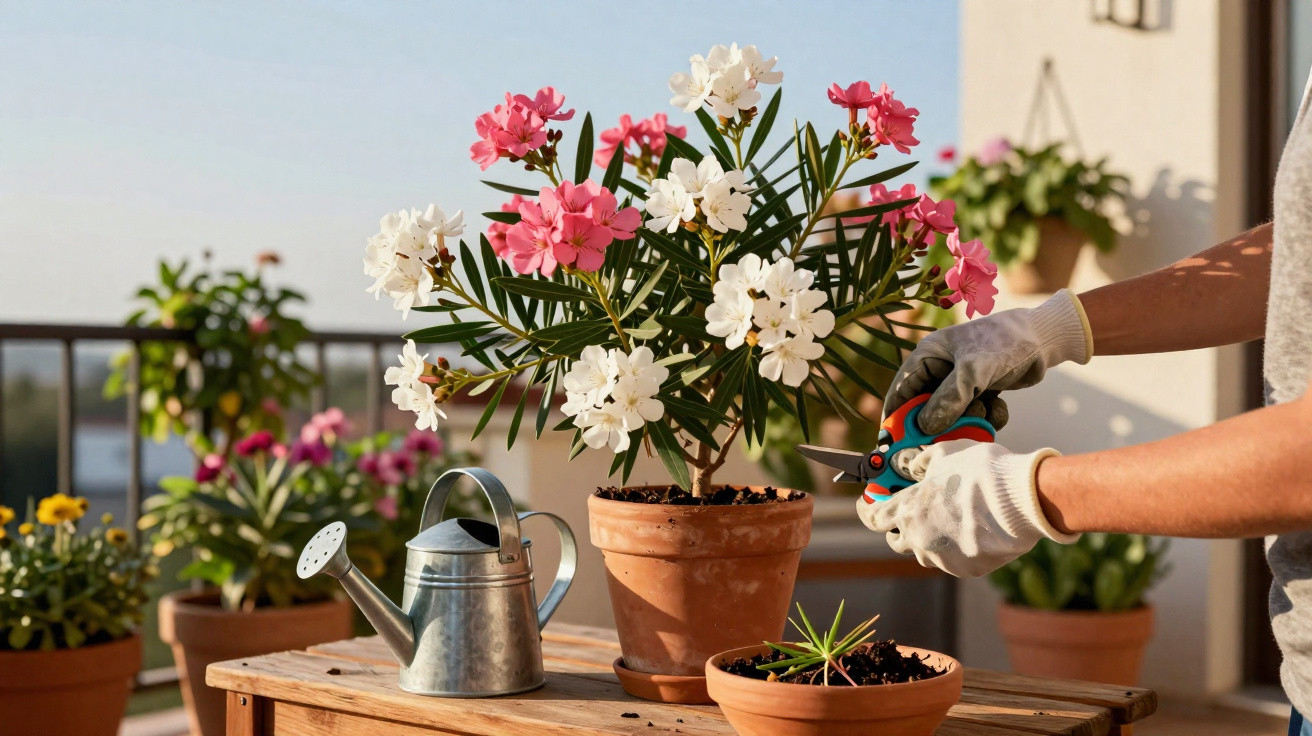
Anyone who spends a holiday in southern Europe can hardly miss oleander: lush blooms above dense, evergreen foliage, often for the whole summer. Back at home, your own shrub can look rather disappointing by comparison - only a few buds, washed-out colour, weak growth. The good news is that it’s usually not the plant, but the care. And sticking to one consistent principle around position, watering and feeding can make all the difference.
Oleander: a sun-lover with an impressive history
Oleander (botanical name Nerium oleander) comes from warm areas around the Mediterranean and parts of South Asia. In its native habitat it grows along dry riverbeds, where the soil is poor, the air is hot and the light is relentless.
That origin tells you exactly what it needs: plenty of sun, a clear-cut, free-draining soil structure, and no constant wetness around the roots. Because the shrub copes well with these tough conditions, it has been valued since antiquity as a hardy ornamental for gardens, courtyards and promenades.
"Oleander loves sun, warmth and a soil that lets water drain away quickly - respect that, and you’ll be rewarded with flowers."
In the UK, oleander tends to do best in a pot on a balcony or patio. In the ground it can also thrive in milder areas, but it tolerates frost and waterlogging far less than it tolerates heat.
The golden rule for a truly abundant display of flowers
If you only want to remember one line, make it this: lots of light, free-draining soil, plenty of water in summer - plus targeted feeding. Everything else follows on from that.
- Position: as sunny as possible, with at least six hours of direct sunlight per day
- Soil/potting mix: free-draining, loosened with coarse sand or expanded clay
- Water in summer: water generously, but don’t leave water sitting in the saucer
- Fertiliser: regular nutrient top-ups, especially during the growing season
A practical tip often shared by gardeners: a liquid feed intended for geraniums also works remarkably well for oleander. Mixed in at the standard dose every two weeks, it helps the plant set fresh buds and supports long flowering periods.
How to avoid common watering mistakes
In warm weather, large container plants can get through huge amounts of water. An oleander standing in full sun all day may genuinely need watering once a day on very hot days. At the height of summer, many plants do even better with two watering rounds per day - provided excess water can run off quickly.
Winter is a different story. At that time, the shrub reacts badly to too much moisture: roots cool down and fungal diseases spread more easily. So in its winter quarters the rule is: water sparingly, but never let it dry out completely.
Pruning properly: how to keep oleander compact and flowering
Without pruning, oleander often becomes bare in the middle and ends up flowering mainly at the tips. A deliberate prune towards the end of winter helps the shrub stay compact, strong and productive.
- In late winter or very early spring, remove all dead, thin, or inward-growing shoots.
- Shorten long, leggy branches a little to encourage fresh side shoots.
- Throughout summer, pinch off spent flowers regularly so new buds keep coming.
If you cut back too hard, you risk fewer flowers the following season, because oleander forms some of its buds in the previous year. For that reason, a gentle, regular late-winter prune is often more effective than severe cuts every few years.
Keep an eye on wind, frost and pests
Strong winds can snap shoots and damage buds. With potted plants in particular, a sheltered spot against a wall or by a balcony railing is worth it. In areas with colder winters, a moveable set-up is ideal: outdoors in summer, then frost-free and bright indoors or in a cool greenhouse over winter.
Common pests include aphids and, occasionally, scale insects. A quick check of young shoots is often enough to catch problems early: sticky leaves, curled tips or tiny dots are typical clues. Acting promptly - for example with a strong jet of water, soapy solution or suitable treatments - prevents the plant wasting energy it needs for flowering.
"Healthy, well-ventilated plants with the right water supply are less likely to suffer heavy pest attacks - stress makes oleander vulnerable."
Propagating oleander yourself: how the cutting method works
If you’d like to produce several plants from a particularly beautiful specimen, taking cuttings is a very reliable approach. The warm season is the best time for it.
The process is straightforward:
- In summer, choose shoots about 15 centimetres long that are not carrying flowers yet.
- Strip off the lower leaves, leaving only a few at the top.
- Let the cut end dry briefly, then dip it in rooting powder (optional, but it improves success rates).
- Insert the cutting into a pot filled with a loose mix of sand and general compost.
- Water lightly and place the pot somewhere warm and bright, but not in full sun.
What matters now is consistent but restrained watering: the compost should never dry out completely, but it mustn’t be soaking wet either. Higher humidity - for example, a clear cover with ventilation holes - helps roots form.
After about two months, there are usually enough roots. A gentle tug on the cutting will tell you whether it’s anchored in the compost. Once it is, the young plant can be moved into a larger pot and gradually introduced to more sun.
Common problems - and how to rescue the flowering
If your oleander refuses to bloom, it’s worth checking the conditions methodically. In most cases, the cause is one of the following:
| Problem | Possible cause | Solution |
|---|---|---|
| Few or no flowers | Too little sun, nutrient deficiency, old unsuitable compost | Move to a sunnier spot, feed regularly, repot into fresh, free-draining mix |
| Yellow leaves | Waterlogging, poor drainage, water that is too high in limescale | Check drainage holes, add a drainage layer, adjust watering routine |
| Brown tips | Drought stress, intense heat without enough watering | Water more often and more thoroughly in summer, monitor water needs |
| Black coating on leaves | Honeydew from aphids on which sooty mould settles | Control pests, rinse leaves with water |
Why oleander is so toxic - and what that means day to day
Oleander contains toxic compounds in every part of the plant. Even small amounts can be dangerous for children, pets and grazing animals. That doesn’t mean you must avoid it - but it does call for a little care.
- Wear gloves when pruning and avoid getting sap in your eyes or mouth.
- Never dispose of prunings where rabbits, horses or other animals could get to them.
- Tell children that leaves and flowers are not for tasting.
For adults, sensible, respectful handling is all that’s needed in everyday gardening. Many popular ornamental plants are poisonous without causing real-world accidents - oleander belongs in that category.
Practical pairings for the garden and balcony
Visually, oleander pairs beautifully with other sun-loving plants that cope well with heat. In pots, it works well alongside lavender, citrus plants, or Mediterranean herbs such as rosemary and thyme. These combinations don’t just look good - they also simplify care, because the plants share similar needs for light and water.
If your window boxes are planted with geraniums, you can also use the same liquid feed for oleander without any issues. That makes a simple routine almost automatic: in summer, water once a week with fertiliser added, plus a quick check of leaves and shoots - and that’s often enough for the shrub to improve noticeably year after year.
"If you give oleander what it knows from its Mediterranean home - sun, air and a free-draining soil - you’ll be rewarded with a wall of flowers that instantly feels like a holiday."
Comments
No comments yet. Be the first to comment!
Leave a Comment