
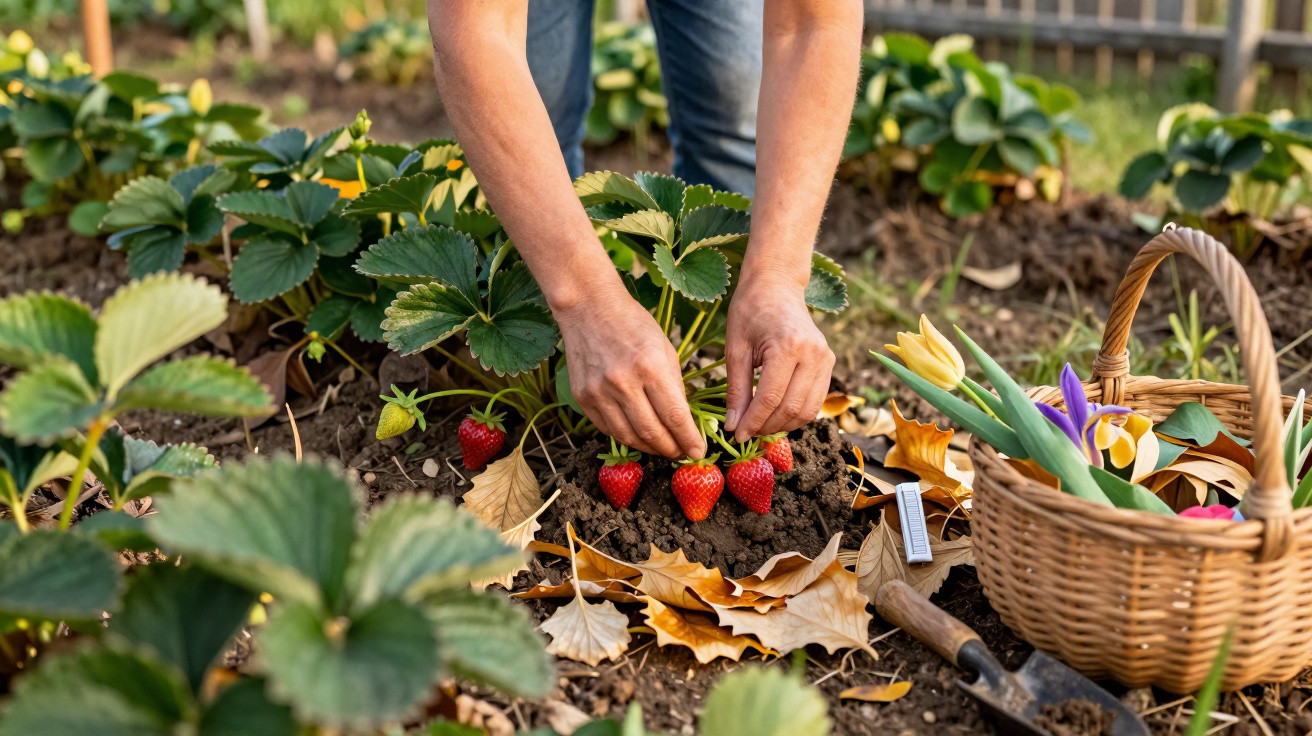
Many amateur gardeners give their flowerbeds a ruthless clear-out in spring: faded bulb plants are removed, then thrown in the bin or added to the compost heap. Yet few people realise that these dried leaves are free, high-performance material that can warm and protect strawberry plants, helping their fruit ripen several days sooner - without fertiliser tricks or polytunnels.
The overlooked treasure in the spring flowerbed clear-out
Why dried tulip and iris leaves are too valuable to throw away
As the spring sunshine returns, many people reach for the secateurs and rake straight away. Once tulips, irises, daffodils and other bulb plants have finished flowering, their brown, limp foliage can look rather bleak. It is therefore cut back and discarded. Although the bed may look tidier afterwards, this is a loss from a gardening perspective.
The long, papery leaves of these plants are far from useless. They are:
- completely dried out, making them initially resistant to rotting;
- fibrous and breathable;
- light, yet resilient in rain and wind;
- available in plentiful quantities in your own garden - at no cost.
This particular combination makes them excellent mulch for sensitive crops such as strawberries. What initially appears to be dead plant waste is actually a practical raw material for smarter garden management.
“Anyone who ruthlessly ‘tidies up’ their bulb plants often throws away precisely what their strawberries could urgently use a few weeks later.”
Why this plant material is better than grass clippings
Many gardeners mulch with grass clippings. This can work, but it has drawbacks: fresh cut grass clumps together, heats up, may rot and can seal the soil surface so tightly that air cannot pass through. For strawberries, this can quickly lead to rot and increased disease pressure.
Dried leaves from tulips, irises and daffodils behave differently:
- They create an airy mesh rather than a compact layer.
- They allow water to pass through rapidly without becoming saturated.
- They dry quickly after rain.
- They retain their shape and do not stick together.
These characteristics ensure that the soil is protected without being smothered. This “natural fleece” is close to ideal for strawberries.
A strawberry boost: how fruit ripens faster
How a thin blanket of leaves warms the soil
Strawberries thrive in mild conditions but are sensitive to cold spring nights. The dried-leaf method relies on a simple physical effect: during the day, the light-brown plant remains capture solar warmth, while at night they help it stay in the soil for longer.
The layer works like a breathable blanket:
- During the day, the fibres retain warmth in the upper soil layer.
- At night, the roots do not cool down as sharply.
- Temperatures remain more even, reducing stress caused by major fluctuations.
As a result, the strawberry plant effectively “believes” the season is already slightly more advanced. It produces stronger growth, forms flowers earlier and delivers ripe fruit sooner.
Up to five days earlier for the first harvest
Trials in commercial cultivation and practical observations indicate that a light mulch of dry bulb leaves around strawberry plants can bring forward the ripening of the first fruit by an average of up to five days.
That may not sound like much, but it makes a noticeable difference in everyday gardening. Anyone eagerly awaiting the first red berries each year will appreciate almost a week’s head start - without polytunnels, heating cables or specialist fertilisers.
“A handful of seemingly worthless leaves can bring the first strawberries to your plate almost a week earlier.”
At the same time, plants cope more steadily with the tricky spring transition, when sunny days and cold nights alternate constantly. Less stress means tougher plants and, in most cases, more fruit per plant.
A natural shield against rot and fungal disease
Less contact between fruit and damp soil
Strawberries often rot from underneath. A familiar sight is fruit with an attractive colour on top but a brown, soft or grey-mouldy underside. Direct contact with wet soil is almost always the cause.
Rain or watering splashes soil upwards, fungal spores land on fruit resting on the ground, and the well-known grey mould can then spread quickly and spoil the crop.
An airy covering of dried leaves addresses several problems at once:
- The fruit no longer sits directly on wet soil but rests on a dry cushion.
- Much of the splash water is caught within the mulch layer.
- The vulnerable underside of the fruit stays cleaner and dries more quickly.
The high-risk contact zone between fruit and moist soil is reduced considerably. Many gardeners consequently notice far fewer spoiled strawberries and can harvest more fruit rather than having to discard it.
What research institutions value about this method
Agricultural research institutes have spent years examining how mulching systems can reduce the use of plant-protection products. Organic ground covers perform particularly well with low-growing crops such as strawberries.
The benefit lies in the microclimate immediately above the soil: water moves quickly through the mulch and drains away, while the surface dries after the next breeze. Fungi that require persistent moisture therefore encounter much less favourable conditions.
“A thin, dry mulch often reduces fungal problems more effectively than many a spraying schedule - while also protecting soil life and beneficial insects.”
Protecting strawberries in this way can eliminate the need for many chemical interventions while still producing an attractive, healthy harvest.
How to prepare the leaf material properly
Which plant parts are suitable - and which are not
When cutting back the spring bed, it is worth sorting the material carefully. Suitable options include:
- long, flat and fully dried iris leaves;
- similar foliage from tulips, daffodils and other flowering bulbs;
- soft, straw-like plant remains with no visible signs of disease.
Less suitable, or potentially risky, are:
- leaves with dark spots, white coating or mould;
- very hard, woody stem remains;
- partly dry but still succulent plant material that will rot quickly.
Diseased or mouldy material should not go near strawberries. Put it in household waste or in a separate compost system that reaches sufficiently high temperatures. Heavily woody stems can be shredded and used elsewhere in the garden over the longer term.
A practical routine for the spring clear-out
A little organisation makes sorting less of a chore:
- Set out two containers: one for ordinary compost and one for mulch material.
- Cut back faded bulb plants just above ground level.
- Place soft, clean, fully dried leaves straight into the mulch container.
- Put diseased, spotted or very hard pieces into the compost container.
Before long, you will have a useful supply of consistent material that is easy to handle and does not constantly fall apart or blow away.
How to apply mulch correctly in the strawberry bed
The ideal layer depth and distance from the plant
When mulching with leaves, less is more. A light layer often works better than a thick covering. As a guide, distribute a loose layer measuring one to two centimetres deep.
Proceed as follows:
- Loosen the soil surface lightly using your hand or a small hoe.
- Spread a thin, loose layer of dry leaves around each strawberry plant.
- Leave a small circle of bare soil directly around the plant crown - roughly the size of a coin.
- Lightly interweave the leaves so that the first gust of wind does not carry them away.
This clear circle prevents the plant crown from staying wet for too long during damp spells and beginning to rot. The roots still benefit from the protected environment and more consistent soil temperatures.
Avoiding waterlogging and application mistakes
An overly thick mulch layer that has been pressed down can obstruct water and air. This is especially problematic in heavy soils, where waterlogging can develop just below the surface, roots receive too little oxygen and plants may suddenly collapse.
Warning signs include:
- a mulch layer that remains constantly damp and smells musty;
- discoloured, limp leaves on the strawberry plants;
- visible mould within the mulch.
If this happens, temporarily remove the layer, loosen the soil and reapply a much thinner covering once everything has dried. The aim is always a well-ventilated, almost springy blanket, rather than a dense mat.
Higher yields, lower costs - and a different view of “waste”
Noticeable savings in the garden budget
Anyone growing a large number of strawberries will know the cost of purchased mulch materials such as straw pellets, hemp fibre or coconut fibre. These products involve transport, packaging and sometimes hefty prices.
Using free material from your own flowerbeds instead removes these costs almost entirely. The savings are especially significant in larger plots: several bags of mulch can easily be bought each season, and the expense often only becomes apparent when looking at the receipt.
Why this method has a double long-term benefit
Over time, the dry leaves break down and become incorporated into the soil. They improve soil structure, support soil life and indirectly make nutrients more available. Strawberries therefore benefit not only in the short term from warmth and rot protection, but also in the long term from livelier, more crumbly soil.
It also gradually changes how gardeners view what counts as “waste”. Many leftovers once casually thrown away can be used purposefully: as mulch, as structural material in compost, as erosion control or as a windbreak. The dried leaves of spring-flowering plants are a particularly striking example of how an underestimated leftover can become a key aid for an earlier, healthier strawberry harvest.






Comments
No comments yet. Be the first to comment!
Leave a Comment