
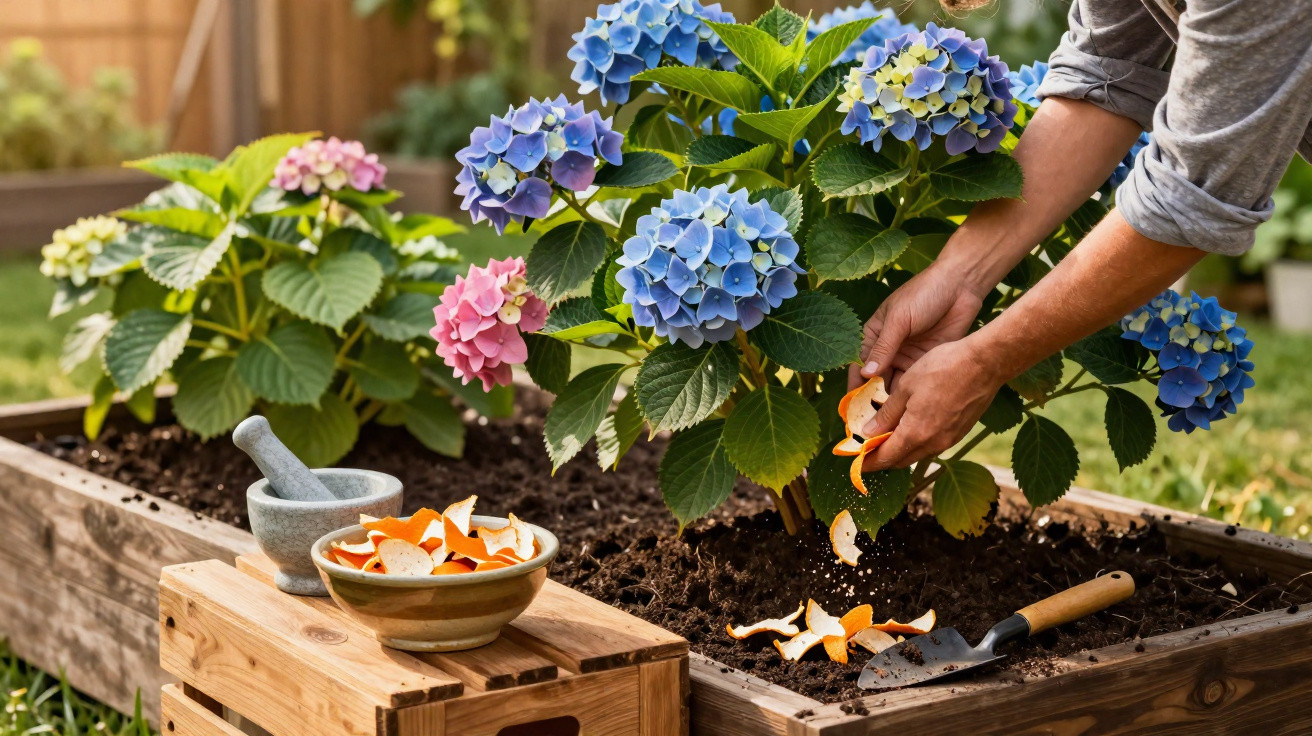
Rather than buying costly specialist fertiliser, an everyday leftover can give shrubs fresh vigour. One particular kitchen waste product can encourage stronger foliage, larger flower heads and brighter colours – yet it would normally be thrown thoughtlessly into the food waste bin.
Why hydrangeas often struggle
Hydrangeas are generally considered easy to care for, but they are sensitive to unsuitable soil. As classic ericaceous plants, they thrive best in slightly acidic soil. However, many gardens have soil that is more calcareous.
The effects are immediately visible on the plant:
- Leaves turn pale green or yellowish
- Flower heads remain smaller than expected
- Shoots stay thin and short
- The plant looks generally “tired”
The reason lies in the pH level. When soil becomes too alkaline, the roots can barely absorb essential nutrients such as iron and potassium. Watering habits and weather also play a part, but lime often simply prevents the plant from receiving the nutrients it needs.
“Lowering the pH around hydrangeas slightly literally opens up the plants’ access to a nutrient buffet.”
The overlooked wonder product: dried orange peel
This long-standing household tip surprises many people: dried, crushed orange peel acts as a gentle, natural fertiliser for hydrangeas. It combines three benefits in one:
- It makes the soil slightly more acidic.
- It provides valuable nutrients.
- Its scent deters certain pests.
The peel contains potassium, nitrogen, magnesium and calcium, among other nutrients. Potassium encourages sturdy shoots and abundant flowering, nitrogen supports leaf growth, while magnesium plays a central role in producing green leaf colour.
The peel’s mild acidity can carefully shift overly calcareous soil towards the slightly acidic range – precisely where hydrangeas grow best. This allows them to absorb nutrients from the soil more effectively again, without overfeeding the plants with chemical fertiliser.
How to prepare orange peel correctly for hydrangeas
Simply throwing fresh peel in large pieces onto the soil is not advisable. It quickly develops mould, attracts fruit flies and, in the worst case, can lure mice or other rodents. A little preparation avoids these issues easily.
Step 1: Dry the peel completely
Orange peel needs to dry thoroughly until it is hard and snaps easily. There are two ways to do this:
- In the sun: Place the peel on a baking tray or tray and set it somewhere warm and well ventilated. Depending on the weather, this takes several days.
- In the oven: Dry the peel at a low temperature (around 50–70 degrees, fan oven) for several hours, until no soft pieces remain.
Turn the peel from time to time as it dries, so that nothing sticks and every side dries evenly.
Step 2: Crush it for a faster effect
The smaller the pieces, the more quickly their contents reach the soil. Suitable options include:
- Fine powder made in a coffee grinder
- Very finely chopped crumbs cut with a knife
- Peel briefly broken down in a blender
Coarsely torn pieces will rot down too, but they take considerably longer. Anyone hoping to see quicker results in the leaves and flowers should choose the finely ground version.
Applying it to the shrub: how often hydrangeas need an orange peel boost
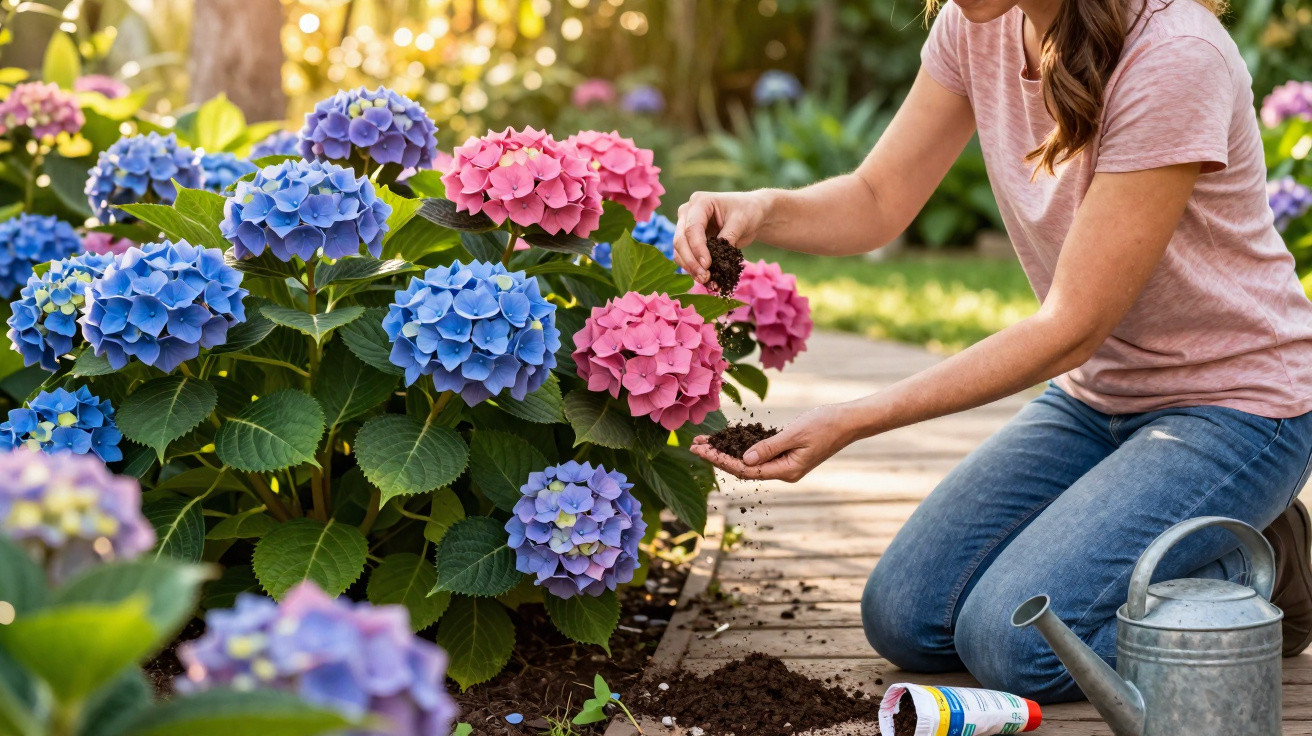
Apply the prepared peel mixture directly around the base of the shrub. A simple routine makes this easy to incorporate into everyday gardening.
- Scatter the powder or crumbs in a loose ring around the root area, rather than pressing them directly against the stem.
- Work them very gently into the top few centimetres of soil with a hand rake or your fingers.
- Water thoroughly afterwards, so the nutrients travel down towards the roots.
A schedule of roughly once a month during the growing season has proved effective. In central Europe, this period runs broadly from March until the end of August. Applying it more often brings little benefit and may alter the soil too much.
“One tablespoon of finely ground orange peel per medium-sized bush each month is usually sufficient.”
Twofold benefit: fertiliser and a natural deterrent for pests
Orange peel contains aromatic compounds such as d-limonene, which many people find pleasantly fresh. Some insects are far less keen on the scent, and this quality can be useful in the garden.
Around hydrangeas, orange peel powder creates a mild scented barrier that disrupts certain ant species and some aphids. It is not a replacement for complete pest control, but it can support other measures, such as checking shoots regularly or spraying them with a jet of water.
Because the effect lasts only while the scent remains, every new fertiliser application renews its deterrent quality. The leaves and flowers therefore benefit in two ways.
Which other plants benefit from orange peel
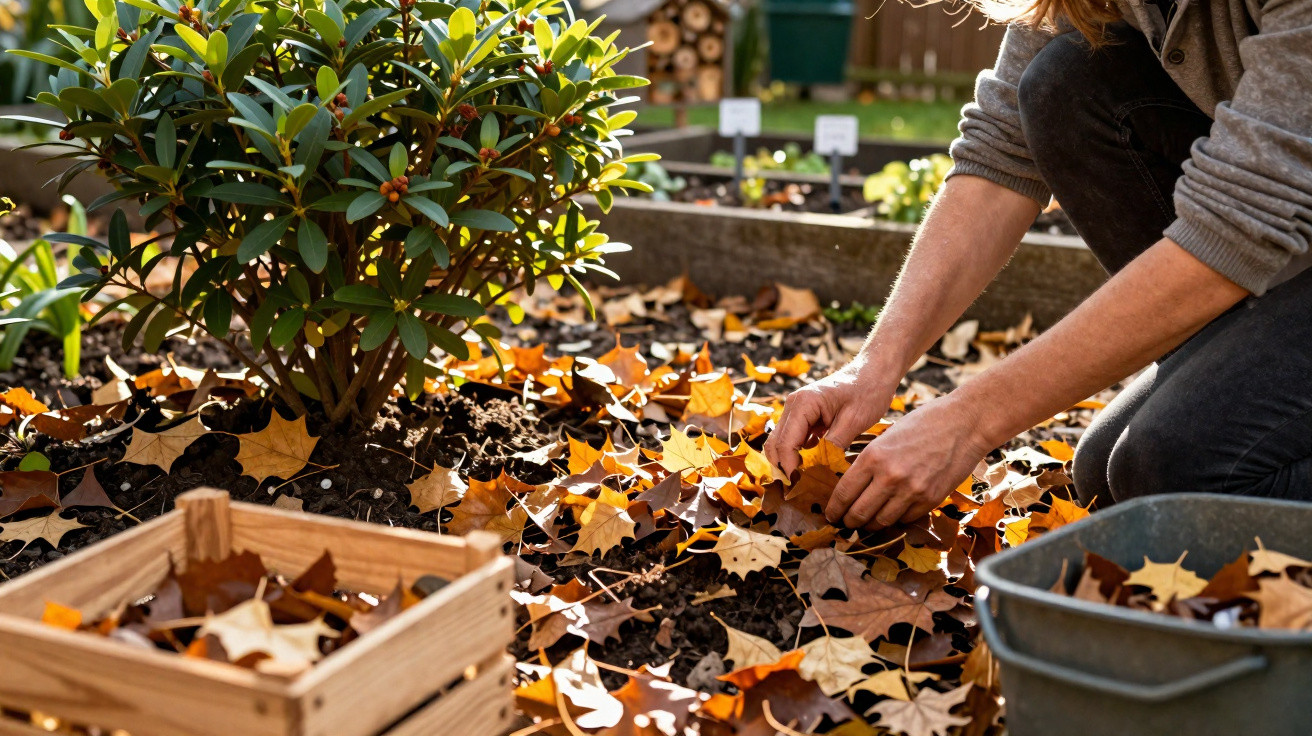
Hydrangeas are not the only plants that appreciate a little more acidity in their soil. Other typical ericaceous plants can be cared for using the same method, especially:
- Rhododendrons
- Azaleas
- Camellias
- Skimmias
- Blueberries grown in the garden or in containers
For container plants, the treatment generally works more quickly because the volume of compost is limited. It is particularly important here to use it sparingly and keep an eye on the plants. If very dark, soft shoots or leaf scorch appear, the mixture was too strong.
When care is needed
Anyone using heavily calcareous tap water will find that orange peel has its limits. The continual addition of lime through watering can partly neutralise the effect of the peel. In these cases, rainwater is a far better option.
If in doubt, it is worth carrying out a quick pH check with a simple soil test kit from a garden centre. Values between 5 and 6 suit hydrangeas best. If the soil is significantly above this range, additional measures may be needed, such as specialist ericaceous compost.
Care is also sensible where animals are present in the garden. Dogs should not chew larger pieces of orange peel, as essential oils in high doses can cause stomach problems. When finely ground and lightly worked into the soil, this risk is minimal.
Practical everyday tips
Anyone who eats citrus fruit regularly can build up a small winter supply for the following gardening season. Simply collect each peel, dry it and store it away from light in a jar or screw-top container. This means plenty of material is ready as soon as spring arrives.
Many gardeners combine orange peel with traditional compost or a little bark mulch. Compost supplies a wide range of nutrients, while bark mulch keeps the soil moist for longer and protects microorganisms. Together, they create a relatively stable, slightly acidic environment in which hydrangeas appear noticeably more vigorous.
Those using orange peel for the first time should deliberately begin with one section of a bed. This makes it easy to compare changes in leaf colour and flower size with untreated plants over the course of the summer. In many cases, the differences are apparent after only a few weeks.
Comments
No comments yet. Be the first to comment!
Leave a Comment