
Having a fresh aromatic herb within reach in the kitchen often changes the whole rhythm of meal prep. Among the plants that have earned a place in flats is basil, prized for its distinctive fragrance, its straightforward growth in a pot on the windowsill, and its flexibility in everyday cooking.
How do you prepare the ideal potting mix for basil in a pot?
Basil does best in a light, free-draining mix that’s rich in organic matter, as this helps prevent water building up around the roots. When you’re growing it in a pot, the right balance in the compost keeps both airflow and moisture at levels that support steady growth.
A common approach is to mix equal parts topsoil (or multipurpose compost), well-rotted organic compost, and coarse sand or perlite. Before adding the mix, it’s worth setting up a drainage layer at the bottom of the pot, which lowers the risk of waterlogging and supports healthier development.
- Use a pot with drainage holes in the base so excess water can run out properly
- Combine soil/compost and sand to keep the mix light
- Add a drainage layer using stones, expanded clay pellets, or pot shards
- Apply a moderate organic feed every 30–45 days
How much water and light does basil in a pot actually need?
Because it comes from a warm climate, basil thrives with plenty of light for several hours each day. As a general guide, aim for 4–6 hours of indirect or filtered sunlight, and try to avoid strong afternoon sun beating directly onto the leaves.
Watering should keep the potting mix slightly moist, but never saturated. A simple method is to press a finger into the compost: if it feels dry about 1 centimetre down, water until you see it start to drain from the holes underneath-then make sure no water is left sitting in the saucer.
How should you harvest basil to encourage new shoots?
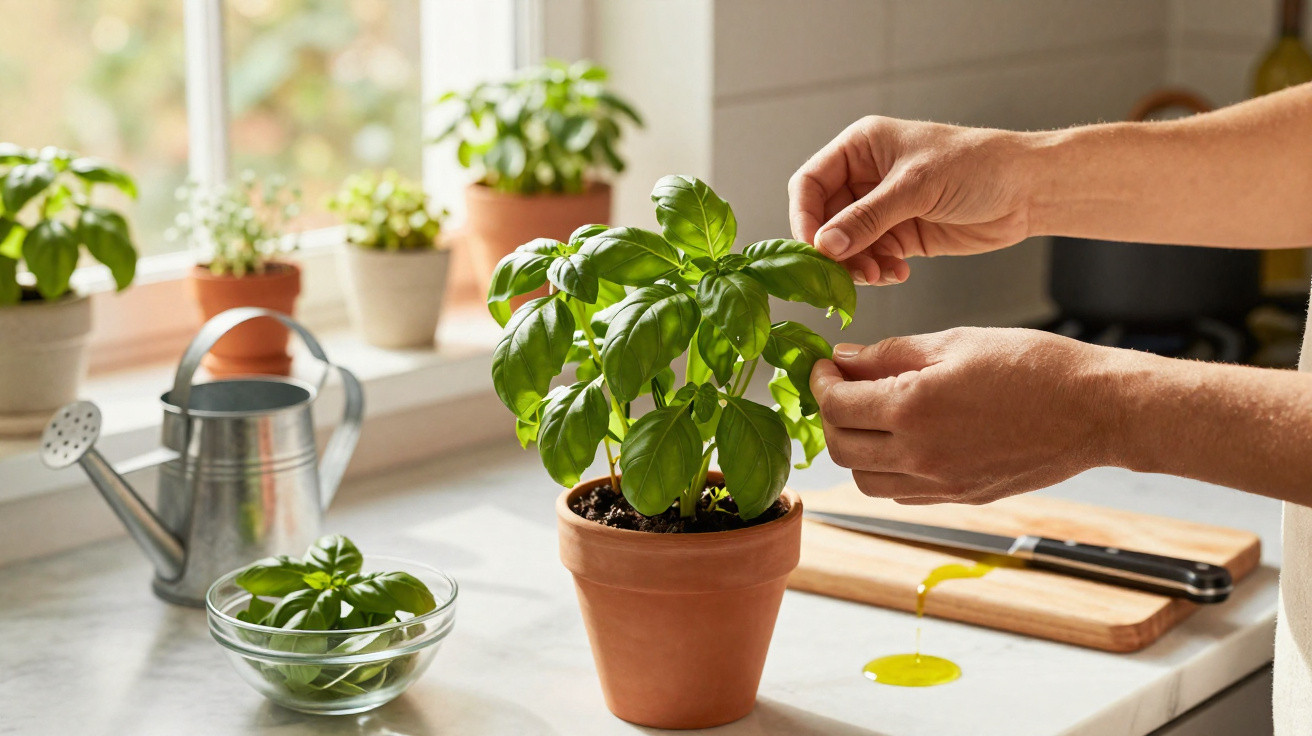
The way you pick basil has a direct impact on how many new leaves it produces and how the plant looks overall. Rather than pulling off individual leaves, it’s better to snip the tips of stems just above a pair of leaves, using clean scissors to reduce the risk of plant health issues.
This encourages side shoots, making the plant bushier and more compact. When flower buds appear, many growers choose to remove them so the plant keeps putting its energy into producing softer, more fragrant leaves over the following weeks.
- Harvest ideally in the morning, when the scent is at its strongest
- Cut stem tips rather than taking only single leaves
- Use clean scissors or a sanitised knife to lower the risk of disease
- Remove flower buds if you want more leaves and fewer seeds
How can you use and store fresh basil leaves in the kitchen?
Once the pot is producing well, fresh leaves can become a regular addition to tomato sauces, pasta dishes, pizzas, salads, and roasted vegetables. Basil is usually best added at the end of cooking or sprinkled over the finished dish, helping to preserve its characteristic aroma and the aromatic oils.
Beyond using it fresh, you can blend the leaves with olive oil, garlic, and nuts to make homemade pesto, which works well with pasta and sandwiches. Another handy tip is to freeze chopped basil in ice cube trays with water or olive oil, giving you convenient portions that keep much of the fragrance even outside the peak growing period.

Comments
No comments yet. Be the first to comment!
Leave a Comment