
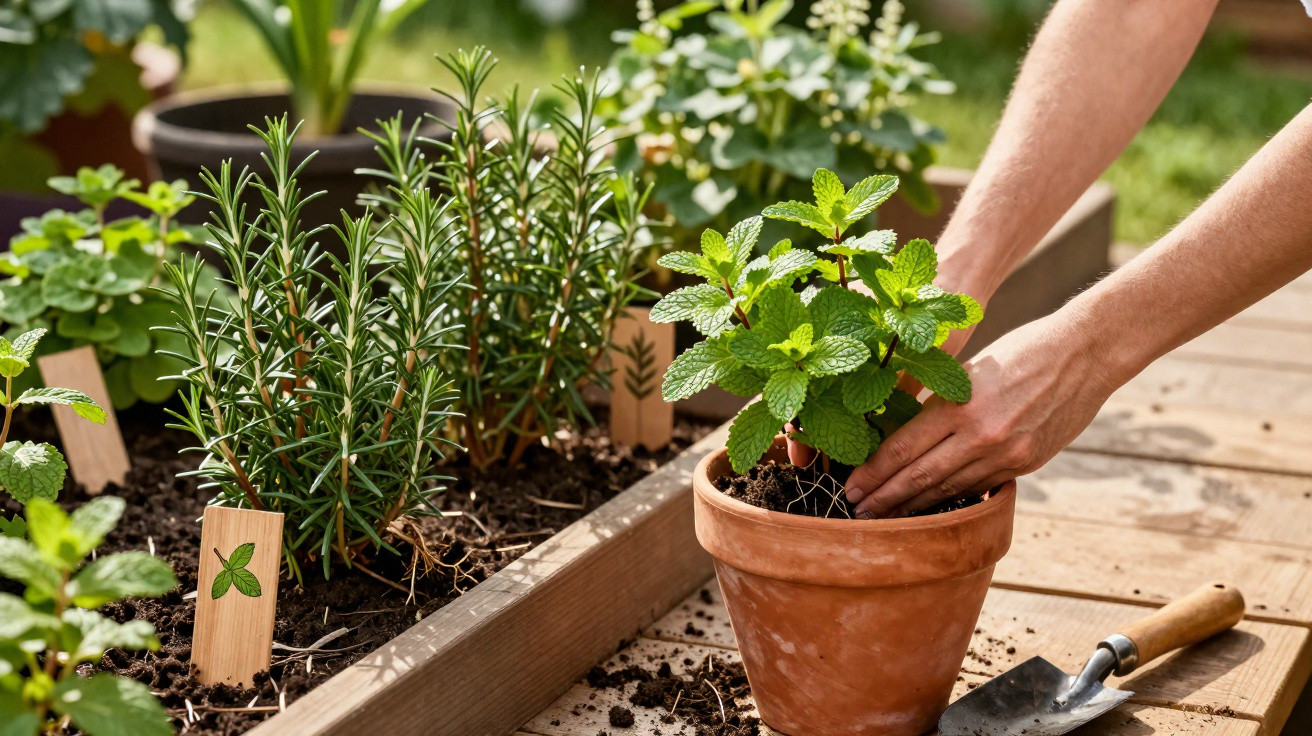
Mint is one of the simplest herbs to grow in the garden: it shoots up quickly, scents the bed, and can be used in teas, juices, sauces, and fresh dishes. However, that toughness comes with a drawback: its roots spread aggressively and can crowd out other herbs-especially rosemary, which prefers drier soil and a more tightly managed space.
Why doesn’t mint pair well with rosemary?
Mint thrives in moist soil that’s rich in organic matter and likes more frequent watering. Rosemary, on the other hand, does best under very different conditions. It grows more successfully in lighter, free-draining soil, with less water and plenty of direct sunshine. Planting both in the same bed sets up a clash in care.
If you water to suit mint, rosemary may struggle with too much moisture around its roots. If you water to suit rosemary, mint tends to lose vigour and produce smaller leaves. On top of that, mint’s roots creep beneath the surface and can take over the space that neighbouring herbs need.
Where should you plant mint in the garden to avoid problems?
The safest option is to grow mint in a pot, planter box, or a separate, contained bed. Even when it looks small, a young plant can spread fast via rhizomes-underground stems that send up new shoots at a distance from the main plant.
- Choose a pot with drainage holes and a nutrient-rich growing medium.
- Position it in morning sun or bright partial shade.
- Keep the compost slightly moist, but never waterlog it.
- Avoid planting it directly beside rosemary, lavender, and sage.
- Prune often to keep the clump neat and compact.
If you prefer mint in the ground, you can sink the pot into the bed, leaving the rim slightly above soil level. This barrier helps stop the roots escaping and makes the plant easier to manage over the months.
Which plants can be planted near mint?
Mint can sit near plants that cope with moderate moisture and aren’t easily overwhelmed by competition for space. Even so, it’s usually best to keep mint in its own container and place the pot close to the bed, rather than mixing everything in the same soil.
- Lettuce and other leafy greens can benefit from the light shade cast by the pot.
- Tomatoes can be nearby, as long as the mint is kept contained.
- Brassicas, such as kale and cabbage, tolerate the strong aroma.
- Basil can share the area, but not the same cramped pot.
- Tough, resilient ornamental flowers can be planted around it without competing as much.
The key is not to treat mint as a quiet, well-behaved plant. It may seem harmless at first, but it can quickly dominate small beds, creep into gaps, and slow down the growth of more sluggish seedlings.
How do you care for mint to harvest more aromatic leaves?
Mint responds very well to regular pruning. Snipping off the tips encourages fresh growth and stops the plant becoming tall, thin, and sparse. Ideally, harvest in the morning, when the scent is usually at its strongest.
The soil should stay moist but not saturated. In a pot, water should drain freely through the holes. If the leaves turn yellow, the cause may be too much water, a lack of nutrients, or insufficient sunlight. If the plant wilts quickly, it may be getting too much heat or not enough watering.
How can you use mint without letting it take over the garden?
Mint is excellent in teas, infused waters, juices, salads, sauces, desserts, and as seasoning for lighter meats. In day-to-day garden care, the trick is to harvest regularly, prune confidently, and divide the clump once the pot becomes crowded. This keeps the leaves young and helps prevent uncontrolled growth.
Rosemary should be planted elsewhere, in a drier spot with strong sun and minimal watering. That way, each herb gets what it needs: mint stays fresh and plentiful in its own pot, while rosemary keeps firm, fragrant leaves in a better-drained part of the bed.

Comments
No comments yet. Be the first to comment!
Leave a Comment