
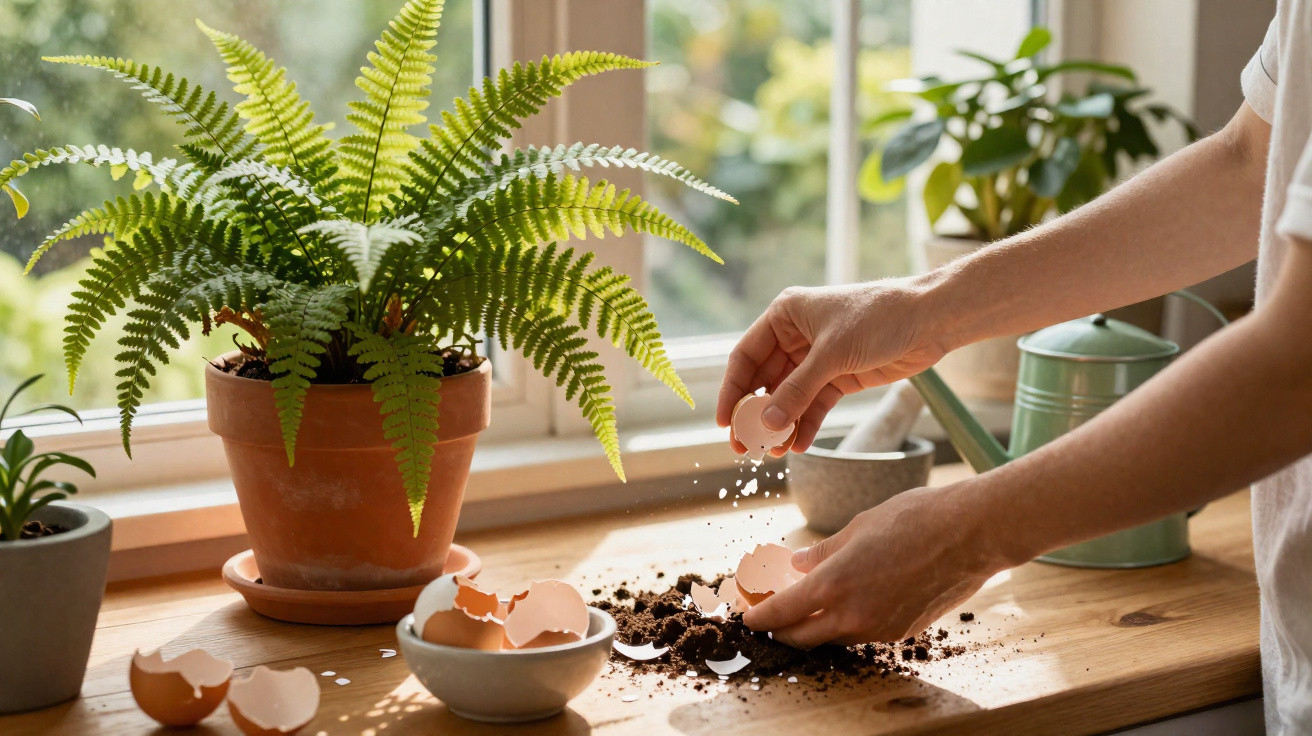
Burying eggshell in a fern pot is a straightforward way to reuse kitchen waste while gradually improving the potting mix. When you prepare it properly, it can support care for the roots and leaves over time.
What is eggshell used for in a fern pot?
Eggshell is widely known for its calcium content, mainly as calcium carbonate. In a plant pot, it breaks down slowly and may help replace a small amount of this mineral in the substrate.
For ferns, calcium plays a role in forming plant structures and helps with the plant’s overall balance. Even so, you should not expect fast results: the shell needs to be well crushed so it blends more easily with the soil and around the roots.
The key points of the trick are:
- Eggshell: wash, dry, and crush it before use.
- Fern: it responds best to a light, moist, well-draining substrate.
- Pot: using small amounts helps prevent excess and soil compaction.
- Drainage: calcium will not make up for waterlogged soil or a pot without a drainage hole.
- Supplement: this trick does not replace complete fertilising and regular care.
When is it worth using this trick on a fern?
This approach can be useful when the fern has been in the same pot for a long time and the substrate has become depleted, growth is slow, or the leaves look less vigorous. In those situations, crushed shell works as a gradual boost, without replacing more balanced fertilising.
It can also be applied after partially refreshing the substrate, by mixing a small amount into the top layer of the soil. The main caution is not to overdo it: ferns prefer a moist, light, airy environment rather than heavy or overly compacted soil.
How should you prepare eggshell before burying it?
Eggshell should never go into the pot dirty. It is best to wash it thoroughly to remove any traces of egg white and yolk, let it dry completely, and only then crush it into small pieces or a coarse powder, which makes mixing it into the soil easier.
Clean, crushed eggshell
Preparing it prevents bad smells and improves how it’s used
Damp shells or shells with organic residue can attract insects and create an unpleasant smell in the pot.
The finer you crush it, the more contact it has with the substrate and the more subtle the application looks.
Once crushed, work a small amount into the top layer of the soil, avoiding direct contact with the crown (the centre) of the plant. Lightly incorporate it by hand or with a small trowel, keeping the roots protected and ensuring good aeration and drainage in the pot.
You can follow this order:
- Wash the shells to remove egg residue.
- Dry them in the sun or in a well-ventilated place.
- Crush until you have small fragments or a coarse powder.
- Mix a small amount into the top layer of the substrate.
How often should you apply eggshell in the pot?
For small to medium pots, a light application every 30 or 45 days is usually enough. The aim is to top up the substrate gradually, without turning eggshell into the fern’s only source of nutrients.
If the plant already gets organic feed, worm humus, or a balanced fertiliser, you can apply it even less often. Too much of any “correction” in a pot can upset the root environment, particularly for plants that are sensitive to moisture and compaction.
Before applying it again, check:
- Whether the soil is still light and free of a crust on the surface.
- Whether the pot drains well after watering.
- Whether new leaves appear healthy.
- Whether there is any bad smell, fungus, or insects in the substrate.
What precautions help you avoid mistakes with this homemade feed?
Eggshell can be useful in the garden, but it should be treated as a support rather than a complete solution. The same applies to other reuse methods, such as using eggshells in the garden, where the amount, preparation, and plant type all need to be taken into account.
To keep a fern looking its best, the overall care matters more than any single trick. Indirect light, balanced watering, fertile substrate, efficient drainage, and small doses of crushed shell all help keep the plant strong and healthy.
Comments
No comments yet. Be the first to comment!
Leave a Comment