
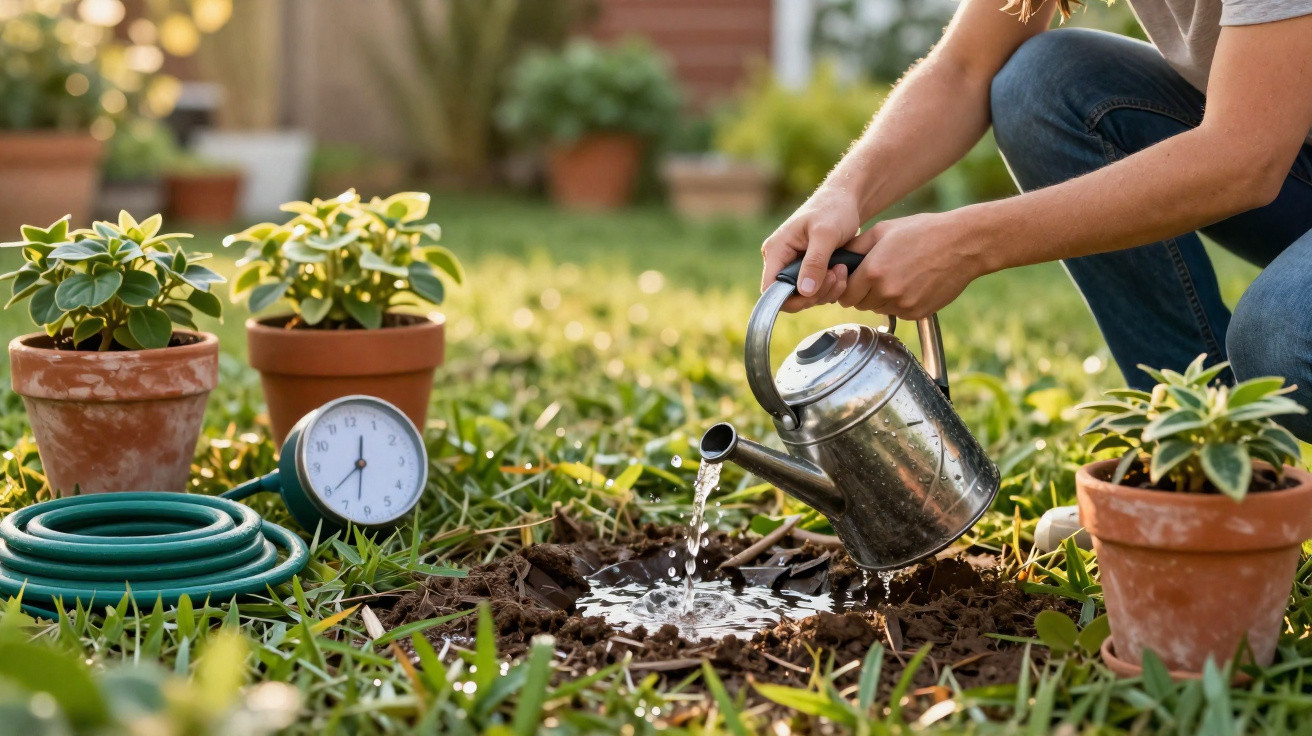
For a split second, the spray catches the sun and sparkles, then it disappears into warm air and baked ground. The water meter keeps ticking over, the cost keeps rising, and the borders still look parched. Plenty of people never notice: they assume they’re doing the right thing because they’re doing what they’ve always done. Hose out after work, a quick splash before tea, and the comforting sense of “I’ve watered, so I’ve helped”. But that routine can hide a slow, quiet problem-water poured away, plants under strain, and beds that look weary long before summer reaches its height. In reality, the most important piece of kit isn’t the watering can at all. It’s the clock. And the hour you choose can make all the difference.
Why your garden is thirsty even when you water it
One July afternoon I saw a bloke in flip-flops watering his front garden while standing on a lawn that had turned to something close to straw. He guided the hose back and forth, carefully, over the pale, yellowed grass. After ten minutes the top layer looked darker and glossy-then, almost immediately, it began to fade and dry again. He sighed, blamed “this heatwave”, and headed indoors. The whole performance took about fifteen minutes. The benefit to the grass lasted roughly as long as a kettle whistle.
In full sun, on a genuinely hot day, as much as half the water you throw over the garden can be lost to the air before it ever reaches the root zone. That isn’t a scary headline-it’s simple physics. Midday heat warms the ground, pulls moisture upwards, and turns your careful watering into a short-lived spectacle. Garden centres will happily sell sprinklers, hoses and clever gadgets, but the one setting that matters most is often ignored: when you water. Most people water when it fits their schedule, not when plants can actually take a proper drink.
The mechanism is straightforward, and a bit brutal. With the sun overhead, evaporation outpaces absorption. Water sits on leaves and heats up, which can invite scorching and encourage fungal problems. Meanwhile, roots-best served by cool, consistently moist conditions-get the worst of both worlds: a rush of lukewarm water followed by long hours of dryness. That’s why gardeners conclude their soil is “always dry”, overreact, and water more often, still at the wrong time. It feels like care. In practice, it undermines the plants. Get the timing wrong, and good intentions quietly become waste.
The best time to water – and how to do it without overthinking
If you change one thing, make it this: water in the early morning. Not “morning-ish when you happen to remember”, but proper morning-roughly between 5am and 9am. The air is cooler, the soil is settled, and the sun hasn’t begun its full-on assault. That gives moisture time to travel down to the roots before heat hauls it back out. Plants start the day hydrated rather than steamed. You can almost imagine them exhaling in relief.
If you’ve got a busy routine, dawn can sound laughable. The practical truth is you don’t have to do it every day. A thorough soak two or three mornings a week beats a token sprinkle every evening. Apply water slowly around the base of each plant, pause for a few seconds, then move on. Aim for a “long drink”, not a “quick sip”. A simple soaker or drip hose paired with an inexpensive timer can handle it while you’re barely awake. Even a plain watering can works far better when you’re on the right timetable.
That neighbour who waters nightly after work, pacing with a sprinkler under a pink sky, looks like the picture of summer. It’s also one of the least efficient routines in the hotter months. Evening watering often leaves leaves wet as the temperature drops-exactly the conditions many fungal diseases like. Foliage can stay damp for hours. Slugs and snails get an easy, shiny route across your beds. The surface cools quickly, and roots don’t take up as much moisture as they could. The garden may look satisfyingly dark and “well watered”, but below ground the plants are still waiting.
Mornings reverse that. Water gets pulled down by gravity and taken up by roots that are actively working. Leaves have the whole day to dry off naturally. You see less disease, less rotting, and fewer plants looking miserable by Thursday. It isn’t a gimmick-it’s simply working with the garden’s rhythm.
“Think like a plant, not like a person with a free half hour,” says a landscape gardener from Kent. “Plants don’t care when you’re home from work. They care when the sun hits their leaves.”
A few practical anchors make the difference day to day:
- Water early, before the heat and full sun properly ramp up.
- Direct water at the base of plants rather than over the leaves, so it reaches the roots.
- Water more deeply but less frequently, encouraging roots to grow downwards.
- Add mulch (compost, bark, grass clippings) to slow moisture loss.
- After a good downpour, hold off watering even if the top layer looks dry.
Rethinking your relationship with the hose
Once you start paying attention to watering habits, you’ll notice them everywhere. The midday sprinkler spinning over a half-empty lawn. Someone on a balcony drenching pots at 10pm. The allotment regular turning on the tap every evening because it’s tradition, not because the plants need it. With hotter summers and tougher water bills, timing stops feeling like a tiny detail and starts feeling personal. It’s about noticing the soil, the sky, and the patterns you fall into.
There’s more to it than avoiding waste. Watering at the right hour changes how the whole garden responds. Roots go deeper. Soil life improves. Plants handle those stifling, windless days that now pass for a normal British forecast. You end up watering less often but getting far better results. Lawns bounce back after heatwaves rather than giving up entirely. And in the background, your water use drops. You don’t need a lecture about sustainability to appreciate the moment the bill lands.
On a human level, that early-morning spell with a hose or watering can has its own odd appeal. The street is still. Birds are getting on with it. The sun feels gentle rather than aggressive. Some days it shifts from “job” to “ritual”. One that sets the tone not just for your plants, but for how you move through the heat that follows. It’s a calmer way to garden: less panic, more attention. And it begins with something as simple as checking the time before you turn on the tap.
| Key point | Detail | Why it matters to you |
|---|---|---|
| Morning timing | Watering between 5am and 9am boosts absorption and cuts evaporation | Less water wasted, tougher plants, a smaller bill |
| Deep watering | Less frequent but longer watering, aimed at roots rather than leaves | Deeper root systems and a garden that copes better with heat |
| Changing habits | Avoid watering in full sun and avoid late watering over foliage | Fewer diseases, less stress, and a simpler, more effective routine |
FAQ:
- What’s the single best time of day to water my garden? Early morning-ideally between 5am and 9am-when the air and soil are cooler and plants can absorb water before the heat builds.
- Is watering in the middle of the day really that bad? It isn’t “banned”, but evaporation is high and plants can be stressed, meaning you use more water for poorer results.
- How often should I water in summer? For most established plants, a deep soak two or three times a week is usually better than a light daily sprinkle.
- Is evening watering always a mistake? It can be fine in cooler, dry spells, but damp leaves overnight increase the risk of fungal disease and attract more slug activity.
- How do I cut water waste without buying any gadgets? Water early, water at the roots, mulch well, and skip watering after decent rain even if the surface has dried.

Comments
No comments yet. Be the first to comment!
Leave a Comment