
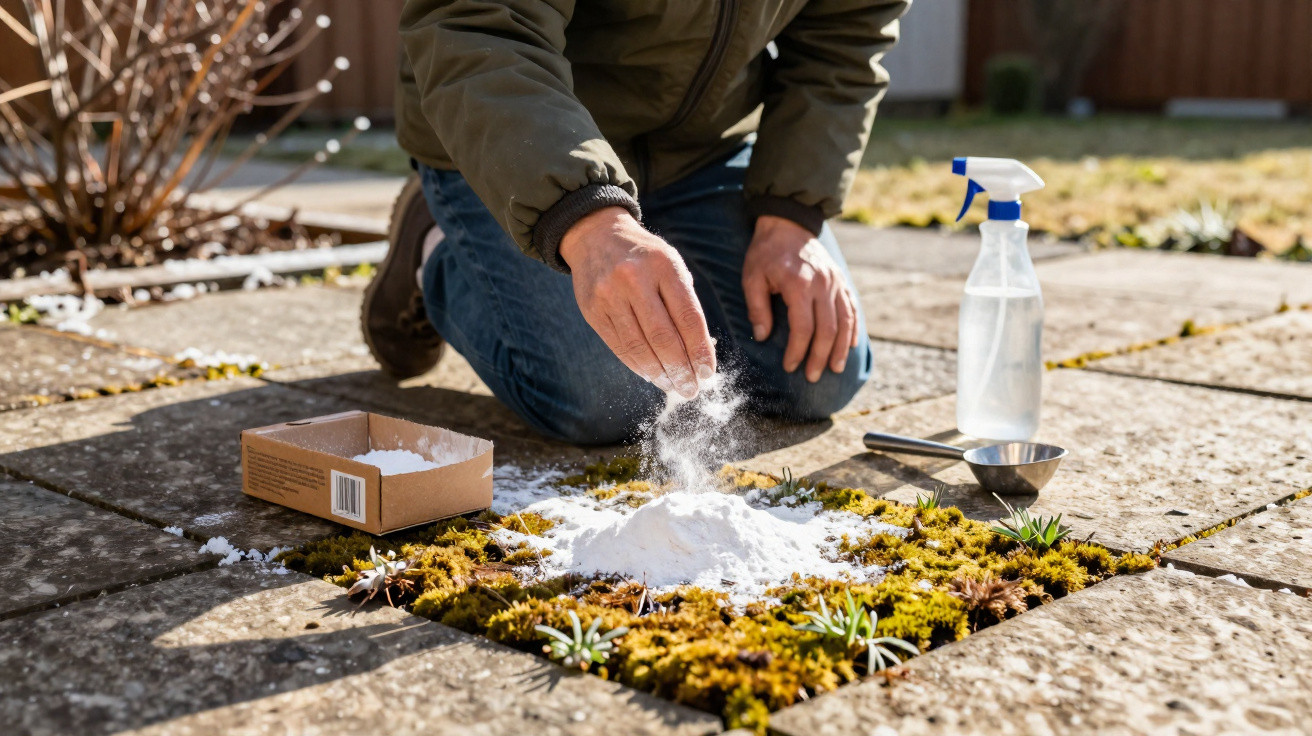
There is no need for heavy-duty cleaning: an unassuming kitchen powder can take on the dirty work.
While many people mentally write off their patio during the colder months, a quiet battle continues beneath the paving slabs. Moss, fine roots and weed seeds are simply waiting for the first mild day to start growing again. Taking action now, in the middle of winter, makes use of a clever effect and can save plenty of scrubbing, scraping and machine use later on.
Why a simple household remedy weakens moss and weeds in winter
On the surface, everything appears to be dormant: bare beds, damp joints and greyish slabs. Yet life remains active in the gaps of patios, driveways and garden paths. Roots, spores and seeds sit protected in the ground and are merely pausing. As soon as temperatures rise, they push upwards and turn clean joints into slippery green strips.
This is where the method comes in: gardeners use bicarbonate of soda, also known as baking soda, during winter. This kitchen powder dries out plant cells and affects roots while the plants are already weakened. Timing matters: acting in January or February catches moss and weeds growing in joints at one of their most vulnerable stages.
“Bicarbonate of soda draws water from plants, disrupts their internal balance and causes them to dry out down to the root zone.”
Unlike boiling water, bicarbonate of soda does not subject paving slabs to thermal stress. Unlike vinegar, its action is not limited to the surface. Its mildly alkaline effect in the joints can even interfere with seeds germinating again – an advantage for anyone hoping for a longer break from regrowth.
How bicarbonate of soda affects moss and weeds in joints
Bicarbonate of soda is a salt rather than a conventional chemical weedkiller. When it comes into contact with plant cells, it creates an osmotic imbalance: water moves out of the cells, and the plant gradually dries out and dies. This becomes visible as yellowing, followed by browning and brittle, dry leaf tissue.
It also raises the pH level in the joints slightly. Many moss species and common weeds found between paving prefer mildly acidic conditions. When the joints become a little more alkaline, they are far less favourable: plants germinate less readily and regrow more slowly.
- Moss may turn yellowish and brittle after just one to two days
- Roots are weakened, making it harder for plants to grow back
- Joints dry more quickly, depriving moss of the conditions it needs to survive
The result is that spring cleaning can often be reduced to a thorough sweep, rather than hours of scraping with a joint knife or using a pressure washer.
Winter method: dry application without scrubbing
Many professionals favour a dry application in winter. It works especially well where a patio has only light moss growth or where the aim is prevention.
Step-by-step guide to the winter powder treatment
- Give the patio a rough sweep to remove loose leaves and heavy dirt.
- Allow around 20 grams of bicarbonate of soda for each metre of joint – roughly one small handful.
- Scatter the powder straight onto the joints, avoiding neighbouring flower beds wherever possible.
- Use a stiff broom to work the powder into the gaps until it reaches the soil and roots.
- Do not rinse it away: natural winter moisture, dew and light rain will gradually dissolve the salt and carry it downwards.
The appeal of this method is that there is no need to kneel or scrub. Nature takes care of spreading it. Over the following weeks, the salt works quietly below the surface. Its effect becomes apparent in spring: many joints remain surprisingly clean, while any remaining plants can be swept out easily.
Liquid application for heavily moss-covered surfaces
If the patio is already densely green, powder alone will often not be enough. In that case, a water-based solution can help, acting like a gentle, targeted “blow” against moss and weeds in joints.
How to mix an effective bicarbonate of soda solution
For a household-sized quantity, use the following basic recipe:
| Ingredient | Amount | Note |
|---|---|---|
| Water | approx. 1 litre | Room-temperature water is sufficient; hot water is not required |
| Bicarbonate of soda | 2–3 tablespoons | Stir thoroughly until no lumps remain visible |
Pour the solution into a watering can with a rose attachment or a pressure sprayer. On a dry day with no rain forecast and no strong wind, target patches of moss and clumps of weeds directly. It is important to aim for the joints where possible, rather than soaking the entire surface.
After one to two days, the greenery will start to change colour. Yellow and brown are positive signs: the plant cells have been damaged. In many cases, a broom is then all that is needed to loosen the dead material. Particularly stubborn patches can simply receive a second targeted treatment.
“Those who apply the powder first and follow up with a solution where necessary can often reduce the physical work dramatically.”
Where bicarbonate of soda is useful – and where it is not
Useful as this method may be, it is not suitable for every surface. Bicarbonate of soda remains a concentrated salt and can harm soil life and cultivated plants if it is washed uncontrolled into beds.
Suitable areas
- Patio slabs and block paving
- Driveways made from concrete or natural stone paving
- Garden paths with firm, closed joints
- Stone steps around the house
Areas to avoid
- Vegetable beds and raised beds
- Perennial beds containing valuable ornamental plants
- Lawns where children will later play or pets will lie down
- Areas with visible drainage leading towards a pond or stream
One or two applications each year are enough to keep the problem under control. Reapplying it constantly risks unnecessary build-up in the soil of neighbouring areas.
Risks, limitations and useful additional measures
Bicarbonate of soda is not a miracle powder that will keep every surface permanently sterile. Heavy shade, persistent damp and damaged joints repeatedly encourage moss growth. In such cases, only a combination of measures will help.
Useful additions may include:
- repairing damaged joints or repointing them
- preventing standing water, for example through improved drainage
- cutting back overhanging branches to allow more light onto the surface
- carrying out a thorough clean in spring so that no thick layer of dirt can build up
Anyone with pets should avoid letting them walk through puddles of freshly applied solution immediately after treatment, so their paws are not exposed to excessive salt. Once rain has washed the area and it has dried completely, there is generally no problem.
Why using bicarbonate of soda is worthwhile
Many households already keep bicarbonate of soda in the cupboard – for baking, cleaning or neutralising odours. This same powder can work quietly in the background during winter and take care of much of the unwanted maintenance between paving joints. Acting early in the year takes the momentum away from moss and weeds in joints before they get going at all.
The effort involved is limited, the required quantities are manageable, and the effect on patios and driveways can be surprisingly noticeable. Bicarbonate of soda will not replace every gardening task, but it can make the annual spring-cleaning effort around the house far less demanding.

Comments
No comments yet. Be the first to comment!
Leave a Comment