
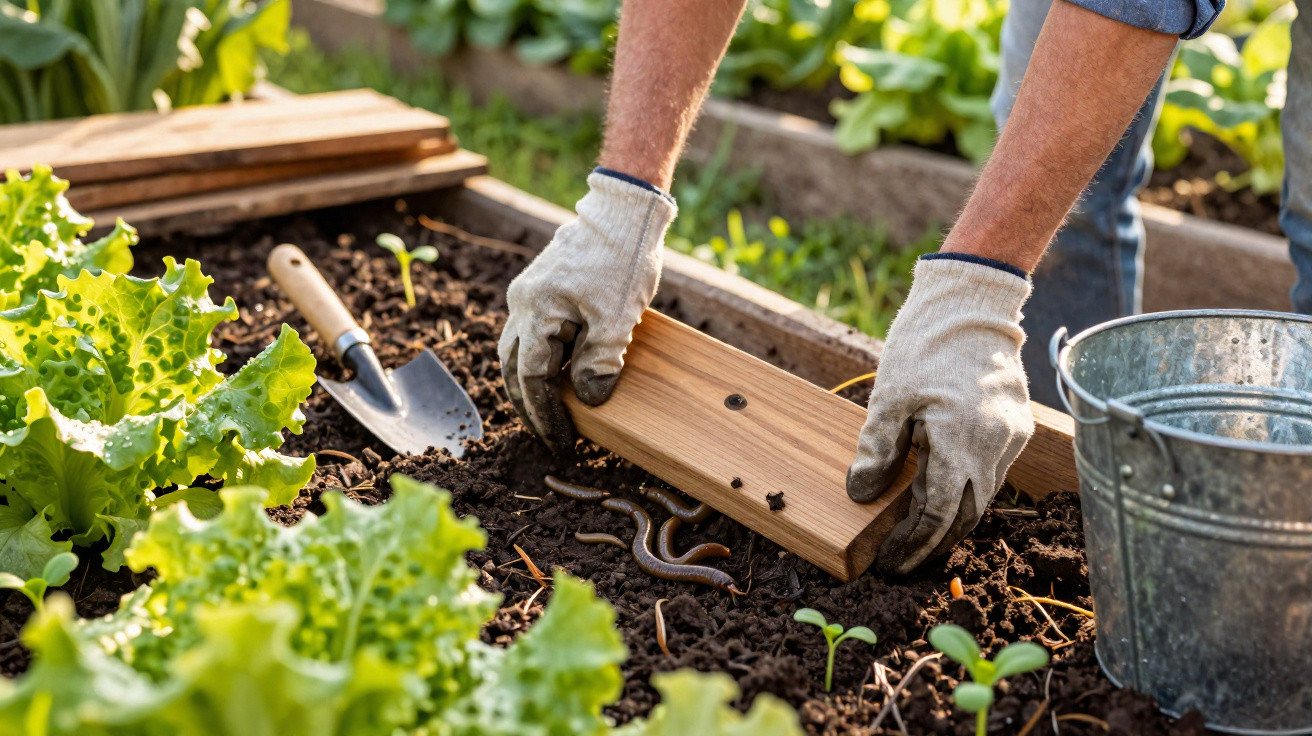
Frustrated amateur gardeners often reach for blue pellets from a packet. Yet there is a far simpler, cheaper and, above all, more nature- and pet-friendly option: a plain piece of untreated wood that irresistibly attracts slugs and draws them away from the vegetable patch.
Why slugs strip your beds so ruthlessly
When you plant your first lettuces, beans or spinach, you look forward to a plentiful harvest – until the slime trails you find in the morning tell a different story. Slugs particularly favour young, tender plants. They may be slow, but they are highly effective and can clear entire rows in a single night.
The key to controlling them lies in their biology. Slugs are:
- averse to light – they avoid direct sunshine
- extremely sensitive to moisture loss – they dry out easily
- active at night – and hide during the day
The wooden-plank trick takes advantage of precisely these traits. Rather than scattering poison indiscriminately or laboriously searching for every slug after dark, you offer them a veritable luxury hotel where they gather of their own accord.
A damp wooden board creates a cool, dark hiding place for slugs – turning chaos in the bed into a manageable problem.
How a wooden plank works as a slug trap
Wood has a quality that stone and bare soil lack: it absorbs moisture and releases it gradually. Beneath an untreated plank, this creates a small microclimate that slugs love – cool, dark and consistently damp.
At night, they leave their natural refuges to feed. As dawn approaches and sunlight becomes a threat, they need a new shelter. That is exactly when they crawl beneath the wood – where they remain together until you arrive.
Which wood is suitable – and which is not
Choosing the right material is crucial to success. Suitable options include:
- old, untreated boards, for example from pallets or building timber
- untreated softwood shelving boards
- leftover timber from decking projects, provided it has not been stained or oiled
The following are unsuitable:
- painted or stained timber
- chipboard and furniture board with plastic coatings
- MDF and other heavily glued boards
These materials absorb very little moisture and can sometimes release concerning substances into the soil. They do not attract slugs to the same extent and have no place in a wildlife-friendly garden.
Step-by-step guide for using a wooden plank in the bed
- Pick a spot directly beside vulnerable crops such as lettuce, cabbage, beans or strawberries.
- Loosen the soil slightly and remove any large stones.
- Water the area where the plank will sit thoroughly.
- Use a watering can to dampen the underside of the board.
- Lay the wood flat on the ground, avoiding large gaps where possible.
- Leave the plank in place overnight.
- Lift it carefully early the following morning – the slugs will be gathered underneath.
Depending on the size of your garden, it can be worthwhile placing several of these traps around the beds. In gardens with a heavy infestation, two to three boards per 10 square metres of productive growing area are suitable.
Gardening without poison: why the wooden plank is a genuine game changer
Many conventional slug treatments rely on toxic substances, including metaldehyde or iron compounds. Although they harm slugs, they often affect other garden animals too. Hedgehogs, toads, birds and ground beetles may eat poisoned slugs – and can then become ill or die themselves.
The situation is different with a wooden plank:
- no poison enters the soil
- no risk to pets or children
- beneficial creatures are spared
- you decide what happens to the collected slugs
The wooden trap does not require an elaborate chemical laboratory – only a dry board, a little water and your own effort.
In the morning, you have a choice: collect the animals and release them further away, feed them to poultry, or move them to places where they cannot cause damage, such as a wild hedge well away from the vegetable garden.
The wooden plank as a diagnostic tool for your garden
The wood trick does more than simply catch “pests”. Regular checks quickly reveal patterns: which boards collect particularly large numbers of animals? Which beds show almost no activity? In this way, you create a kind of “slug map” of your garden.
Typical insights include:
- Areas with dense ground cover or tall grass around the edges are often hotspots.
- Places near compost heaps and untidy corners are popular refuges.
- Permanently damp areas, such as those close to water butts, produce more slugs.
Armed with this information, you can adjust your overall strategy: tidy boundary areas, improve barriers, avoid sources of moisture or place other plants in higher-risk spots.
Smart combinations: making your garden more slug-resistant over time
The wooden plank works immediately, but it is no replacement for long-term garden design. Ideally, combine this method with further measures that are as gentle as possible:
- Rough mulch materials: grit, crushed shell, coarse bark mulch or sheep’s wool make travel unpleasant for slugs.
- Sturdy bed edges: metal or wooden frames with a sharp edge make it harder for them to get in.
- Encourage beneficial wildlife: piles of dead wood, leaf piles and water sources attract natural predators.
- Choose resilient plants: some perennials and herbs are less attractive to slugs, including thyme, lavender and certain ornamental grasses.
Adding these elements means you will need to use the wooden trap less and less, as the balance in the garden gradually becomes more stable.
When the method reaches its limits
As simple as the trick is, it cannot fully solve every problem. After periods of heavy rain, slug numbers can explode. You may then find dozens of animals beneath the planks each morning. If you do not remove them regularly, you are simply maintaining a collection point right next to the bed.
The method also becomes time-consuming in very large vegetable-growing areas. In those cases, it is worth combining wooden traps at critical points with mechanical barriers around the most important crops.
Practical tips from everyday gardening
A few small details can make a considerable difference in daily use:
- Position the boards so that you can reach them easily without stepping into beds.
- Wear gloves if you would rather not handle slugs directly.
- Mark the boards with small sticks so that nobody accidentally steps on them.
- At the height of summer, a quick dampening in the evening is often enough to keep them attractive.
- Replace badly rotted boards from time to time, as they will eventually break down.
For families with children, the morning check can even become a small gardening ritual: children lift the boards while adults decide what happens to the “catch”. It gives even the youngest family members a chance to learn how an ecosystem works – without alarming images of poison or warning symbols.
Why simple methods are often the best
Shiny retail packaging tempts shoppers with promises of “immediate effect” and “maximum efficiency”. An untreated board, by contrast, seems unremarkable. But anyone who uses it consistently soon realises that practical gardening does not always follow the logic of advertising.
A wooden plank costs nothing, can be adapted to gardens of any size and makes visible processes that would otherwise remain hidden. In turn, this builds a better understanding of your own soil, the garden climate and the role of creatures that may initially seem like nothing more than pests.
By gardening this way, you are not merely protecting your rows of lettuce. Little by little, you turn your garden into a stable system in which slugs have a place too – just not in the middle of a freshly planted vegetable bed.

Comments
No comments yet. Be the first to comment!
Leave a Comment