
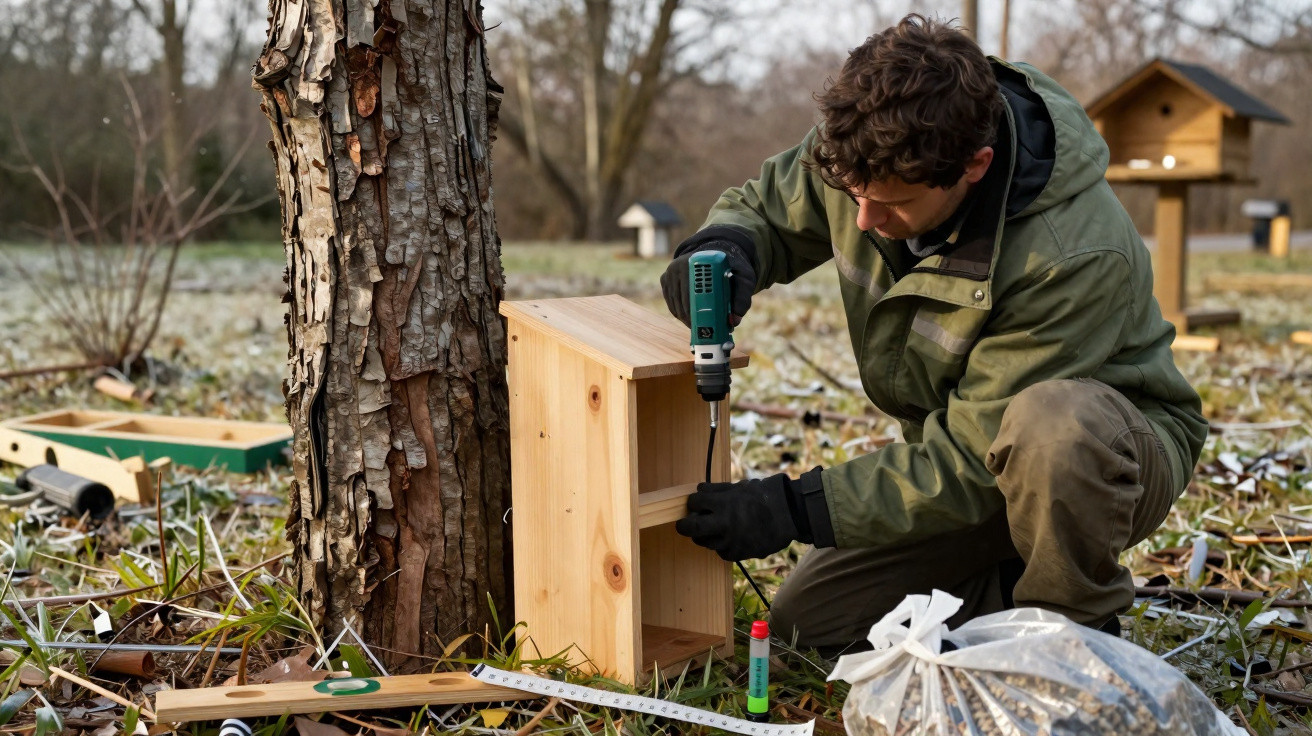
Professionals do the reverse: they fix nest boxes in the depths of winter, when the garden seems dormant and your fingers lose feeling. It is not a quirky habit - it is the quiet margin between healthy, well-fed nestlings and a back-garden crisis of overheating, empty crops, and predators learning your routine.
I once saw a neighbour haul out a ladder in April, with bees already humming and bright sun flashing off fresh pine. He fastened a nest box onto a warm, south-facing wall, pleased with himself like a brand-new landlord. Blue tits checked it the very same afternoon, and we all grinned at how quickly wildlife responds. A few weeks on, that grin vanished. On clear days the box heated up like an oven, the chicks ended up begging when the caterpillar peak was not there, and a cat worked out the timings. It looked spot-on in the shop - but the sunshine had different ideas.
Why midwinter beats spring for nest boxes
Professionals put boxes up in January or February because birds begin scouting then. They try out holes for roosting during cold spells and store those locations in memory for the breeding season. A box that has been outside for several weeks loses the “DIY shop” scent and starts to smell of rain, wood and bark.
Fixing a box in midwinter also avoids drawing attention. Put up a brand-new box in April and it can act like a signpost: predators notice the ladder, pick up the smell of fresh timber and follow the disturbance to the site. By March, a box installed in winter simply blends into the garden’s structure, and birds investigate at their own pace rather than in a human-triggered rush.
Food timing is the other understated reason people do the job in the cold. Many small songbirds time their hatch dates to match the brief, intense flush of caterpillars on nearby trees. A late-April DIY effort can push nesting later, or tempt birds into a box that runs too hot, and those narrow feeding windows quickly become empty ones. Nestlings do not grow on peanuts; they grow on insects. That phenology problem can unravel quickly if the box is on the sunniest fence in the street.
How to place a box like a pro in January
Choose shade over showiness. Aim the entrance between north-east and east so it gets mild morning light but avoids scorching afternoon sun. Fix it 2–4 metres up on a tree trunk, a solid fence or a wall, with a slight forward tilt so rain sheds away, and skip any perch that would make raids easier. Shade beats sun.
Build for function: thick, untreated timber, a snug-fitting lid, and drainage holes in the base. Where squirrels or woodpeckers are common, add a metal plate around the entrance to prevent chewing. If the box is on a pole, fit a baffle; if it is on a trunk, use a smooth collar. Quiet beats cute. The goal is a box that disappears into the garden, not a decorative “bird hotel” that advertises itself to corvids and cats.
Set enough distance to reduce territorial clashes: in a small garden, stick to one box, or in bigger spaces keep boxes several metres apart. Once spring arrives, leave it alone; repeated checks and noisy visits can draw the wrong kind of interest. Let the birds find it on their own terms. Midwinter matters.
Common mistakes that starve chicks - and how to dodge them
Sunny-wall syndrome is a classic. That warm, bright spot in April feels friendly to us, but nestlings are better off in a darker box under dappled cover. Heat stress leads to dehydration and frantic begging that parents cannot keep up with. A cooler box supports the slow, steady feeding pattern chicks need.
Food mismatch is another. Nestlings need soft-bodied insects, not seed. Keep feeders going for adult birds in winter, then in spring allow the garden to support caterpillars and spiders. Plant native trees and leave a slightly untidy patch so life can build up. And honestly, nobody keeps it perfect every day. Small shifts compound - fewer pesticides, more leaf litter, less raking and roaring.
Then there are basic hardware mistakes. Perches become predator steps. Low boxes attract cats. Shiny, new fixings shout “fresh install”. Choose matte finishes, mount higher, and keep access straightforward rather than obvious. We have all had that moment when a bird finally turns up and we want to intervene - the best help is setting things up so nothing is required from you when hatching begins.
“Install in winter, forget in spring. If I can spot your new box from the patio, a magpie can see it from the sky.” - field ecologist, urban bird project
- Hole size matters: 25 mm for blue tits, 28 mm for great tits, ~32 mm for house sparrows.
- Predator guards: baffle or smooth collar, and a metal entrance plate where gnawing happens.
- Maintenance window: clean in late autumn, not in April rush hour.
- Microclimate first: shade, airflow, drainage. Pretty paint doesn’t feed chicks.
Leave room for wildness
Putting up boxes in midwinter is a modest act. There is no fanfare, no highlight reel, no instant applause. It works with the season’s rhythm, giving birds time to map safe sites and allowing the box to fade into the background. When spring arrives, your role changes from builder to observer.
That change affects the feel of a garden too. It becomes less performative and more genuinely alive. The best nest boxes slip into the wider story of trees and hedges, a story driven by temperature, insects and countless small timings beyond your control. The payoff is understated: gentle calls at dawn, a flicker of wings, a calm box tucked under leaves.
You can still enjoy the moment you put one up - just do it in the cold months. Let winter be the preparation and let spring be the display. The birds will set the storyline, and your hands will not be the surprise twist.
| Key point | Detail | Why it matters to you |
|---|---|---|
| Timing | Install in midwinter so birds can roost, prospect, and normalise the box | Higher chances of occupancy and lower stress in breeding season |
| Placement | East or north-east facing, shaded, 2–4 m high, slight forward tilt | Cooler microclimate and safer access for adults and chicks |
| Predator-proofing | Baffles, collars, metal entrance plate, no perch, avoid obvious routes | Fewer raids from cats, squirrels, corvids, or woodpeckers |
FAQ:
- When is the latest I can install a nest box? Anytime beats never, though midwinter is best. If you’re late, pick deep shade, go quiet, and avoid checking it after birds start visiting.
- Should I feed chicks with mealworms? Parents know the menu. Supplement only if you’re already consistent and use live or soaked options in moderation near dawn and dusk. Don’t replace the insect hunt; support it.
- What about painting or decorating the box? Skip bright colours and gloss. Use untreated wood or low-VOC, matte, earthy tones on the outside only. The inside stays raw and breathable.
- How do I stop squirrels or woodpeckers from enlarging the hole? Fit a metal hole plate sized to your target species. Add a baffle or smooth collar below. Move food stations away from the box to reduce traffic.
- My box stays empty. What now? Give it a full year, then adjust microclimate: more shade, right height, correct hole size, quieter path. Sometimes moving it a few metres changes everything.


Comments
No comments yet. Be the first to comment!
Leave a Comment