
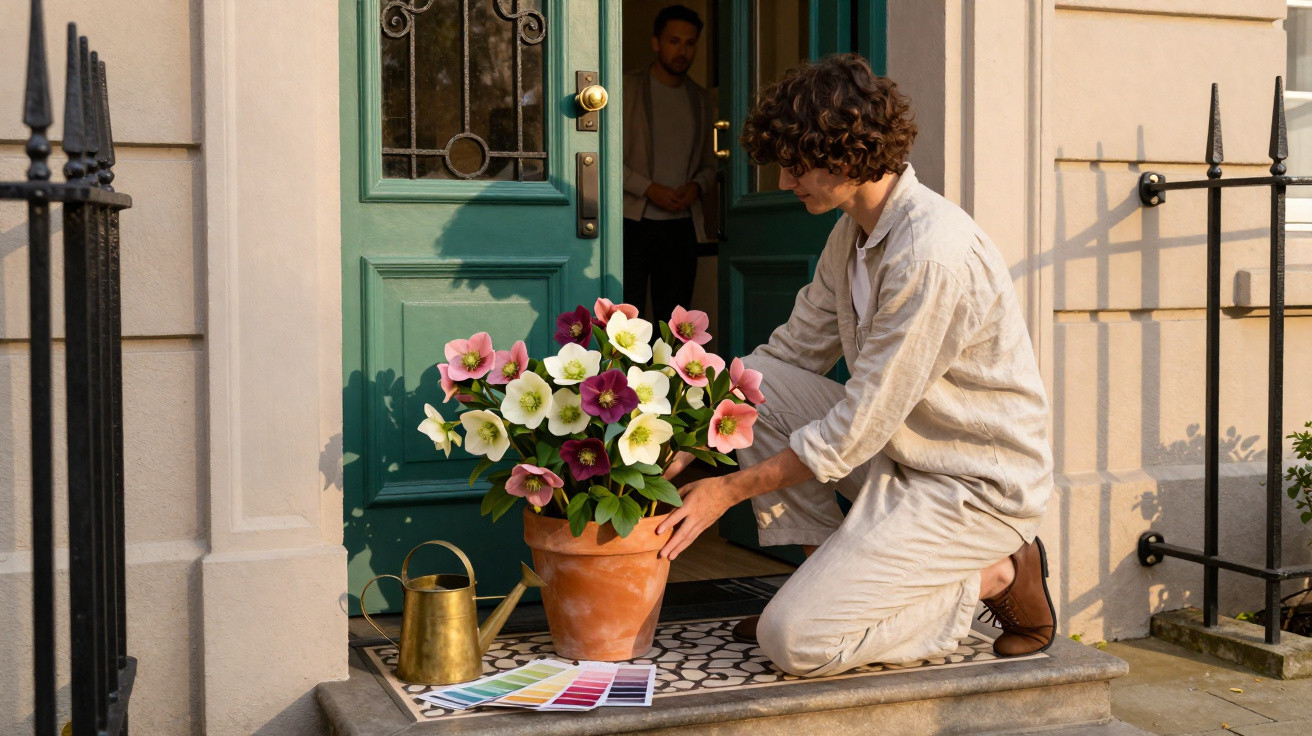
Grey February, a fine drizzle, plants lying dormant.
And then, all at once, one front door becomes a must-stop spot on the street.
That’s what has started happening in many neighbourhoods as a particular plant-quiet on the garden-centre shelves yet striking on a doorstep-began appearing in entrance pots and small front plots. One carefully chosen specimen is turning passing spaces into photo backdrops, even in deep cold under a leaden sky.
The flower that gets on with the job when the rest of the garden is off-duty
The name might sound unusual, but it’s worth remembering: the Oriental hellebore, also known as the Lenten rose. It’s a perennial that ignores the usual rules of garden timing. While most plants retreat in winter and sit looking flat for weeks, this one comes into its own.
From January through to March-when many house fronts can look neglected-the hellebore produces full, sturdy blooms above deep green foliage that stays attractive year-round. In colder towns and cities, it’s not uncommon to see it flowering even when there’s a thin film of frost on the ground.
"The effect is simple and impactful: ordinary doors take on the look of a well-cared-for home, without needing renovation or major spending."
That visual contrast-gloomy winter, healthy flowers-is a key reason the plant has earned a place by front doors, outside smaller buildings and on narrow verandas. For anyone wanting a dependable hit of colour without swapping pots every season, the hellebore avoids the cliché of annual bedding and last-minute bouquets.
From a dull frontage to the street’s calling card
Neighbours tend to notice the difference quickly. Anyone who sets a pot of hellebores beside the door usually finds two things happen: visitors mention it, and passers-by linger a moment longer on the frontage.
That’s partly because the plant carries itself well. Its leaves make a steady, rounded base-almost like a neat green carpet. Above that, firm flower stems rise and tip slightly forward, as though the house is being introduced.
In compact homes with no room for a traditional garden, two matching pots of hellebores placed on either side of the door instantly create symmetry and a sense of care. On terraced houses or homes with steps, it also sits nicely alongside the entrance, mixed in with lanterns, benches or even outdoor shoe storage.
Why this choice creates such a strong visual shift
- Flowers right through winter, when almost nothing else adds colour.
- Evergreen foliage, so the pot never looks empty.
- Balanced shape: it doesn’t block the way, but it’s clearly present.
- Refined shades that sit comfortably with doors, windows and exterior finishes.
In decorating terms, it works like a well-placed lamp: it doesn’t steal the entire scene, but it makes everything around it look better.
Colours that work with the door, the gate and even the pavement
The first wave of hellebores to reach gardens was best known for understated white. Now the picture is very different. Growers have been crossing varieties and offering a range that feels as broad as a paint chart.
You can find flowers that are almost black-plum or graphite tones-ideal for more contemporary frontages with polished concrete and metal. There are also gentle shades of dusty pink, light green, pale yellow and even apricot, which suit homes with coloured doors or timber-framed windows.
"Much of its success by the entrance comes down to one simple trick: choose a flower colour that speaks to the colour of the door."
A pot of deep wine-coloured blooms, for instance, makes a bold contrast beside a white door. A hellebore in a delicate lime-green shade can lift grey or brown gates without feeling heavy. Around blocks of flats, it adapts well to compact lobbies and small exterior set-backs, creating a garden-like feel even in paved areas.
How to plan the palette for your entrance
| Main frontage colour | Hellebore shades that suit it |
|---|---|
| White or off-white | Deep purple (almost black) or dusty pink |
| Concrete, grey, aluminium | Chartreuse green, pale yellow, apricot |
| Exposed brick or timber | Creamy white, soft pink, light green |
| Coloured doors (blue, red, green) | White or bi-coloured flowers, for balance |
Simple upkeep: a good-looking entrance without being tied to a watering can
One of the biggest attractions of using hellebores by the front door is how little maintenance they need. Once established, they ask for very little. They cope with hard cold, wind and even slightly irregular watering-so long as the compost isn’t left waterlogged.
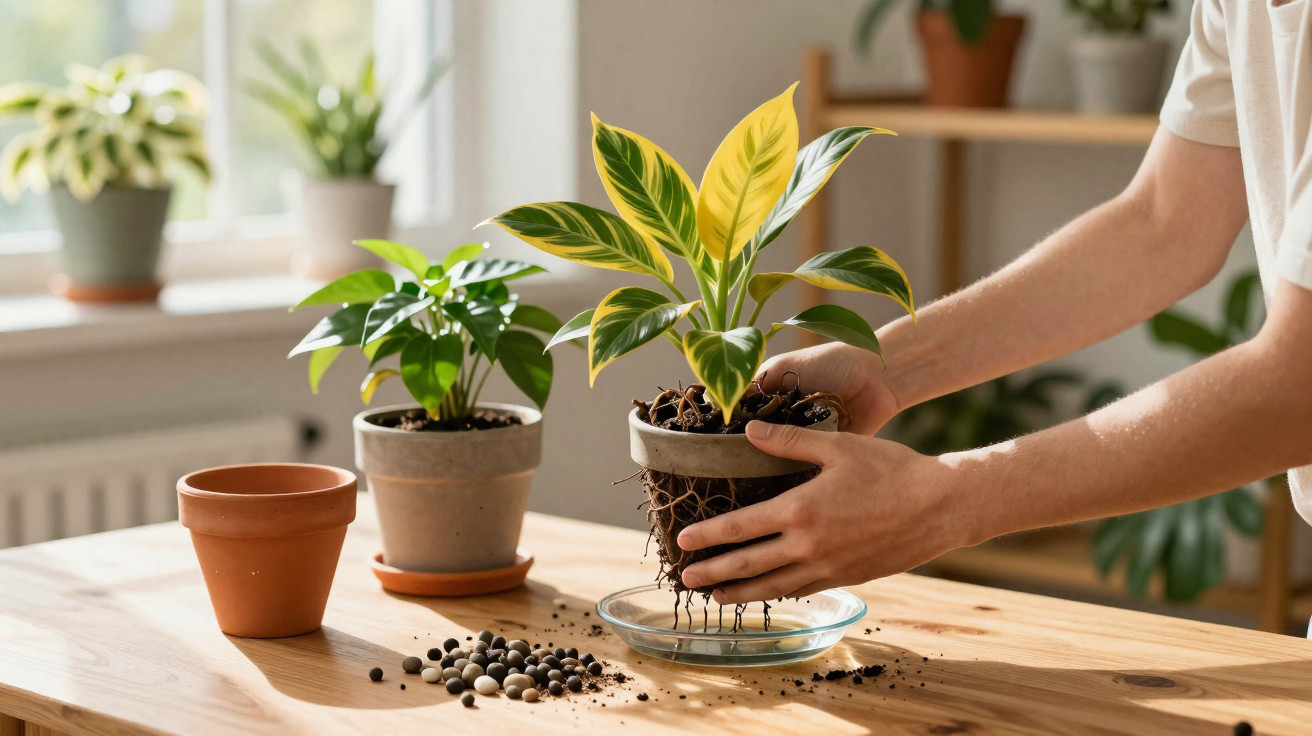
In pots, the best approach is a container with a drainage hole and a generous drainage layer, using gravel or expanded clay pellets. Above that, a mix of garden soil, well-rotted organic matter and a little coarse sand gives the roots the support they like.
"The most common mistake isn’t a lack of care-it’s too much: overwatering and soil with poor drainage."
In practical terms, that means in cold, wet spells you often won’t need to water at all. In dry periods, moderate watering twice a week is usually enough. Pruning is straightforward: remove old, yellowing leaves at the end of winter to make room for fresh growth.
A basic step-by-step for planting by the front door
- Pick a spot with bright shade or weak sun, particularly in the morning.
- Use a deep pot, or a border area with good drainage.
- Don’t plant it too deep: the crown should sit level with the soil surface.
- Water thoroughly once, then ease back on the frequency.
Pot partners that make the entrance even more photo-worthy
A hellebore looks strong on its own, but it becomes even more eye-catching when paired with plants that bring a different texture. By front doors, on verandas and in small garage set-backs, thoughtful combinations can turn a single pot into a designed arrangement.
Colourful foliage plants such as heucheras create a contrasting under-layer. Smaller ferns add a woodland-garden feel, even in the middle of the city. And trailing plants like variegated ivy soften the rim of larger containers and add movement.
A common idea in residential schemes is a three-tier mix: hellebores in the centre, lower heucheras around them, and ivy cascading down the sides. This structure works just as well for ground-floor homes as it does for small roof terraces reached by stairs.
Risks, extra care and limitations worth knowing about
Like many ornamental plants, hellebores contain toxic substances if ingested. That means extra caution in homes with small children and inquisitive pets. Ideally, keep pots out of direct reach and avoid planting them in beds where cats and dogs tend to dig.
Another consideration: people with sensitive skin may find the sap irritating when handling the plant. Gloves solve this, especially when removing older leaves or repotting divisions.
In very hot climates, with long, dry summers, the plant can struggle if exposed to strong, direct sun. In those situations, the best entrance spot is partial shade-under an overhang or beneath taller trees. In flats, east-facing balconies or those protected by external louvres tend to work better.
Practical set-ups for anyone who wants to try this decorating “shortcut”
If you’re new to it, a simple place to start is to create a small “welcome corner”: a tall pot of hellebores in a shade that matches the door, a neutral mat or doormat, and a bench or wooden crate beside it. The cost is moderate, but the visual payoff is high.
Another approach is to use the plant as a gentle outdoor divider. Two aligned pots can mark the transition from pavement to front door, or from gate to driveway. In shared developments, building managers have been using hellebores in sets of identical containers at block entrances, bringing a sense of cohesion without major works.
For anyone thinking in terms of building interest over time, pairing hellebores with other winter performers creates a sequence of appeal across the colder months. Bulbs that appear ahead of spring, small fragrant shrubs and low ornamental grasses can all join in, ensuring the entrance never looks completely lifeless.
In the end, the principle is straightforward: choose a plant that puts in the work when it’s least expected. The Oriental hellebore has become a favourite among gardeners for exactly that reason. With a bit of care at planting time and a smart decision on where the pot sits, a tired frontage takes on a new story-and the entrance can quite reasonably compete for the title of the most admired on the street.

Comments
No comments yet. Be the first to comment!
Leave a Comment