
Not all is lost yet – provided you act correctly now.
Many orchid owners know the panic that sets in when previously magnificent green foliage suddenly droops limply. Instead of firm, plump leaves, the plant develops wrinkled, softened flaps. Although this looks like drought, an entirely different issue is often responsible. Anyone who simply thinks “water more” at this point can quickly make matters worse. However, a clear rescue plan can still help many of these plants regain stability.
Soft, wrinkled leaves: what your orchid is trying to tell you
When the leaves of a Phalaenopsis become soft, sink in and develop creases, the plant lacks water internally. Pressure inside its cells drops, leaving the leaves unable to hold themselves upright. To the owner, this suggests thirst – yet the problem very often lies with the roots rather than the watering can.
Common causes include:
- Root rot caused by permanently wet growing medium
- Severe dryness from watering too infrequently
- Extremely dry air near radiators or south-facing windows
- Unsuitable growing medium that retains water
Soft, wrinkled leaves are a clear warning sign: the water supply route between root and leaf has been disrupted – and time is running out.
Prompt, targeted action can often still stabilise the plant. First, though, you need a diagnosis before watering, feeding or cutting anything.
Quick diagnosis: checking roots, growing medium and location
A look inside the pot determines which rescue strategy is suitable. Transparent plastic pots reveal a great deal, while plants in opaque pots should be carefully removed from their container.
Assessing roots correctly
Typical signs around the roots include:
- Healthy roots: firm, plump, silver to green, with pale tips
- Rotten roots: brown, mushy, hollow and often accompanied by a musty smell
- Completely dried-out roots: grey, hard and brittle
If the whole crown of leaves moves when touched lightly, the root neck may be damaged. In that case, take the plant out of its pot and inspect the base. A stable, firm base indicates good prospects, whereas a softened or rotting base is critical.
Checking the environment and care conditions
Alongside the roots, the orchid’s indoor climate plays a major part. Ideal conditions are:
- A bright spot without harsh midday sunshine
- Temperatures generally between 18 and 22 degrees
- Humidity of around 50 to 70 per cent
- Soft watering water with a low lime content
With pure dehydration and no root rot, a gentle soak is often enough: place the pot in lukewarm water for 10 to 30 minutes, then allow it to drain thoroughly and water again only once the growing medium is almost dry. A rigid calendar-based watering routine is risky. It is better to check with a finger or by judging the pot’s weight each time.
When leaves are soft and roots are rotting: rescue in several steps
If the roots show obvious signs of rot, a simple soak will no longer be enough. The orchid then requires something like emergency surgery.
Root surgery for weakened Phalaenopsis
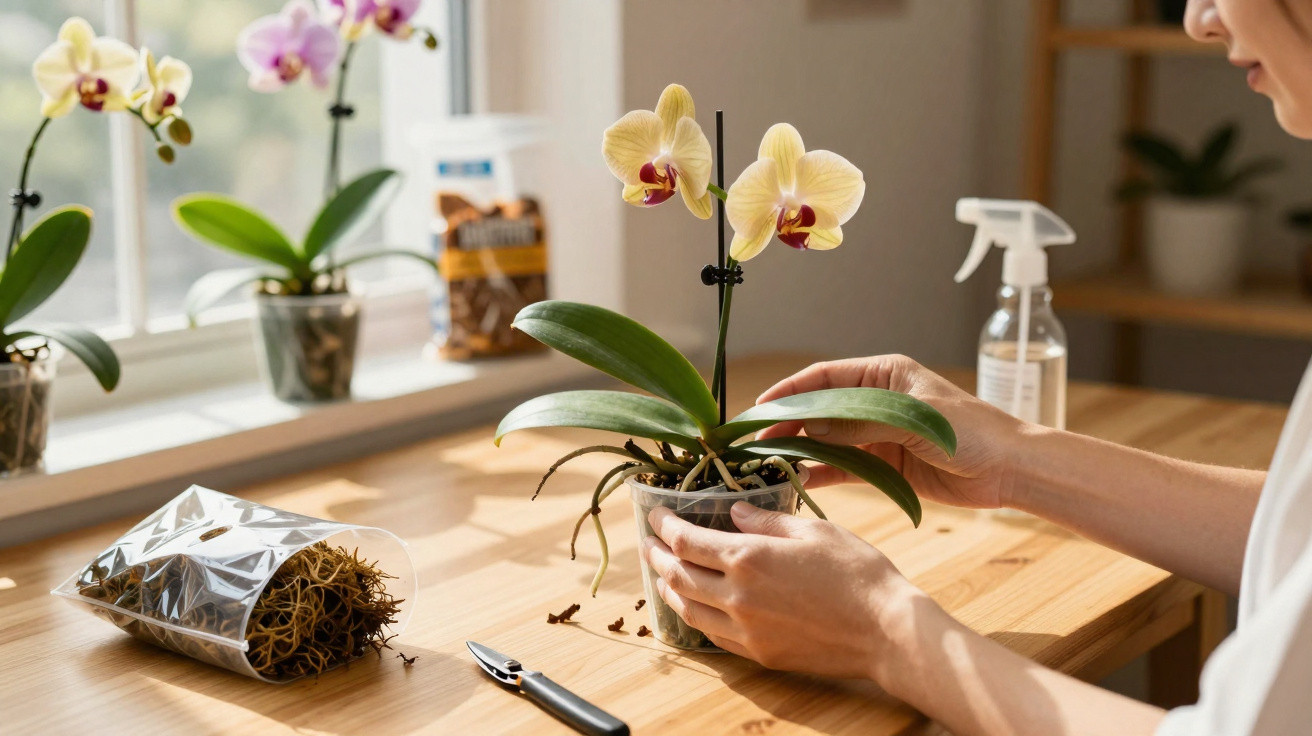
- Carefully remove the plant from its pot and shake away the old growing medium.
- Cut away all mushy, hollow or blackened roots using disinfected scissors or a sharp knife.
- Leave only firm, pale roots in place.
- Lightly dust cut surfaces with cinnamon powder to slow fungal growth.
- Leave the plant to dry in the air for several hours.
Afterwards, the patient needs a new home. Use a specialist orchid growing medium containing coarse bark, a little moss and, optionally, some charcoal. This mix allows water to drain rapidly while retaining sufficient moisture in its air pockets.
For the first few weeks after repotting, water the plant very sparingly. The growing medium may be slightly moist, but must never be soaking wet. A musty or earthy smell from the pot is a warning sign of fresh rot.
Intensive care in a plastic bag: when hardly any roots remain
If the orchid is almost rootless and its leaves feel like tough leather, a more drastic approach is needed: a type of humidity tent.
This is how the transparent bag method works:
- Remove every rotten root and clean the plant.
- Place a layer of lightly moistened sphagnum moss fibres in the bottom of a clear bag.
- Set the orchid on the moss without burying it.
- Close the bag and blow a little air inside to create a small “greenhouse”.
- Place or lay the bag in a bright but non-sunny spot at around 20 to 22 degrees.
The sealed bag creates humidity of almost 100 per cent. The leaves absorb moisture while new roots can form at the base.
Fresh root tips usually appear after three to four weeks. Then open the bag gradually so the plant can adapt to normal humidity. It should move into fresh orchid growing medium only once several new, stable roots have developed.
Preventing setbacks: a simple care routine for firm leaves
Once the plant has been saved, a consistent routine will help prevent further periods of limpness.
Water properly rather than drowning it
Many Phalaenopsis do not die from thirst, but from well-meant overwatering. A few basic rules help maintain a stable water supply:
- Water only when the growing medium is almost dry, using a finger test or weight test.
- Thoroughly soak the pot in the sink, then let it drain completely.
- Never leave water standing in the outer pot or saucer.
- Avoid heavy watering directly into the leaf axils, where water collects and encourages rot.
In very dry centrally heated air, a tray of pebbles and water beneath the pot can help. The water evaporates and raises humidity without leaving the roots standing in water.
A location that avoids stress
A bright bathroom window, an east- or west-facing window in a living space, or a spot slightly away from a south-facing window all work well. Direct midday sun scorches leaves and places extra demands on the plant’s energy, which it needs for roots and foliage.
Draughts, constantly changing temperatures and dry air directly above radiators all cause stress. Anyone determined to keep an orchid in such a position should use a humidifier nearby and pay particularly close attention when watering.
Common mistakes – and how to spot them
Many problems with limp leaves arise from good intentions. A brief look at typical mistakes can help you avoid them in future:
| Problem | Typical symptom | Better solution |
|---|---|---|
| “Rescue soaking” in a bucket of water | Roots rot and the smell becomes musty | Use short water baths, then allow the plant to drain completely |
| Permanently damp compost from the garden centre | The growing medium clumps together and roots receive no air | Use specialist, coarse orchid growing medium |
| Cutting off leaves because they look unattractive | The plant loses reserves during its recovery phase | Leave green leaves in place until they genuinely die off |
What is happening inside the plant?
A Phalaenopsis stores water not only in its roots, but above all in its thick, fleshy leaves. When the root system fails, the plant uses up these reserves – which is why its leaves turn soft and wrinkled. At the same time, it attempts to form new roots at the base, as long as the growing point remains healthy.
The bag method, or maintaining very high humidity, supports this process: the leaves lose less water and can even take in some moisture through their surface. This leaves the plant with more energy to produce new roots.
How much hope is realistic?
The prospects are best when the leaf base and at least some of the roots are still firm. Full, green leaves that are only slightly limp can usually be stabilised successfully. Completely yellow, mushy or blackened leaves, by contrast, indicate that extensive areas of tissue have already died.
Those who intervene early, assess the causes honestly and do not water “just in case” have surprisingly good prospects with Phalaenopsis. This genus is more resilient than its delicate appearance suggests – if you take its signals seriously and restore a balance of water, air and light.

Comments
No comments yet. Be the first to comment!
Leave a Comment