
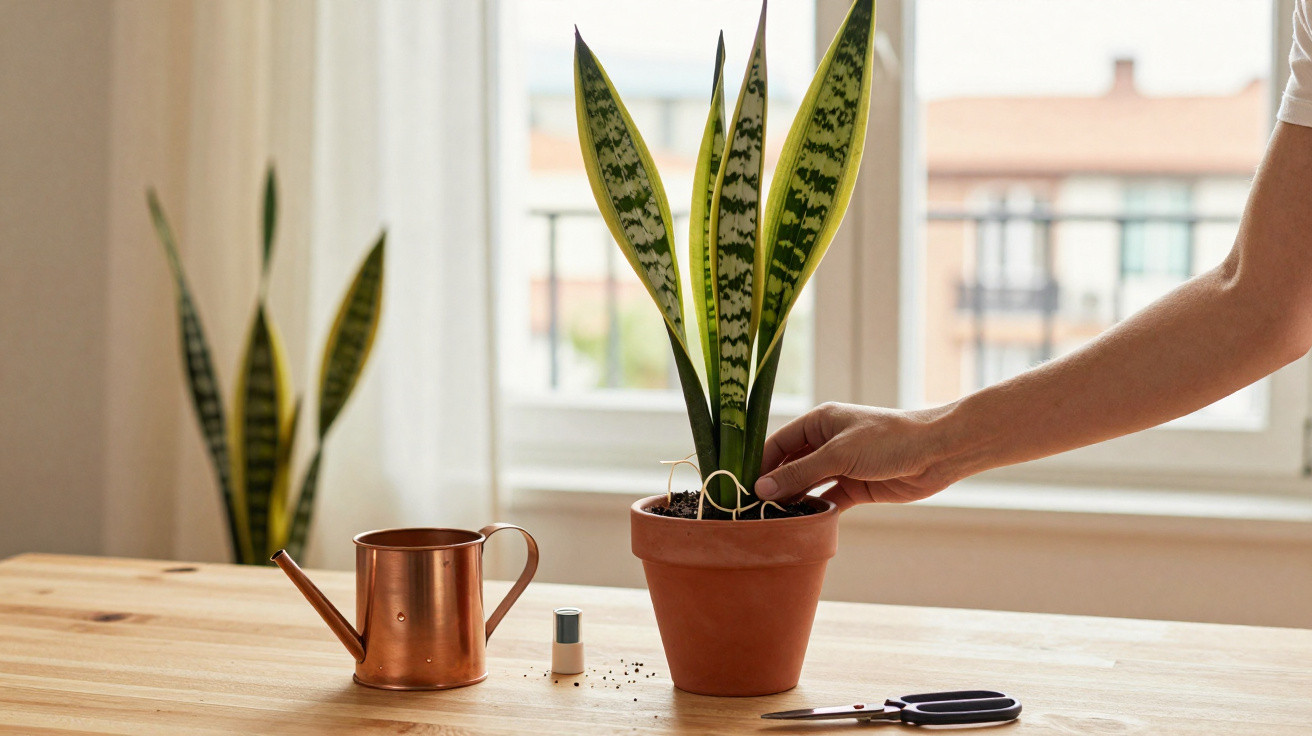
Snake plants are among the most common ornamental plants in homes and offices across Brazil. Their tough appearance, marked by upright, rigid leaves, is often automatically taken as a sign that the plant is healthy. However, root problems can develop unnoticed while the visible part of the plant still looks strong and well formed.
Why does the snake plant look healthy even when it is overwatered?
The snake plant is well known for its ability to hold water in its leaves and rhizomes. This internal store allows it to cope with dry spells, yet it can also conceal damage that begins in the roots and takes time to become visible in the leaves.
Excessive watering keeps the potting mix constantly wet and restricts air movement between its particles. With less oxygen available, the roots become less effective and more susceptible to fungi and bacteria, even as the above-ground portion remains upright and green.
How can you tell whether a snake plant has healthy roots?
In practical terms, a snake plant’s health depends more on what is happening inside the pot than on how its leaves look. Drainage is a crucial factor: pots without drainage holes are likely to hold too much water, leaving the growing medium waterlogged for days and encouraging root-system rot.
When repotting or checking the plant, look for these clear signs to establish whether the roots are in good condition or have already been affected by excess moisture:
- Firm, light-coloured roots indicate healthy growth and sufficient aeration.
- Darkened, very soft sections or an unpleasant smell suggest rot.
- Rhizomes that are waterlogged or fall apart when touched reveal too much water in the growing medium.
How should you adjust snake plant watering day to day?
The way a snake plant is watered directly affects root health and the plant’s lifespan. Rather than following a fixed schedule, it is safer to adjust watering to the setting, pot type and condition of the growing medium, without allowing the soil to stay continuously damp.
Before watering, check the moisture below the surface, assess the weight of the pot and make sure that water is not left standing in the saucer. Indoor spaces with limited ventilation or little natural light generally keep the growing medium moist for longer, so they require wider gaps between watering than balconies or well-ventilated outdoor areas.
What extra care does a snake plant need in different environments?
Dracaena trifasciata also responds to the climate, the type of pot and the time of year. During colder or wetter periods, evaporation slows and the growing medium takes longer to dry. Reducing watering frequency helps prevent the plant from staying constantly damp and becoming vulnerable to fungi.
Plastic pots retain more moisture and therefore need longer intervals between watering, whereas terracotta pots allow greater transpiration and help the growing medium dry more quickly. By using a suitable container, a free-draining growing medium and regularly monitoring moisture, you can better protect the roots, prevent hidden issues caused by overwatering and support the snake plant’s healthy development over time.


Comments
No comments yet. Be the first to comment!
Leave a Comment