
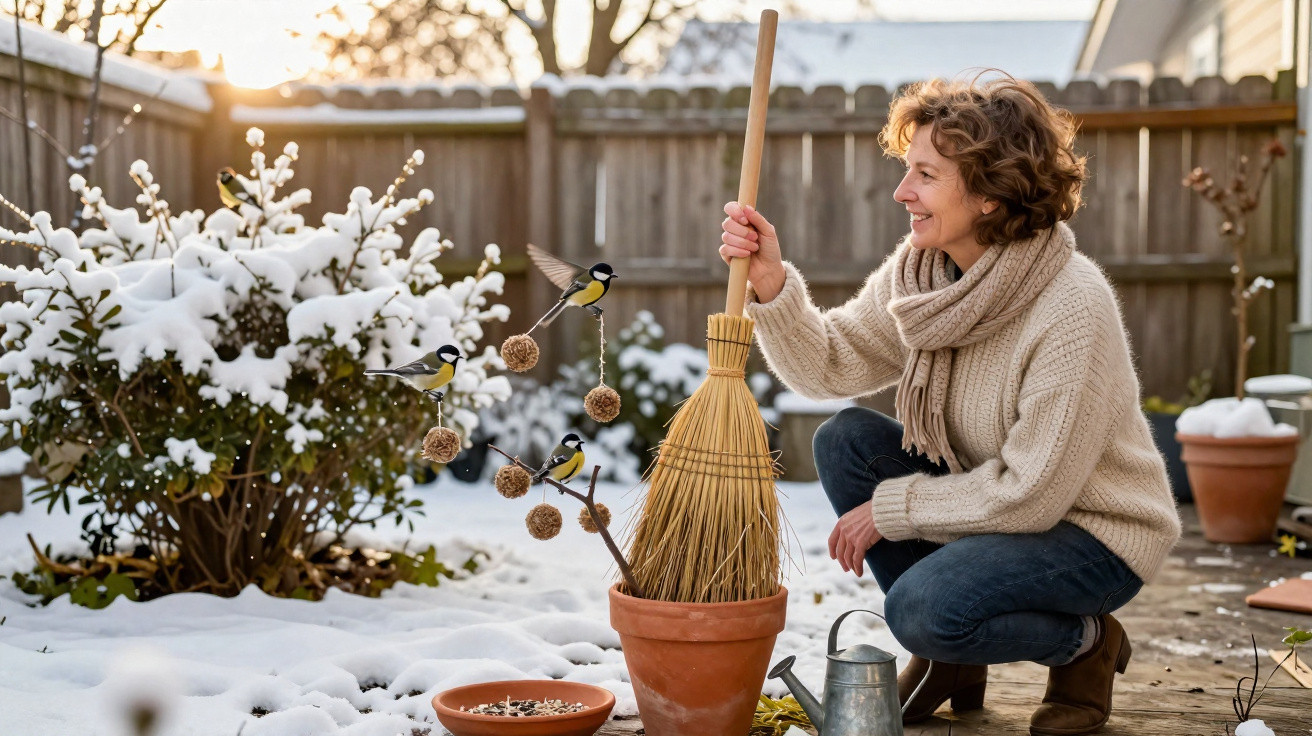
Among bare shrubs, frozen lawns and snow-covered flowerbeds, winter can leave gardens looking deserted. What appears to us as a picturesque snowy scene is a tough fight for survival for tits, robins and sparrows. Food supplies disappear and hiding places are lost. This is where an item many people have carelessly left in a corner comes in: the old broom in the shed.
Why winter is so harsh for garden birds
When temperatures remain around freezing both day and night, small birds face intense pressure. Their metabolism works at full speed, using large amounts of energy to maintain their body temperature. At the same time:
- insects are difficult to reach or have disappeared;
- berries have long since been eaten;
- grass seeds and wildflower seeds are concealed beneath snow;
- shelter in hedges and bushes has been greatly reduced.
Many people scatter bread or put up bird feeders. Birds need more than a few seeds, however: they require safe places to land, protected spots to feed and somewhere to retreat when sparrowhawks or cats appear.
“A good winter garden for birds always provides three things at once: energy, protection and a clear view – and that is exactly where a broom can help.”
How an old broom can become a lifesaver
An old yard broom or straw broom has an unexpected advantage: its thick bristles act like an artificial bush. Birds can find grip, cover and small hiding places among the fibres. If the broom is also mounted above ground level, it creates a safe resting place away from damp conditions and many predators.
The idea is to turn the broom into a multifunctional “bird base” that serves as a feeding station, perch and miniature shelter at the same time. It is surprisingly easy to do and does not require costly specialist equipment from a garden centre.
Step by step: setting up a bird broom
Whether it is a plastic-bristle broom, twig broom or straw broom, almost any type can be used. A secure fixing and a calm location in the garden or on the balcony are what matter most.
Choosing the right location
- Slightly elevated: Attach it to a tree trunk, post or balcony railing, for example.
- Sheltered from the wind: A position with some cover from a house wall, hedge or fence is ideal.
- A clear view for birds: They need to spot threats early, so do not squeeze the broom completely into a dense corner.
- At least 1.5 metres above ground: This makes access considerably more difficult for cats.
Turning the broom into a feeding station
Now comes the creative part. Food and small shelters can be secured between and around the broom bristles:
- Fat-based food: Hang fat balls, an energy ring or homemade fat balls containing oats and seeds from the bristles.
- Pieces of fruit: Tie on apple slices, pear wedges or half a slightly bruised apple.
- A small food supply: Wedge a seed mix or sunflower seeds into the bristles so birds can peck them out.
- Mini shelter: Secure a lightweight small wooden box or improvised shelter, for instance one made from leftover timber, to the handle.
“The broom keeps food dry, raised and easy to reach – a major advantage over seeds simply scattered on the ground.”
How a broom protects birds from cold, damp and predators
Its greatest strength lies in its structure: tightly packed fibres work like a small thicket. They create a protected micro-area with little wind passing through it. To birds, it resembles a small shrub that has remained standing in the middle of a bare winter landscape.
The raised position also adds security. Mice, rats and hedgehogs have less access to dropped food. Cats find it harder to creep up unnoticed. Birds of prey are often spotted early too, as songbirds have a good all-round view from the broom.
| Winter problem | What the broom provides |
|---|---|
| Wet, frozen food on the ground | Food hangs dry and elevated between the fibres |
| Too few protected perches | The broom replaces missing bushes as a resting place |
| Danger from cats and birds of prey | Better visibility and hiding places among the bristles |
| Expensive feeding stations | Affordable use of materials already available |
Which food genuinely helps – and what is harmful
Not everything found in the kitchen cupboard is suitable for birds. Anyone stocking their broom feeding station should follow several basic rules:
- Suitable choices: Sunflower seeds, hemp seed, oats, unsalted nuts and specialist wild bird food mixes.
- For soft-billed birds: Pieces of apple, raisins in moderation, dried berries, and oats mixed with a little vegetable fat.
- Avoid: Salted nuts, bread showing signs of mould, seasoned leftovers and bacon with a high salt content.
For homemade fat-based food, mix vegetable fat or unsalted butter with grains, seeds and oats. Spoon the mixture into small cups or moulds, allow it to harden, then attach it to the handle or among the broom bristles – and the high-energy snack is ready.
How the broom brings people and neighbours together
In many community gardens and shared courtyards, an improvised feeding spot like this quickly becomes a talking point. Children can watch which species visit the broom, keep tally charts and name the regular visitors. Older people gain a reason to check briefly each day for their feathered guests.
“A simple household item becomes a small winter project that brings families, neighbours and nature closer together.”
Anyone with several brooms or old garden tools can create small stations in different areas. This produces a kind of “bird route” through the garden, giving different species feeding spots at varying heights, from close to the ground to high in a tree.
Other everyday objects that help birds
The broom is only the beginning. Many apparently useless items from the shed or cellar can provide simple but effective support in a winter garden:
- Old rake: Mounted with its tines facing upwards, it is ideal for hanging fat rings.
- Wooden handles: These can become extra perches, such as on a patio or balcony.
- Metal or wire baskets: Suitable for loose peanuts or fat blocks.
- Broken wooden ladder: Laid across two posts, it forms a level with several feeding places.
Using ideas like these not only saves money but also reduces waste. At the same time, it creates a landscape of structures in which birds can navigate and settle more easily.
Overlooked risks – and how to avoid them
Useful as a broom can be, several points must be considered:
- Cleanliness: Remove food remains that become mouldy or heavily soiled regularly to prevent disease.
- Check the fixing: The broom must be securely mounted to withstand storms, so it cannot fall onto animals or people.
- Near windows: Keep it away from large glass surfaces or mark the panes to stop birds flying into them.
- Do not leave strings dangling: Longer threads or wires can become traps; use only short, taut fastenings.
Keeping these points in mind creates safe, lasting support for wildlife without introducing new hazards.
Why this small idea can make a big difference over time
Garden birds are more than attractive visitors. They eat pests, spread seeds and help keep the biological balance of green spaces stable. If they make it through difficult winters successfully, they repay the garden with lively activity in spring.
The repurposed broom demonstrates how easily ecology can be woven into everyday life. There is no need for expensive products or perfect planning. A look inside the garden shed, a little time for making things and an attentive eye for the animals outside your own door are enough to turn a useless dust-gatherer into a small winter lifeline.


Comments
No comments yet. Be the first to comment!
Leave a Comment