
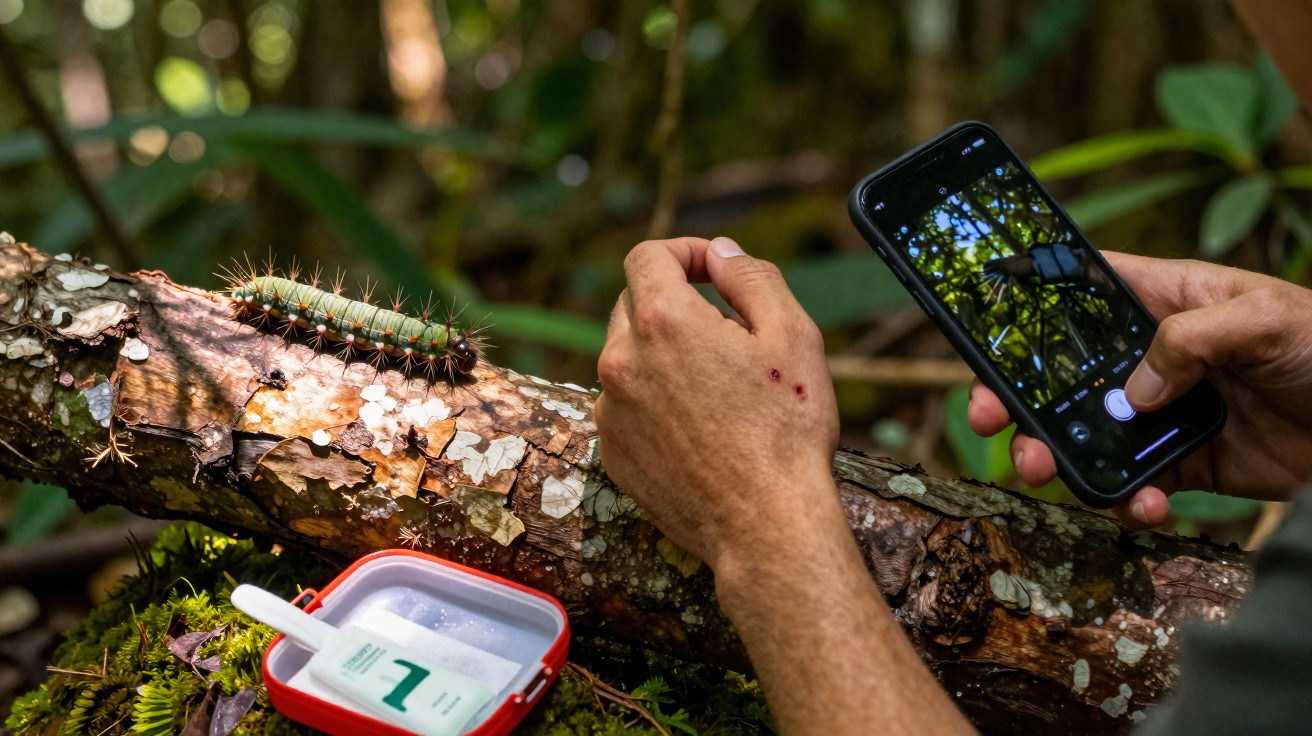
Resting a hand on a tree trunk can be enough to result in a medical emergency. Concealed among vegetation and usually gathered in groups, the Lonomia caterpillar has bristles that can release venom capable of disrupting blood clotting and, in the most serious cases, causing internal bleeding.
Why is the Lonomia caterpillar so dangerous?
Lonomia belongs to a group of caterpillars of major medical importance in Brazil. An accident occurs when its stiff bristles touch the skin and inject toxins into the body. The larger the affected area and the greater the number of caterpillars touched, the higher the possible dose of venom.
From 2007 to 2017, 42,264 incidents involving Lonomia were recorded in the country, including 248 serious cases and five deaths. Its venom disrupts clotting mechanisms and may lead to bleeding, acute kidney injury and intracranial haemorrhage, particularly if treatment is delayed.
How can you identify a Lonomia caterpillar?
This caterpillar generally has a greenish-brown colour, dark stripes and pale U-shaped markings along its body. Its light-green spines resemble tiny pine trees, unlike the long hairs seen on other caterpillars. At its most developed stage, it can grow beyond five centimetres in length.
Its group behaviour is another key feature. During daylight hours, dozens of caterpillars may stay still in clusters on tree trunks, making them hard to spot. Avocado, peach and pear trees are among the fruit trees that may provide shelter for these animals.
What symptoms may occur after contact?
Initial symptoms usually involve burning pain, redness and swelling at the affected site. The risk is that local discomfort can ease even as envenomation continues to develop. Several hours later, a person may experience a headache, feeling unwell, nausea, abdominal pain or unexplained bruising.
- Bleeding from the gums or nose.
- Bruises appearing for no apparent reason.
- Blood in urine, vomit or when coughing.
- Drowsiness, confusion or altered consciousness.
These symptoms may point to impaired blood clotting and require immediate medical care. Kidney failure and intracranial haemorrhage are uncommon complications, but they can be fatal. For this reason, do not wait for bleeding to appear before going to a health service.
Watch the video shared by the YouTube channel Ric spinola, which shows Brazil's most venomous caterpillar and the serious problems it can cause.
What should you do if you touch the caterpillar?
After contact, wash the area carefully with soap and water, then seek medical attention as soon as possible. A cold compress may ease the pain while travelling for treatment. Do not rub the skin, apply a tourniquet or use home remedies on the affected area.
Do not try to catch the animal or touch it again. If a safe distance can be maintained, taking a photograph may assist healthcare professionals with identifying the caterpillar. In urban areas, clusters found on trees should be reported to the municipal zoonosis service so they can be removed appropriately.
Prompt treatment can prevent serious complications
The specific treatment uses antilonomic serum, produced solely by the Butantan Institute and provided free of charge through Brazil's Unified Health System. The antivenom neutralises toxins still circulating in the bloodstream and works best when given early.
Before touching trees, picking fruit or working in gardens and orchards, inspect tree trunks closely and wear suitable protection. If you make even minimal contact with an unknown caterpillar, do not wait for the symptoms to worsen. Seek medical care immediately, because recognising the danger in time can save a life.





Comments
No comments yet. Be the first to comment!
Leave a Comment