
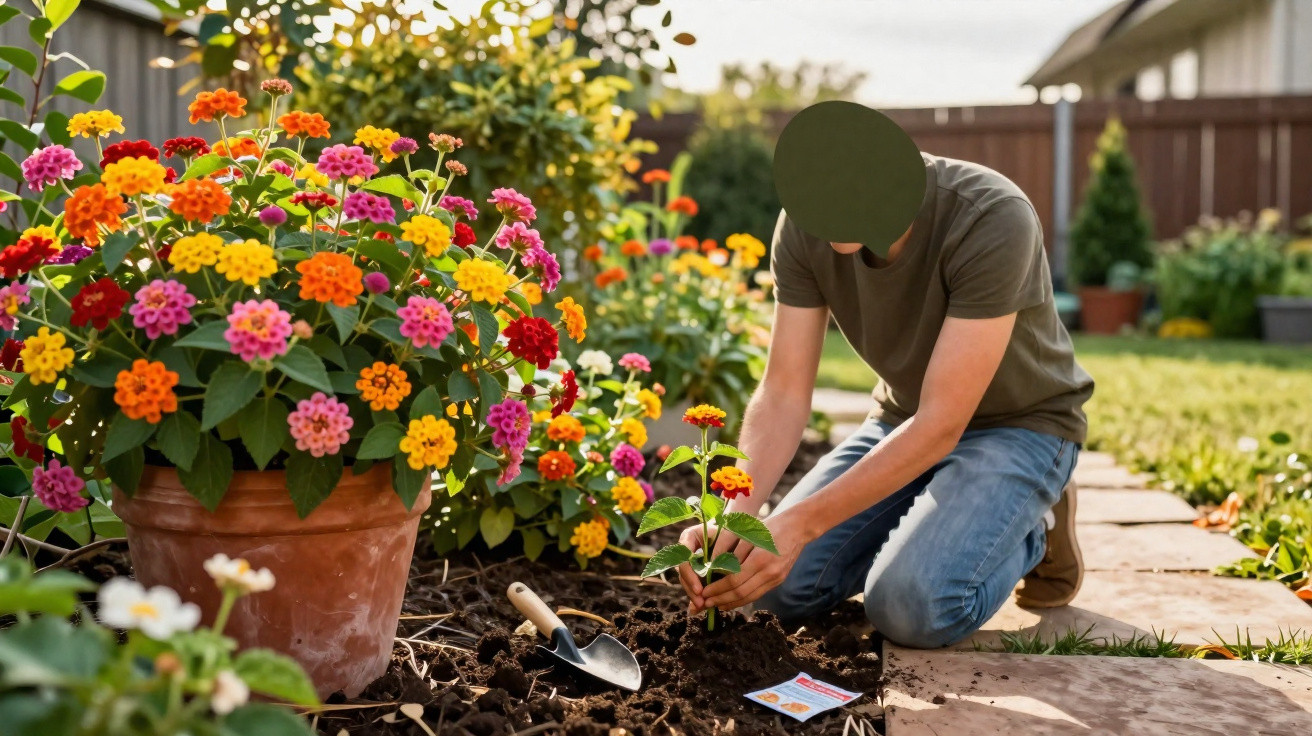
Lantana, also known as shrub verbena, is one of those plants that is impossible to overlook once it has found a place in a garden or on a balcony. Its colour combinations look hand-painted, its flowering seems never-ending, yet it remains somewhat overlooked in the UK. It is time to take a closer look at this underestimated queen of the garden.
What makes Lantana so special
Originally from the Americas, Lantana grows as a perennial shrub in warm, humid regions. In our climate, it is usually grown in pots or window boxes, where its strengths really come into their own.
- exceptionally long flowering season, from roughly May to October – and even longer with good care
- changes colour as the flowers develop, often shifting from yellow to orange or red
- copes with heat and sunshine far better than many traditional balcony flowers
- attracts butterflies, bees and other insects in large numbers
Many amateur gardeners consider Lantana to be “indestructible” because it seems to keep producing fresh flowers without pause – provided its location and care are right.
Anyone with a south-facing balcony, where pelargoniums or petunias often dry out during high summer, will find Lantana a remarkably hardy alternative.
The right position: sun, sun, sun
Garden centres generally sell Lantana either as a small shrub or as an elegantly shaped standard plant. Both forms prefer very similar conditions:
- Position: full sun, warmth and shelter from the wind
- Container: a sufficiently large pot or window box with drainage holes
- Growing medium: loose, free-draining compost, ideally mixed with a little sand or expanded clay
Before planting, it is worth checking the base of the pot. There should be a drainage layer of expanded clay or broken terracotta pieces at the bottom. This prevents waterlogging, which is the plant’s greatest enemy after prolonged frost.
The rule of thumb is simple: Lantana loves holiday-style sunshine, but hates wet feet.
Lantana can also be planted in borders, but only if it is lifted in autumn and kept frost-free in a pot. For that reason, many gardeners choose to grow it in a container from the outset.
Planting Lantana: getting off to a good start
The ideal planting time is late spring, once night-time frosts have reliably passed. That is when the plant can move outdoors.
- Line the pot or window box with a drainage layer.
- Add loose compost, position the plant and gently loosen the root ball.
- Fill around the edges with compost, firm it down well and water thoroughly.
- For the first few days, protect it slightly from intense midday sun while it establishes.
If you are combining several plants in one window box, allow a little extra space between them. Lantana usually grows more densely and bushily than it appears likely to in May.
Summer care: plenty of flowers, but not entirely effortless
Although Lantana is considered easy to care for, it does still need some attention. A long flowering season requires energy, supplied through water and nutrients.
Watering correctly
- Keep the compost consistently lightly moist, but never permanently wet.
- During hot spells, water daily if necessary, sometimes in both the morning and evening.
- Do not allow the root ball to dry out completely, otherwise the plant will drop buds and flowers.
The surface of the compost may dry out from time to time, but the layer beneath should still feel lightly moist. If in doubt, push a finger two to three centimetres into the growing medium.
Feeding for continuous flowering
A Lantana that flowers for months on end needs a regular supply of nutrients:
- work a slow-release fertiliser into the compost when planting in spring
- from May onwards, feed once a week with liquid flowering-plant fertiliser
- if growth is particularly strong and flowering is abundant, use a slightly more generous dose, while still following the instructions on the packet
Lots of flowers mean high demand: without fertiliser, Lantana soon looks tired and produces fewer buds.
Pruning Lantana: from compact shrub to a shapely crown
In a window box, it is usually enough to remove faded flowers regularly. This encourages fresh buds and keeps the plant looking tidy. Heavy pruning is often unnecessary here, as many balcony plants are grown for just one season anyway.
It is different for standard Lantana plants or larger container specimens intended to live for several years:
- in March or April, cut all shoots back firmly to around 10 to 15 centimetres
- remove older, woody branches further inside the plant so that light can reach the crown
- during the growing season, lightly shorten individual overlong shoots to maintain the shape
This hard cut may look severe at first, but it encourages the plant to produce new growth and develop its characteristic dense covering of flowers.
Overwintering: keeping the “indestructible” Lantana truly alive
Lantana cannot tolerate frost at all. Anyone wishing to keep it as a perennial shrub will need suitable winter accommodation:
| Option | Temperature | Characteristics |
|---|---|---|
| bright, cool room | around 10 °C | Some leaves remain, growth is slow, and occasional light watering is needed. |
| dark, very cool room | about 5 °C | The plant usually drops all its leaves; it needs almost no water, but the root ball must not dry out completely. |
From February, gradually provide the plant with more light and water again. If it is pruned in March, place it somewhere bright afterwards, but not yet in full sun. It should only return permanently to the balcony or terrace after the last frosts, usually in late May.
Toxic to children and pets, a paradise for insects
As attractive as Lantana looks, it is not harmless to people or many pets. Every part of the plant is considered toxic, particularly the berries that form after flowering. These can quickly prove tempting to children.
- Place plants beyond the reach of young children.
- If you have dogs or cats, choose positions where they cannot nibble the plant.
- Dispose of faded plant material in household waste rather than on the compost heap if animals can access it.
For butterflies, bees and countless wild insects, however, Lantana is a nectar-rich magnet – especially during dry summers.
For an insect-friendly display, combine Lantana with native perennials such as lavender, sage or catmint. This creates a continuously flowering “buffet” for pollinators.
When Lantana is genuinely a good choice – and when it is not
Lantana is ideal for gardeners who:
- have a very sunny balcony or terrace
- enjoy intense colours and want to create a Mediterranean feel
- are happy to water and feed regularly throughout summer
- want to watch butterflies and other insects
It is less suitable for households where young children play freely on the balcony without it being certain that nobody will eat the berries. Anyone without a frost-free space must often treat Lantana as an annual container plant, which can be a shame with larger specimens.
Practical advice from experience
Many Lantana problems can be avoided simply by preventing a few common mistakes in the first place:
- Pot too small: The plant dries out constantly and flowers remain smaller. It is better to choose a generously sized container from the beginning.
- Exposed, draughty position: The plant suffers on a balcony with persistent draughts, and leaves may develop brown edges.
- Waterlogging: Brown, soft roots and suddenly limp growth indicate root rot. Repot immediately and improve drainage.
A thin layer of bark mulch or lava gravel over the compost can also help. It reduces evaporation and keeps moisture in the pot for longer, which is particularly useful during hot spells.
Another interesting point: Lantana is no longer available only in the classic yellow-and-orange shades. Well-stocked nurseries now offer varieties in pink and lilac, white and yellow, or even two-tone pastel colours. Combining several of them creates an almost tropical-looking floral display with little effort – right in the middle of an urban balcony.




Comments
No comments yet. Be the first to comment!
Leave a Comment