
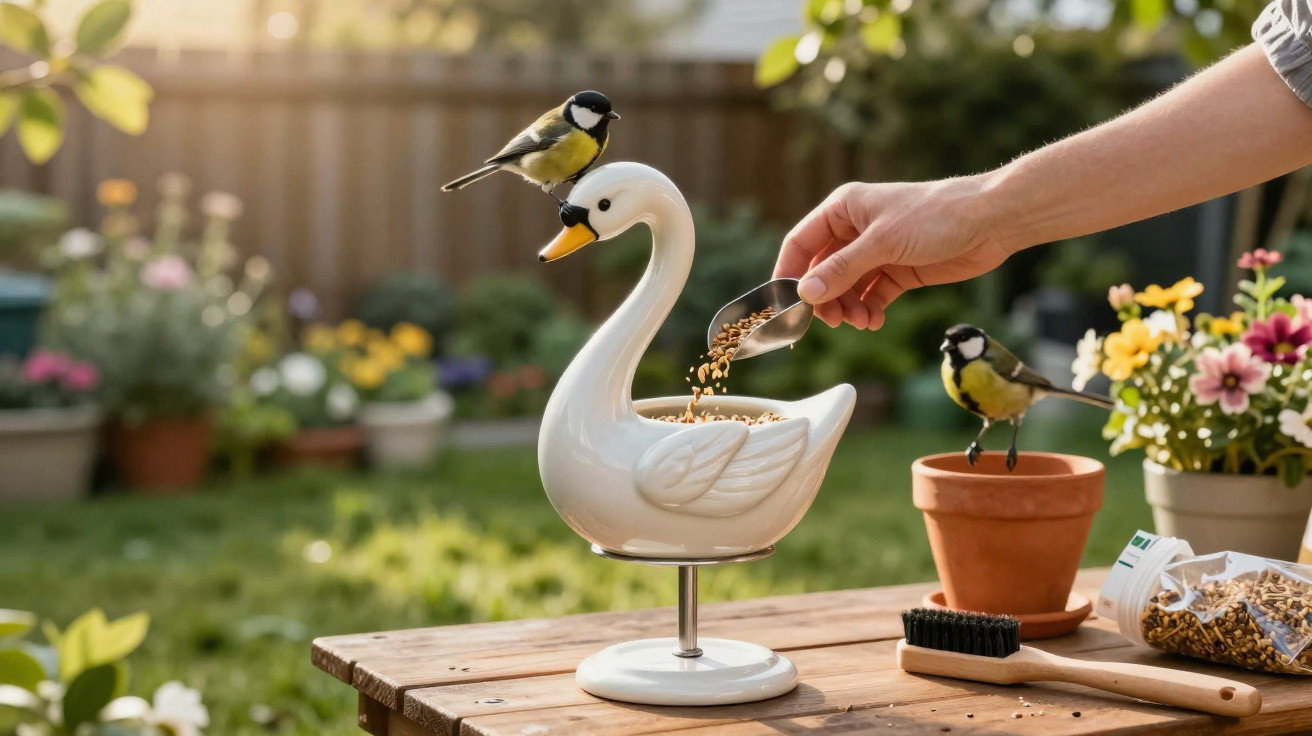
Those dusty old vases can look awkward in the living room in no time. Out in the garden, though, they can become a handy lifeline for birds when food is scarce in the colder months. With just a few simple steps, a so-called dust-catcher turns into a sturdy feeding station - decorative, low-cost and genuinely eye-catching.
From dust-catcher to feeding station: what’s so brilliant about the swan
Most people recognise the classic swan vase made from ceramic or porcelain: heavy, glossy, with wide-spread wings, usually in white or pastel shades. Plenty end up at car boot sales or in charity shops because no one wants them on display at home any more.
"Those very traits - heavy, stable, wide opening - are what make the swan outdoors a perfect feeding station for garden birds."
The benefits are pretty clear:
- Substantial weight: less likely to topple over, even in the wind
- Wide opening: plenty of room for seed and for several birds at once
- Durable material: ceramic stands up well to rain, frost and sun
- Stand-out shape: a decorative feature in a flowerbed or on the lawn
Feeding birds in winter doesn’t just help individual animals. Your small visitors pay it back in the garden: they eat caterpillars and aphids, spread seeds, and keep the garden feeling lively even in the bleak part of the year.
Materials: what you need for the swan feeding station
Most of what you’ll need is likely already in the shed or cellar, or can be picked up at a car boot sale or from a charity shop. There’s very little you truly have to buy new.
| Item needed | Purpose |
|---|---|
| Ceramic swan vase | Main body that will hold the seed later |
| Sturdy plate or flat platter | Base and landing area for the birds |
| Small vase with a narrow neck | Connector between the pole and the plate |
| Wooden or PVC pole (at least 1.5 m) | Support that raises the feeding station |
| Waterproof ceramic adhesive / outdoor silicone | Permanently secures the parts |
If you can’t find a swan, you can use the same idea with other solid ceramic pieces - for example an old lion figure, a fruit bowl, or a plant pot with a wide rim.
Step by step: turning the swan into a bird bar
1. Clean everything thoroughly
Older ceramics often come from the loft dusty, sticky, or with grime in the creases. Before you glue anything, wash all parts well with warm water and a bit of washing-up liquid, scrub the joins with an old toothbrush, then let everything dry completely.
2. Build the base
Place the plate upside down on a table. Put a generous blob of silicone or ceramic adhesive in the middle, then glue the small vase onto it with the base of the vase facing down.
Important: press firmly for a few minutes, then leave it alone. Adhesive needs much longer to cure fully. One to two days is ideal - that way nothing wobbles later.
3. Fix the swan in place
Once the base has set, turn it over so the plate is the right way up again. Apply adhesive to the underside of the swan vase, position it centrally on the plate, and press down firmly.
Leave it to dry for several more hours. The more patient you are, the sturdier the whole structure will be. In the garden, wind, rain and the birds’ weight all put stress on the feeding station.
4. Set the pole and mount the feeding station
Outside, drive the wooden or PVC pole into the ground in a clearly visible spot. At least 30 centimetres should go into the soil so it won’t tip over. A rubber mallet helps if the ground is hard.
The small vase glued beneath the plate now acts as a sleeve: slide it over the pole. The plate with the swan rests on top. Quickly check that everything is level - then you can add the seed.
The best spot for the swan feeding station
Where you place it determines whether birds feel safe. They need a clear view of their surroundings and quick escape options.
- A height between 1.5 and 2 metres, so cats can’t reach easily
- Near shrubs or a tree, so birds can dart back into cover
- Not right inside dense bushes - cats often lurk there
- Not in a constant draught; some shelter from strong wind and driving rain
A lightly open area with a bush around 2 to 3 metres away is ideal. That way, the birds can spot predators early, while staying close to a safe retreat.
What should go in the swan - and what shouldn’t
The best food depends on which species visit your garden. A base of sunflower seeds is almost always a safe bet.
Suitable foods
- Black sunflower seeds for tits, sparrows and finches
- Ready-made mixed seed blends for garden birds
- Fat balls or energy cakes, hung nearby
- Small pieces of apple or pear for blackbirds and robins
Best avoided
- Old bread and rolls - they swell in the stomach and often contain too much salt
- Seasoned leftovers, sausage, cheese
- Heavily salted or spiced nuts
- Chocolate or sweet baked goods
As a rough guide, the most useful period for a feeding station is between October and March. During this time birds find very few insects, seeds and berries outside. If you want to keep feeding into spring, reduce the amount and lean more towards natural food sources such as native perennials and berrying shrubs.
Hygiene: keeping the bird bar from becoming a source of disease
Where lots of animals gather in a small space, germs spread quickly. A swan that stays packed with old food and droppings can encourage illness.
"A quick clean once a month with hot water is usually enough to keep the feeding station hygienic."
Remove leftover seed, rinse the ceramic with hot water, and scrub with a soft brush if needed. It’s better to avoid harsh cleaning products, so no residues end up on the birds’ beaks.
If you notice sick birds in the garden (fluffed up, very lethargic, eyes stuck together), reduce the amount of feed, clean the feeding station more often and, if in doubt, pause feeding for a while.
Creative variations for keen crafters
If you enjoy projects like this, the basic idea is easy to adapt. A few options:
- Mount two smaller swans on a large plate - feeding station plus a mini bird bath
- Angle the plate base so a shallow puddle forms after rain
- Use old teacups and saucers as extra, lower feeding spots in the border
- Paint the swan - for example with weatherproof dots or stripes - if the original looks too plain
The key point remains the same: the build must be stable and safe for the birds, with no sharp edges or wobbly parts.
Why the effort is worth it for your garden and the climate
With a single repurposed swan vase, you get several positives at once: less waste, a decorative corner, and more life outside the window. It can also help children connect directly with tits, blackbirds and sparrows - birds many otherwise only know from books.
Feeding stations also work well alongside other simple steps: native shrubs such as dog rose, hawthorn or elder provide shelter and natural food. Leaving perennial stems standing through autumn offers extra feeding in the form of seed heads.
In the end it’s just an old ceramic swan. For many garden birds, though, this small bit of making can help them through harsh winter days - and for people, a dull view from the window suddenly becomes live entertainment.
Comments
No comments yet. Be the first to comment!
Leave a Comment