
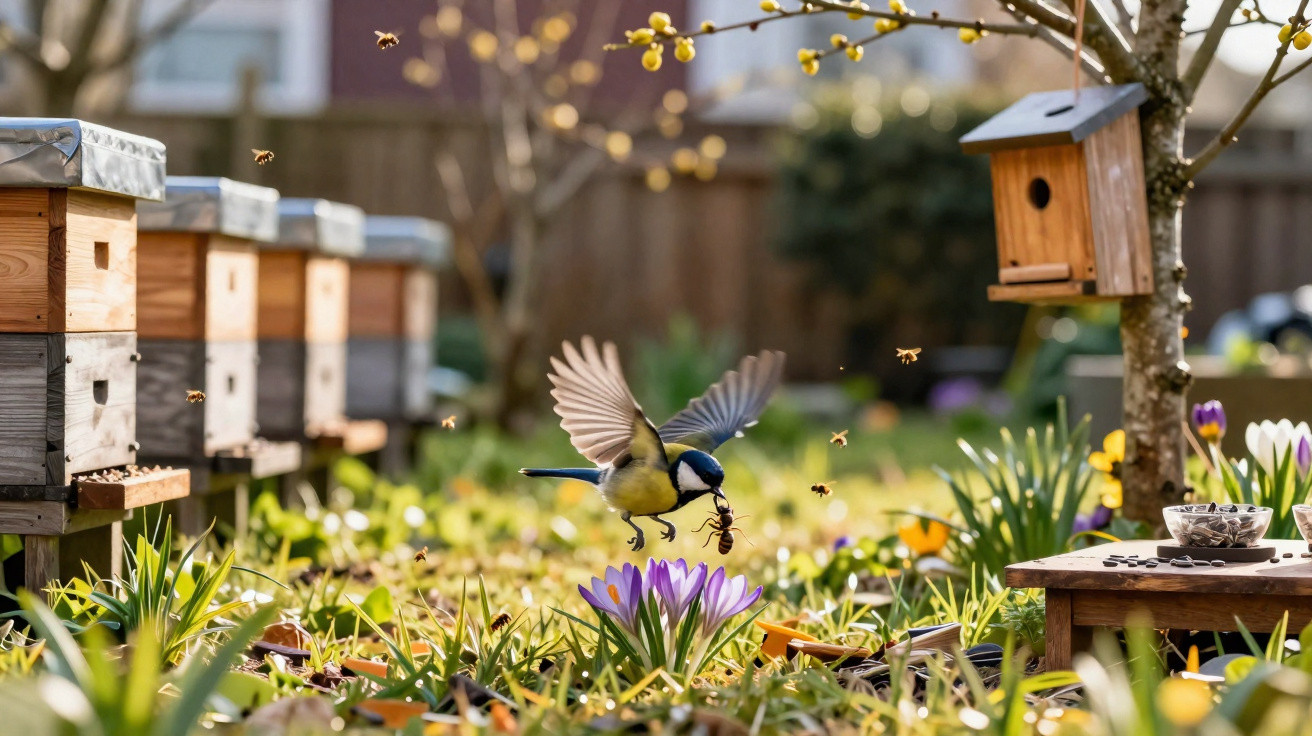
While beekeepers and amateur gardeners worry about their bees anew each year, a small helper is quietly at work in the background: the tit. Provided it finds suitable nesting sites and food early in the year, it consumes large quantities of insect larvae – including those of the Asian hornet. Taking action in good time during March can noticeably ease the pressure on a garden while also supporting biodiversity.
Why the Asian hornet is so dangerous to bees
The Asian hornet, whose scientific name is Vespa velutina, has spread across large parts of Europe. Classified as an invasive species, it is a major threat above all to honey bees and other pollinators. A single colony can consume up to 11 kilograms of insects each year, with pollinators accounting for a substantial share.
The crucial period is early spring. After winter, young queens emerge and look for a sheltered location to build their first, still-small founding nest. If they are left undisturbed, the colony expands rapidly over the summer. Before long, the conspicuous large nests are found high in trees, on buildings or inside sheds, making intervention risky for non-professionals.
Anyone who waits until summer has already missed the decisive period for containing the Asian hornet.
Experts assume that the species can no longer be eradicated completely. Its rapid reproduction and the absence of a specialised predator rule out full control. Although individual bird species, such as bee-eaters and certain birds of prey, do eat hornets, they occur far too rarely in built-up areas. This is where tits become important.
Tits: discreet allies against the Asian hornet
Blue Tits and Great Tits are already familiar visitors in many gardens. What is often overlooked is that these small birds are highly effective insect hunters. In spring, while rearing their chicks, their diet consists almost entirely of insects and larvae.
A breeding tit makes relentless trips back and forth during the feeding period. Ornithologists estimate that a pair completes 500 to 900 visits a day. Over a few weeks, this adds up to several thousand caterpillars, beetle larvae and other small insects – including Asian hornet larvae when a hornet nest is nearby.
There is also an interesting secondary effect: Great Tits in particular are often seen close to abandoned hornet nests. They peck out any remaining larvae and dead insects, thereby reducing some of the breeding potential for the following season.
Tits cannot solve the hornet problem on their own – instead, they provide ongoing, gentle pressure that slows the population somewhat.
Scientists stress that no single enemy – whether a bird, bat or parasitic insect – can regulate the Asian hornet completely. What matters is a combination of measures. Tits are an important element because they are present for most of the year and feed on insects continuously.
How to make your garden attractive to tits
For tits to make the most of their abilities, they need three things: safe nesting places, a varied food supply and an environment free from toxins. The best time to prepare is from late winter to mid-March.
Putting up nest boxes correctly
Nest boxes are the key first step. Many gardens lack old trees with natural cavities, and a simple wooden box can fill that gap.
- Material: untreated, preferably thick timber; avoid plastic
- Entrance hole: around 2.5 to 3 centimetres in diameter
- Height: 2 to 5 metres above the ground
- Position: slightly sheltered from the weather and not facing the prevailing wind
- Protection: install it where cats and martens cannot easily reach it
Putting up the box before mid-March greatly improves the chances that a pair will move in. Boxes installed later are sometimes used as well, but competition for suitable nesting cavities is already high by then.
Feeding strategy: seeds first, then insects
In late winter, naturally available insects are still scarce. Feeding stations can help birds through the colder weeks. Sunflower seeds, unsalted nuts and plant-based fats are particularly suitable. Supplementary feeding should stop again from the end of March. That is when the breeding season begins and the birds switch fully to insects – precisely the behaviour wanted here.
At the same time, it is worthwhile turning the garden into a small insect haven over the longer term. This gives tits plenty of prey, while bees benefit too.
- plant native shrubs such as elder, hawthorn or hazel
- leave a few areas wild, with piles of leaves and deadwood
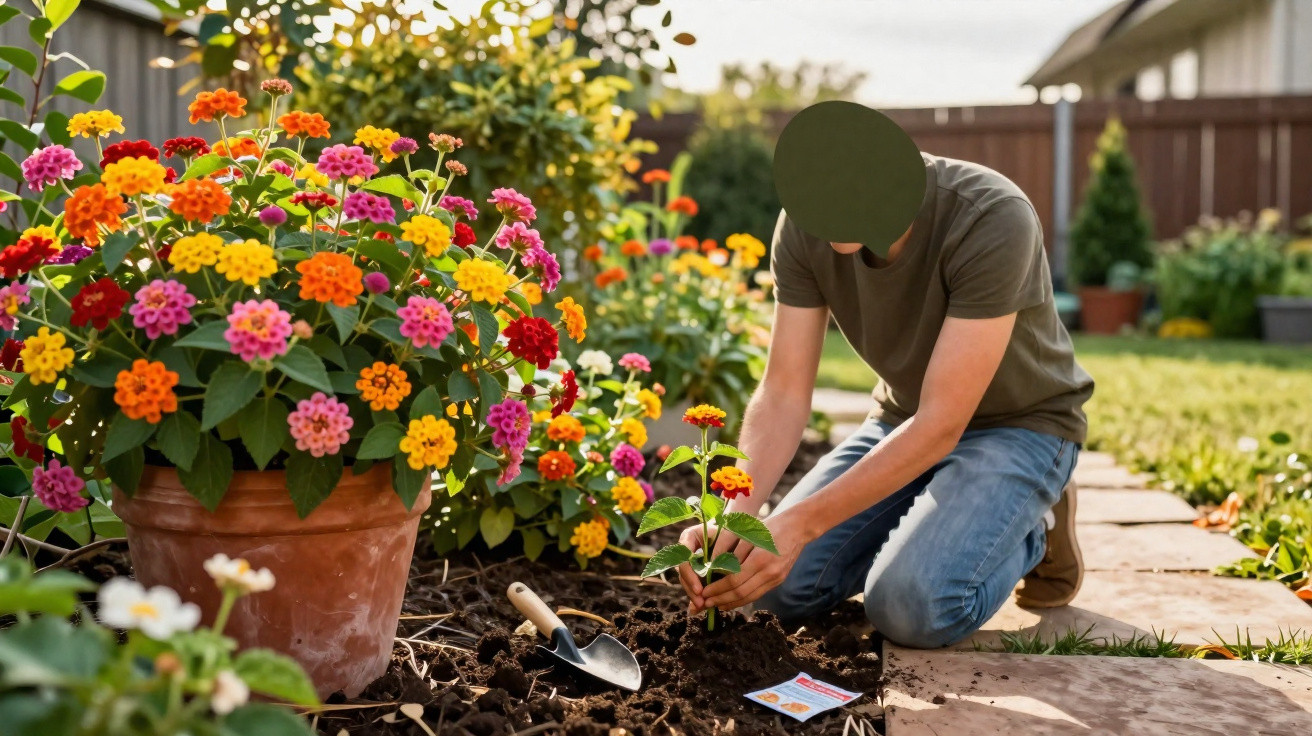
- sow flower-rich perennials and wildflowers that attract insects
- create a shallow water dish or mini pond and keep it clean
No toxins: why pesticides undo all the benefits
Anyone wanting to encourage tits specifically must avoid chemical sprays consistently. Pesticides kill beneficial insects as well as pests. Birds also take in these toxins indirectly through their prey. This can weaken them, disrupt reproduction and, in the worst cases, prove fatal.
A “tidy” garden without insects is an ecological desert for tits – and ultimately does not help bees either.
A lively, slightly “untidy” garden with a variety of structures delivers far more benefits: more pollinators, more natural predators of aphids and caterpillars, more birds – and therefore a more stable overall balance.
What to do if you find an Asian hornet nest
Helpful though tits are, they are no substitute for professional control. Anyone spotting an Asian hornet nest in the garden or on their home should never attempt to deal with it themselves. Stings are painful, and several attacks at once can be dangerous, particularly for people with allergies.
| Situation | Recommended action |
|---|---|
| Small, early nest in March/April | Report it without fail to a specialist contractor or the relevant authority; removal is most effective at this stage. |
| Large nest high in a tree in summer | Do not tackle it yourself; appoint a specialist company and keep a safe distance. |
| Abandoned nest in winter | It no longer poses a danger and is often an interesting food source for tits and other birds. |
The combination is what makes the difference: professionals deal with dangerous nests, while tits simultaneously reduce offspring and other pest insects throughout the garden.
Which tit species are especially active in gardens
Two species are particularly noticeable in built-up areas: the smaller Blue Tit, with its blue-and-yellow plumage, and the somewhat larger Great Tit, with its black head and striking black stripe down its breast. Both are highly adaptable and readily use nest boxes.
Coal Tits and Marsh Tits may also appear in gardens with varied habitats. They all share the same characteristic: during the breeding season, they eat insects and larvae almost continuously. As a result, they affect not only Asian hornets, but also aphids, geometer moth caterpillars and leaf-mining moths.
Benefits for the whole garden – not only for bees
Making a garden friendly to tits is not simply a response to concerns about honey bees. Solitary bees, hoverflies, beetles and butterflies also benefit from flowering plants, water-rich corners and pesticide-free care. Many of these species are themselves under pressure and respond well to new habitats.
At the same time, pest problems settle down naturally. Rather than treating every issue with a spray, birds and beneficial insects intervene. The Asian hornet remains part of the system, but is less dominant when several factors work against it.
So, anyone taking a few straightforward steps in March – putting up a nest box, using feeding stations wisely, avoiding toxins and planting native shrubs – gains a powerful feathered ally. The tit may look harmless, but it is a formidable insect hunter. That can make all the difference when the first hornet queens begin searching for a new home again.




Comments
No comments yet. Be the first to comment!
Leave a Comment