
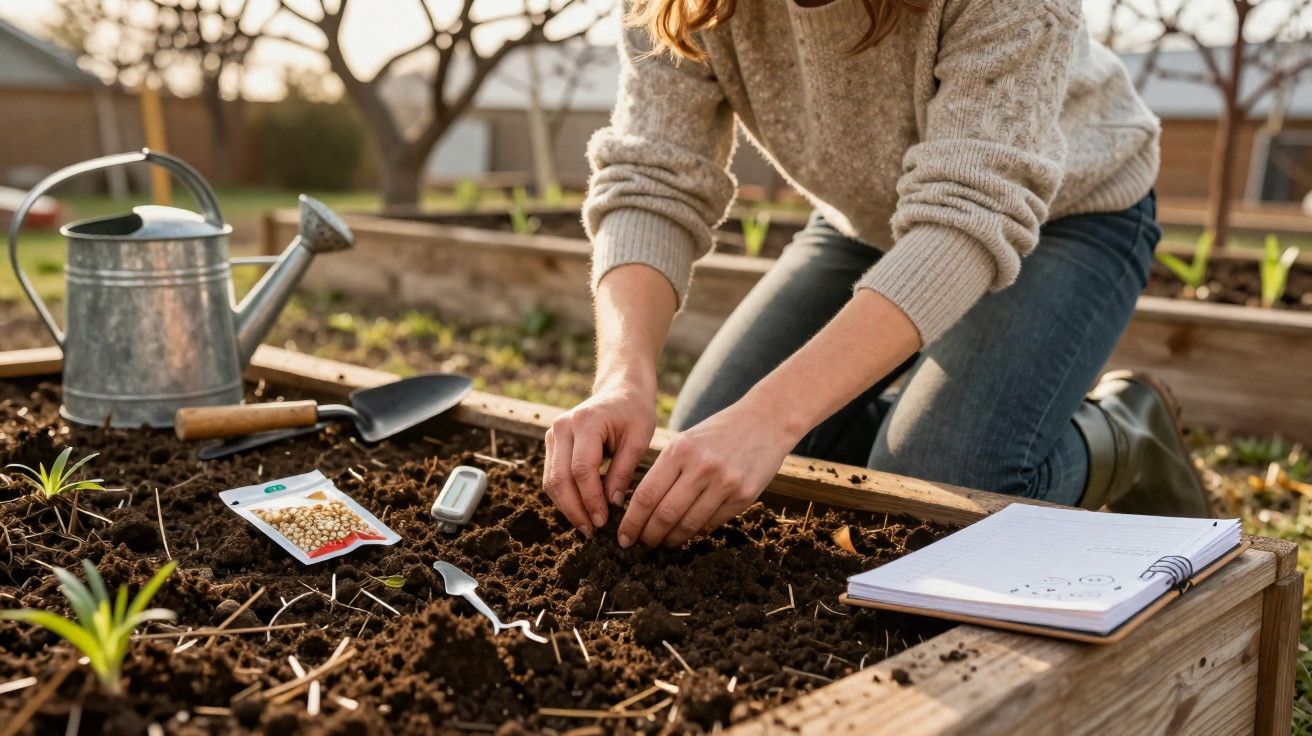
Many amateur gardeners are not yet thinking about beds, tomatoes or courgettes in February. For seasoned gardeners, however, this month marks the real beginning of the season. Preparing the soil properly now can often double the summer harvest, bringing stronger plants, fewer diseases and noticeably less work during the busiest months.
Why February is the garden’s quiet starting signal
Winter may still feel long, yet the new season is already beginning beneath the surface. The ground is usually still moist, but no longer frozen solid. Earlier generations made deliberate use of precisely this transitional period.
- Low weed pressure: After winter, the soil surface is generally still fairly clear. Preparing it now gives you a head start before weeds begin to grow.
- An ideal time to improve structure: The earth is neither hard as concrete nor completely waterlogged, making it well suited to loosening and improving.
- A head start for spring: Nutrients and organic matter have time to settle in and break down before the first young plants are planted out.
“Tending the soil in February gives summer vegetables a head start that is clearly visible in their size and yield.”
The 5 steps old gardening professionals use to wake their soil
1. Check the soil before getting started
Before reaching for any tools, there is one simple but often overlooked task: look at the soil, feel it and test it.
- Moisture test: Take a handful of soil and squeeze it. If it forms a sticky lump, it is too wet, so it is better to wait.
- If it is too dry: If everything immediately crumbles into dust, lightly hoeing or breaking up the surface can help restore life to the soil structure.
- Check the pH: A basic test kit from a garden centre will show whether the soil is more acidic or calcareous. Many later crop choices depend on this.
Knowing your soil allows you to act with purpose: less guesswork and more suitable measures.
2. Loosen rather than dig – keeping the soil alive
The old advice was that a good gardener digs every bed deeply. Today, we know that this disrupts valuable soil layers and microorganisms. Experienced gardeners learned this long ago and use gentler methods.
Tools such as a Grelinette (broadfork) or a traditional digging fork are ideal:
- Push the tines into the ground and gently rock them back and forth without turning the soil over.
- This lets air into the soil while leaving soil organisms at their usual depth.
- Water can drain away more effectively, waterlogging becomes less likely, and roots can later make their way through the ground more easily.
This careful approach usually takes less effort than fully digging over a bed, while rewarding you with loose, crumbly soil.
3. Feed the soil properly: organic matter is key
Fertile garden soil works rather like a digestive system: without food, there is no energy. February is therefore the time to fill the soil organisms’ “store cupboard”.
- Mature compost: A layer two to three centimetres deep spread across the surface provides humus, trace elements and billions of microorganisms.
- Well-rotted farmyard manure: This is especially suitable for hungry vegetables such as cabbage, squash, tomatoes and aubergines. Fresh manure does not belong on the bed, as it can scorch roots and tie up nitrogen.
- Natural soil improvers:
- Small amounts of wood ash provide extra potassium, which supports flowering and fruit development.
- Rock dust supplies trace elements.
- A little lime can raise the pH of very acidic soils.
At first, all of these materials should remain on the surface or be worked in only lightly. Soil organisms will do the rest, gradually turning them into a nutrient-rich humus layer.
4. Green manure: many professionals’ secret weapon
Experienced gardeners rarely leave their beds bare. Plants grown solely to support soil health, known as green manure, have an important role.
- Depending on the region and weather, robust crops such as field beans or vetch can still be sown in late winter.
- Their roots run through and loosen the soil, while fixing nitrogen from the air for the vegetables that follow.
- In March or April, cut the plants just above soil level and either leave them in place or work them into the surface.
This creates a kind of “soil cocktail” of roots, leaves and stems that greatly improves structure and fertility, without any mineral fertiliser.
5. Protect and warm the soil: the boost for early sowings
Bare soil suffers: rain leaches nutrients away, wind dries it out and frost compacts it. This is why many older gardeners placed particular importance on good protection in February.
- Mulch layer: Leaves, straw, grass clippings saved from the previous year or chipped prunings form an insulating cover. They retain moisture, suppress weeds and release nutrients again as they rot down.
- Dark cover: If you want to use the bed sooner, cover it with black sheeting or heavy horticultural fleece. The soil warms up faster beneath the cover.
This can often bring forward the sowing date for radishes, spinach or lettuce by two to three weeks. In cooler areas, that may determine whether a crop succeeds or disappoints.
Four common mistakes that can reduce a good harvest
Poor timing or an ill-considered job in February can cause considerable damage. Everyone encounters these pitfalls at some point, but recognising them can save a great deal of frustration.
- Working completely waterlogged soil: The earth becomes sticky, forms clods and later develops cracks. Roots then struggle to find enough air.
- Deep digging with a spade: Helpful organisms such as earthworms and fungal networks are disturbed or killed, leaving the soil less fertile.
- Adding no nutrients: Simply loosening soil without replacing anything is like working on credit. The ground becomes depleted and plants remain weak.
- Leaving beds uncovered: Wind, rain and frost remove fine soil particles and continually cool the surface layer.
“Every measure should suit the soil type, weather conditions and planned crop – not rigid calendar dates.”
Practical examples for different garden soils
Clay soil in a terraced-house garden
Heavy, wet clay often sticks to your shoes in winter. Here, paying attention to soil structure is especially worthwhile:
- Loosen only when the surface has dried, using a digging fork without turning the soil.
- Apply plenty of compost and, if necessary, work in a little sand or fine grit.
- Use a thick layer of mulch to stop the soil from sealing over again.
Sandy soil on an allotment
Sandy soils warm quickly but retain water and nutrients poorly.
- Generous applications of compost are essential here, ideally every year.
- Use green manure with deep-rooted plants to carry more humus deeper into the soil.
- Do not apply mulch too thinly, as it significantly reduces evaporation.
Why preparing garden soil in February is genuinely worthwhile
Many summer tasks, including watering, weeding and feeding, depend directly on how well the soil was prepared in late winter. Crumbly, humus-rich soil stores water like a sponge, releases nutrients gradually and allows roots to grow deeply. Plants cope better with dry spells, are less prone to fungal diseases and often produce larger, more even fruit.
Anyone who starts developing a yearly February routine for their beds usually notices a clear difference after just two to three years: the same area, but more crates of vegetables, fewer failures and less stress during heatwaves. Particularly in periods of extreme weather, well-prepared soil becomes perhaps the garden’s most important ally.




Comments
No comments yet. Be the first to comment!
Leave a Comment