
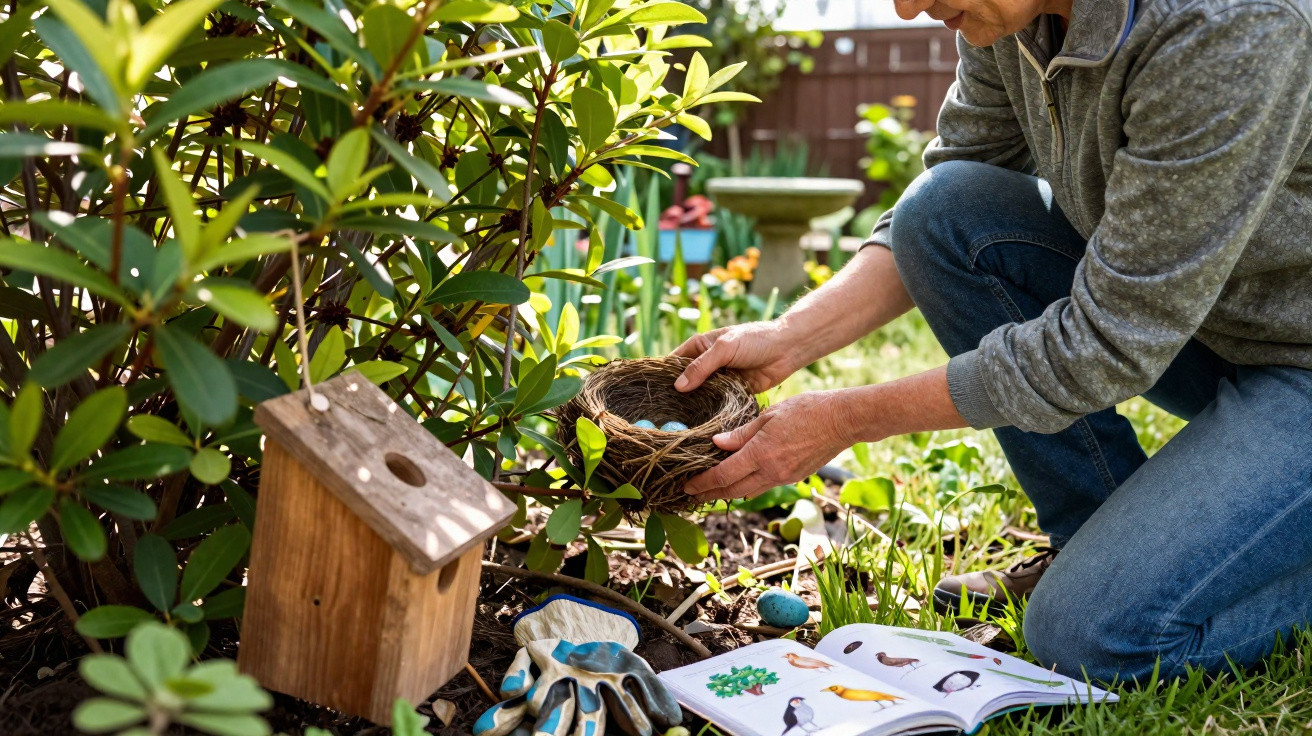
If you look closely over the coming weeks, it soon becomes clear that a real baby boom is under way among the crocuses, daffodils and first fresh greenery. In the UK especially, but also across central Europe, many garden birds use the milder weather to begin building their nests. Four species stand out in particular - and all of them may already be nesting right outside your door.
When garden birds start nest building
In the United Kingdom, the main breeding season for most songbirds begins in early March and continues until August. The timing is broadly similar in central Europe. Exactly when it happens depends on the species, the weather and the food available. As daylight hours increase, many birds actively search for mates and suitable nesting sites.
“From March until late summer, every garden can potentially become a nursery for songbirds.”
During the first weeks of spring, the signs are already unmistakable: males sing more intensely, pairs repeatedly follow the same flight paths, and birds carry grass stems, leaves or moss in their beaks. By then, it is clear that a nest is being built nearby.
These four garden birds are especially likely to breed now
In typical terraced-house gardens in England and Germany alike, four species are particularly noticeable as early garden breeders: blackbirds, robins, blue tits and long-tailed tits. Each favours different parts of the garden, so knowing their preferences makes a nest easier to spot.
Blackbird: a discreet builder in hedges and shrubs
Blackbirds are among the most common garden visitors. They construct open-topped nests, usually well concealed in thick vegetation. Favoured locations include:
- evergreen hedges, such as cherry laurel, thuja and yew
- climbing plants including ivy and honeysuckle
- dense shrubs, for example privet or wild roses
Their nests are generally positioned 1–3 metres above ground. Blackbirds often begin their first brood as early as March and, in favourable weather, can raise several clutches in a year. The eggs remain in the nest for around two weeks before the chicks hatch.
Robin: the quiet visitor in dense cover
Robins may seem trusting, but they are highly sensitive around their nests. They often nest:
- in dense ground cover or beneath shrubs
- in corners of log piles
- in wall crevices or old plant pots left lying around
Their nests can be surprisingly low down, sometimes just a few centimetres above the ground. Robins also begin the season early. From late March onwards, soft chirping can often be heard from the undergrowth as the parents tirelessly bring insects and worms to the young.
Blue tit: a regular occupant of nest boxes
Blue tits are classic nest-box residents. In the wild, they use cavities in trees, while in gardens they particularly favour:
- traditional wooden nest boxes with a small entrance hole of around 28 mm
- holes in old fruit trees
- gaps in sheds or beneath roof eaves
In early spring, they can often be seen perched at a box entrance, pecking at it or inspecting it. This indicates that the site is being assessed and that the pair may be considering moving in. Once the location is accepted, they carefully line the cavity with moss, feathers and animal hair.
Long-tailed tit: early singers in family groups
Long-tailed tits are among the earliest and most industrious nest builders. They create intricate enclosed nests from moss and spider silk, often placed in:
- slender branches of shrubs and deciduous trees
- hedges at eye level or slightly higher
- garden edges, often close to uncultivated ground
The quiet, high-pitched calls of groups of long-tailed tits are frequently heard early in the morning from March and April. Following them with your eyes may, with a little luck, reveal their finely woven nest.
How can you identify a nest in your own garden?
You will rarely find a nest by searching for it directly; the behaviour of the adult birds is usually the better clue. Clear signs include:
- birds repeatedly taking the same route, often carrying food in their beaks
- a bird repeatedly disappearing into the same spot in a bush
- louder, agitated scolding when you approach a particular area
- early, quiet chirps or begging calls coming from hedges and nest boxes
“Anyone wanting to find nests should observe rather than search - and always keep their distance.”
Particularly during breeding, repeated close human visits can be enough to unsettle birds. If the parents stay away for too long, eggs can become cold or chicks may go hungry.
Legal position: nests receive strict protection
In the United Kingdom, protection is governed by the Wildlife and Countryside Act 1981. Deliberately disturbing or destroying nests can result in substantial fines and even imprisonment. Across German-speaking countries too, the breeding and rearing period is subject to special protection.
As a general rule during this period:
- do not cut hedges back severely
- do not heavily thin trees where nests may be present
- do not open nest boxes or “take a look inside”
If you discover a nest by accident, mark the area and avoid it until the young birds have fledged. Children can enjoy an explanation from a safe distance - use binoculars rather than putting a phone into a bush.
How garden owners can support breeding birds
A bird-friendly garden starts with its design. Gardens consisting only of stone, gravel and closely mown lawn will attract few breeding pairs. Important elements of a thriving habitat include:
- hedges made up of native shrubs for shelter and nesting sites
- flowering plants that support insects, which later become food for birds
- little or no pesticide use
- an area that is allowed to remain slightly untidy, with log piles, leaf heaps or a wild corner
Nest boxes complement this habitat but cannot replace it. Anyone installing boxes should ensure they are at the right height, usually 2–3 metres, in a sheltered position, with the entrance facing away from strong midday sun.
“A healthy garden full of insects is the best ‘supermarket’ for hungry nestlings.”
Feeding stations can also be provided, using energy-rich food such as mealworms, fat balls or special breeding-season mixes. On warm days, a shallow dish of fresh water is helpful for both drinking and bathing.
Common mistakes to avoid
Good intentions can sometimes cause problems. Typical examples include:
- opening a nest box to film or photograph chicks
- trimming a hedge precisely when young birds are still in the nest
- placing feeding stations directly beside routes used by cats
- using strong garden lighting at night, which can disturb birds
Feeding bread is not a good idea either. Special seed mixes or insect-based bird food are better options. Anyone unsure should follow guidance from wildlife conservation organisations.
What exactly does “breeding season” mean?
The breeding season does not refer only to birds sitting on eggs. It includes:
- finding a mate and establishing a territory
- nest building and egg laying
- incubation and hatching
- feeding young birds in the nest
- the first days after fledging, when parents continue to feed them
The period after fledging in particular often causes misunderstandings. Many people assume that apparently abandoned young birds are helpless. In reality, they are learning to fly at this stage and are fed by their parents nearby from the ground. Intervention should only be considered when you are genuinely certain that a bird is injured or orphaned - and it is then best to consult a wild-bird rescue centre.
How your garden can become a bird paradise over time
Anyone paying closer attention this spring will see how strongly birds depend on the way we design our gardens. Individual measures, such as putting up a nest box, are a start, but the overall picture is what matters. A mixture of wildflower meadow, shrubs, trees, a few untidy corners and restrained maintenance attracts not only birds but also butterflies, wild bees and other animals.
By making small improvements every year - planting an additional native hedge, hanging another box or avoiding chemical products - you can gradually create a valuable refuge. The reward arrives in spring: quiet song, adult birds fluttering past with food in their beaks, and the knowledge that new life is growing in your own garden.


Comments
No comments yet. Be the first to comment!
Leave a Comment