
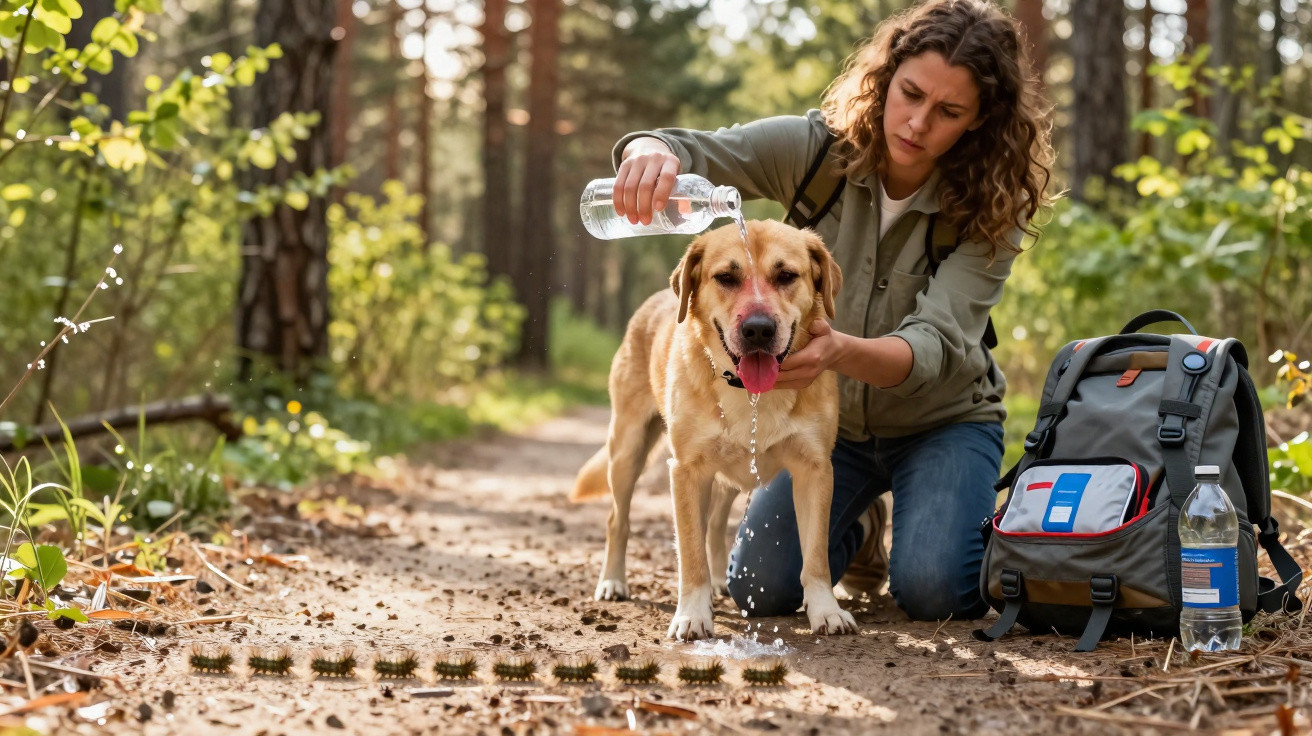
An inconspicuous caterpillar can cause devastating damage within only a few hours.
While many owners casually pick up the lead, a danger may be waiting among pine trees, grassland and park paths – one that remains active for longer than it once did because of climate change. More alarmingly, the obvious first-aid reaction for most people can make matters dramatically worse and may determine whether a dog keeps its tongue – or even survives.
Why the caterpillar threat lasts so long this year
In the past, the rough guidance was clear: take particular care in late winter, and conditions usually became calmer in April. In many areas, that rule of thumb can no longer be relied on. Increasingly mild winters and warm spells in spring keep these pests active for longer.
The concern is processionary moth caterpillars, especially pine processionary caterpillars. They travel across the ground in long lines, which can be as enticing to dogs as a living scent trail. That is precisely what makes them so hazardous.
“After unusually mild winters, the risk from processionary moth caterpillars often remains until late April and, in some cases, even into May.”
Outdated calendars, modern risks
Foresters and dog owners once used particular months as their guide. Today, those periods are shifting further and further:
- February–March: Traditionally the main season for caterpillars travelling on the ground.
- April: Now also a high-risk period in many regions.
- Depending on weather conditions: Initial encounters may occur as early as January, while the danger can continue throughout spring.
Anyone relying on old experience may lower their guard too soon. It is exactly during this period that many dogs begin sniffing much more freely around undergrowth and woodland edges again.
How processionary moth caterpillar venom causes harm
The caterpillars do not actively bite dogs. The risk comes from their fine urticating hairs, which act like thousands of tiny poisonous darts. They can detach through contact, or even in gusts of wind, before penetrating the skin and mucous membranes.
Toxic microscopic needles in the mouth and nose
Dogs are naturally inquisitive. They push their noses into piles of leaves or nudge crawling caterpillars with their muzzles. Sometimes, they may even briefly take them into their mouths. This is when the hairs strike.
The urticating hairs contain a strongly irritating protein that triggers a severe inflammatory response. The danger is especially serious if the tongue, palate or throat is affected.
“Even brief contact is enough for highly toxic urticating hairs to embed themselves in the mucous membrane and cause extensive damage there.”
Warning signs: how to recognise poisoning
Common symptoms after contact with processionary moth caterpillars include:
- sudden, intense panting and heavy drooling
- rubbing the mouth or muzzle on the ground or with the paws
- crying out, whimpering or showing an obvious pain response
- a swollen muzzle or tongue, and reddened mucous membranes
- agitation, panic and, in the worst cases, circulatory problems
Without prompt treatment, parts of the tongue may begin to die within a few hours. In severe cases, a life-threatening allergic shock can occur.
The most common mistake: trying to help makes it worse
In an emergency, many owners instinctively do exactly the wrong thing. They wipe around inside the dog's mouth with a tissue, scarf or their hand in an attempt to remove what they believe are venom residues. The impulse is understandable – but potentially disastrous.
Why rubbing and wiping are so dangerous
Rubbing causes the urticating hairs to be:
- pushed further into the mucous membrane,
- broken up and spread even more widely,
- smeared across larger areas.
As a result, more venom is released and the tissue damage spreads further. An action intended to help can therefore accelerate the destruction of the tongue and surrounding tissue.
“Keep fingers, cloths, tissues and rubbing motions away – every wipe intensifies the toxic effect of the urticating hairs.”
The only sensible first-aid action
Every minute matters in an emergency. Although the situation is serious, owners can use valuable time before a vet is able to intervene.
Rinse generously – without any rubbing
Before travelling to the clinic, the key action is to rinse rather than scrub, using clean water.
If you suspect contact with processionary moth caterpillars, proceed as follows:
- Secure the dog, remain calm and carefully open its mouth.
- Flush out the mouth with as much clean water as possible, for example from a drinking bottle.
- Direct the flow of water from the corners of the mouth outwards, so the hairs are washed away rather than forced further in.
- Do not use brushes, cloths or fingers to rub the area.
- Immediately travel to the nearest veterinary practice or veterinary hospital.
Rinsing is no replacement for professional treatment, but it may reduce the number of urticating hairs present and thereby limit the harm.
What the vet will do next
At the veterinary practice, treatment will usually involve a complete set of measures. Typical steps include:
- sedation or anaesthesia, allowing the dog to be examined without pain
- thorough cleaning of the mouth, tongue and, where necessary, the nose
- strong pain relief
- anti-inflammatory medication, usually corticosteroid preparations
- monitoring of breathing and circulation
The sooner the dog arrives, the more tissue can be saved. If treatment is delayed too long, part of the tongue may need to be surgically removed. This can severely and permanently affect eating, drinking and quality of life.
How to protect your dog before contact occurs
The best emergency is one that never happens. A few rules of behaviour can greatly reduce the risk during walks.
Walking with foresight
In affected areas, it pays to stay particularly alert. Typical warning signs when out walking include:
- nests in pine or oak trees that resemble cotton-wool-like clumps
- columns of caterpillars moving in a single line across the ground
- official warning signs in woods, parks or around playgrounds
In these places, keep your dog on a short lead and prevent it from sniffing in undergrowth or leaf piles. The edges of pine woods, sunny woodland margins and banks alongside paths are particularly critical areas.
What to carry in your rucksack
Those who regularly walk in affected regions can prepare in advance:
- a large drinking bottle filled with clean water
- an additional small bottle reserved for emergency rinsing
- the address and telephone number of the nearest veterinary hospital saved on a mobile phone
Sometimes, the simple question of whether you have enough water with you determines how severe the injuries become.
Further risks that many owners do not know about
It is not only the dog's mouth that is at risk. Urticating hairs can also:
- cling to paws and cause eczema,
- enter the eye and result in serious corneal damage,
- be transferred to people via the dog's coat.
Anyone who notices suddenly itchy patches of skin or irritated eyes after a walk should consider caterpillar contact and seek medical advice as well.
When the danger decreases in the longer term – and why we must not rely on it
In theory, the risk falls once the caterpillars pupate and become moths. However, climate change means these stages shift from year to year. In a warm spring, the caterpillars remain active on the ground for longer, while the period is shorter in cooler years.
For dog owners, this means it is better to follow visible signs than fixed dates in the calendar. People who visit the same woodland regularly will gradually notice when nests appear and disappear – observation is more reliable than routine.
Why staying alert on walks truly matters
Processionary moth caterpillars may look small and harmless, yet the consequences of brief contact can shape a dog's life. With a little planning, a watchful eye and the right response in an emergency, the risk can be considerably reduced.
Ultimately, it requires only an extra water bottle in the rucksack and a little more attention on the path. In return, dogs and owners may avoid pain, surgery and possibly the loss of a faithful companion.




Comments
No comments yet. Be the first to comment!
Leave a Comment