
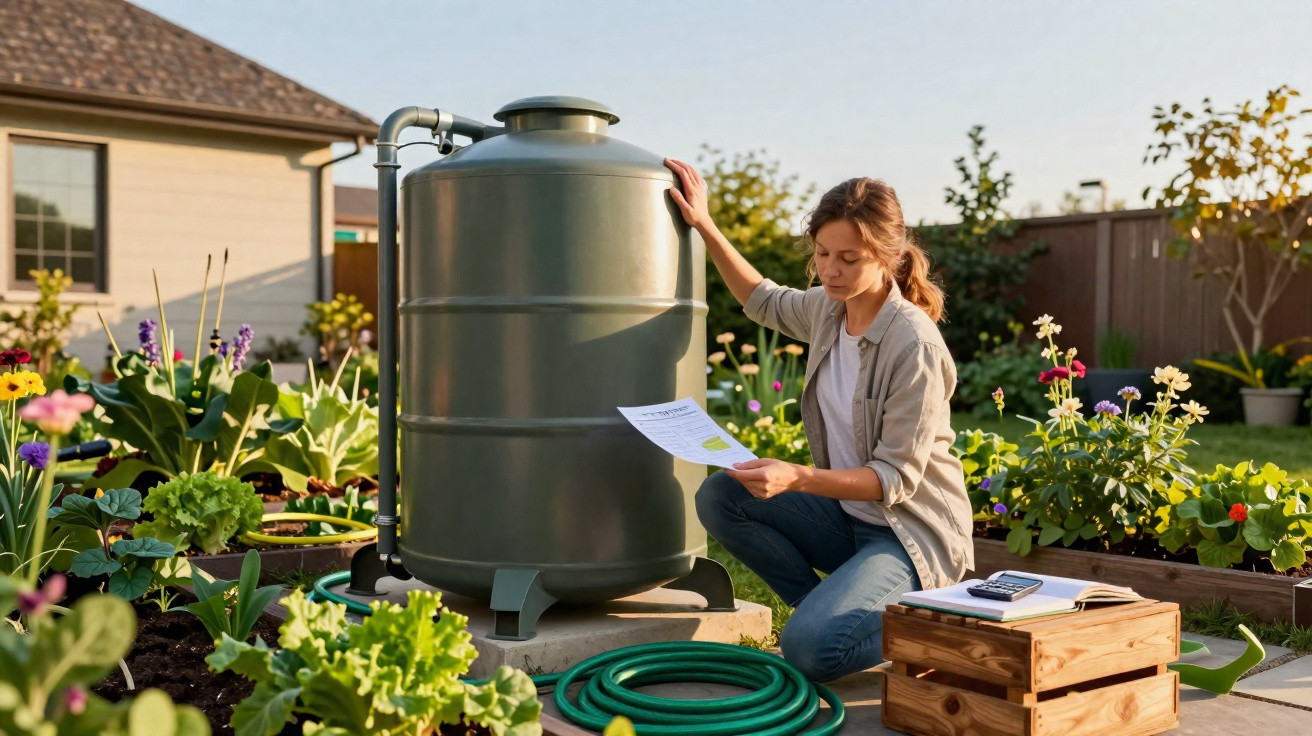
The winters have been wet, yet in many regions the summers are getting drier year on year. That is why many homeowners are considering installing their own rainwater harvesting system. It is a sensible move-provided the set-up is legally watertight. Because the gap between a permitted money-saving measure and a breach that can, in theory, cost up to 45,000 euros can be nothing more than an unassuming pipe.
Why rainwater can suddenly become a problem
Collecting roof run-off in a cistern feels harmless. You take pressure off the drinking water network, cut your own bills, and keep borders and beds green even when watering restrictions are in place. That is exactly where the legal trap sits: when authorities impose usage bans during droughts, or when a rainwater system is connected incorrectly to the drinking water supply, an environmental measure can turn into a risky grey area.
In areas vulnerable to drought, so-called water scarcity regulations often prohibit filling private swimming pools or watering ornamental gardens. Ignore those rules and you can quickly face four-figure penalties-regardless of whether the water came from the mains or from your own cistern.
"Using rainwater is permitted-but it only becomes dangerous when it conflicts with water-scarcity rules or the drinking water network."
When rainwater use is allowed with no formalities at all
Rules for outdoor use are relatively relaxed. In many cases, homeowners can start without registering anything and without seeking permission. The decisive factor is how the water is used and where it goes.
Straightforward use outdoors
A system is usually unproblematic when all of the following apply:
- The cistern-whether below ground or above ground-is connected only to the guttering/downpipe from the roof.
- The water is used solely for watering the garden or for cleaning the patio, paths, or a car.
- Not a single drop can enter the public drinking water network or any pipework that also carries drinking water.
On top of that, there are technical requirements aimed mainly at health and hygiene:
- The collected water must come from a roof that is not walkable and contains no asbestos or lead components.
- The cistern must remain closed so that dirt and animals cannot get inside.
- Antifreeze and other chemicals are prohibited in the tank.
To prevent mosquito problems in summer, specialist sources recommend briefly venting the cistern from time to time. However, the lid should never be left open for long, otherwise the tank can become a breeding site for insects.
When the system becomes notifiable
The moment homeowners use rainwater inside the house, the rules become much stricter. The most common next step is for the cistern to feed a second set of pipework for toilet flushing, the washing machine, or cleaning floors.
This shifts the installation from a “private garden set-up” into an area where public health and environmental protection are central. In many local authority areas, you must notify the council once rainwater is routed into internal pipework.
"Anyone using rainwater for the WC, washing machine or cleaning water must officially notify the installation in many municipalities-and keep it strictly separate from the drinking water network."
Separating the systems: zero tolerance
The key principle is simple: rainwater pipework and drinking water pipework must never meet in technical terms. Any form of connection can allow contaminated water to flow back into the public supply.
Typical requirements include:
- All rainwater pipes must be clearly marked, often with signage such as “Not drinking water”.
- Taps/outlets inside the home must use lockable taps or special fittings to prevent confusion.
- There must be a physical separation between the drinking water and rainwater systems-no valve, no bypass, no “emergency changeover”.
The reason is public health law. Operating a system in a way that could contaminate drinking water installations is not treated as a minor paperwork slip: it is regarded as a risk to the supply for many people. That is why the penalties can be severe in extreme cases.
How a cistern can, in theory, lead to a 45,000-euro fine
Relevant public health legislation includes tough sanctions. Anyone who contaminates public drinking water mains or installations-or knowingly accepts that risk-can face up to three years’ imprisonment and fines of up to 45,000 euros.
Such maximum penalties are rare for typical owner-occupiers. Even so, lawmakers are making a clear point: once the drinking water network is involved, discretion ends. Even suspicion that germs, chemicals, or other substances could enter public pipes via an incorrectly installed rainwater system can be enough for authorities to intervene.
In practice, financial risk tends to arise in three situations:
- Failing to comply with watering or pool-filling bans during dry spells.
- Connecting rainwater pipes to the drinking water network, even temporarily.
- Ignoring local notification requirements or installation rules for indoor systems.
Rainwater and drought: when saving money leads to a penalty
Across many European countries, authorities are increasingly sensitive about water use during heatwaves. If a summer is classed as critical, regional emergency rules may apply: car washing, filling pools, or watering gardens can be restricted or fully prohibited.
The crucial point is that these bans often relate to the type of use, not the source of the water. So if you draw from your cistern and still water decorative lawn areas, you may face the same penalty as a neighbour using mains water. Depending on the region, fines can reach €1,500, and repeated offences can push the amount significantly higher.
"Whether the water comes from the mains or from your own cistern makes no difference for many watering bans-the deciding factor is what it is used for."
What makes a legally robust rainwater harvesting system
Anyone who wants to use rainwater efficiently should plan the system correctly from the outset. That means not only the technical design, but also checking local rules. Many councils and water suppliers publish guidance notes that set out what is permitted and how a system should be built.
At its core, a safe rainwater system has these features:
- A clean roof with no problematic materials such as asbestos sheets.
- A closed, easily accessible cistern with a filter and an overflow.
- No chemical additives and no antifreeze.
- Completely separate pipe systems for rainwater and drinking water, clearly labelled.
- If indoor use is planned: documentation and, where required, notification to the local authority.
Keep an eye on costs and grants
Paying for a cistern can be worthwhile over the long term. Anyone with a large garden or high wastewater charges can save a noticeable amount year after year. In some areas there are even grant schemes that cover part of the cost, because each private system eases pressure on the public infrastructure.
At the same time, it is sensible to be realistic about maintenance and ongoing costs. Filters need replacing, sediment must occasionally be removed, and technical components should be checked. If that is neglected, you risk odours, algae growth, or a decline in water quality.
Common misconceptions about rainwater-and what actually applies
There are plenty of misunderstandings around this topic. Three particularly common assumptions repeatedly lead to disputes with authorities or neighbours:
- “Rainwater is always free and can be used without limits”: Only partly true. The water itself is free, but its use is restricted by environmental and public health rules.
- “I’ll just fill my pool with rainwater-no one will notice”: With visible features such as pools, neighbours and councils are increasingly attentive to whether drought-time restrictions are being followed.
- “A small link between rainwater and drinking water pipes saves space”: Even attempting to couple the systems creates incalculable risks. A backflow into the drinking water network can have serious consequences.
Anyone who recognises these pitfalls and keeps their system properly separated benefits in two ways: lower water bills and a home that is less dependent on shortages during hot periods. At the same time, every well-planned cistern supports careful use of a resource that is likely to become noticeably more valuable in the future.






Comments
No comments yet. Be the first to comment!
Leave a Comment