
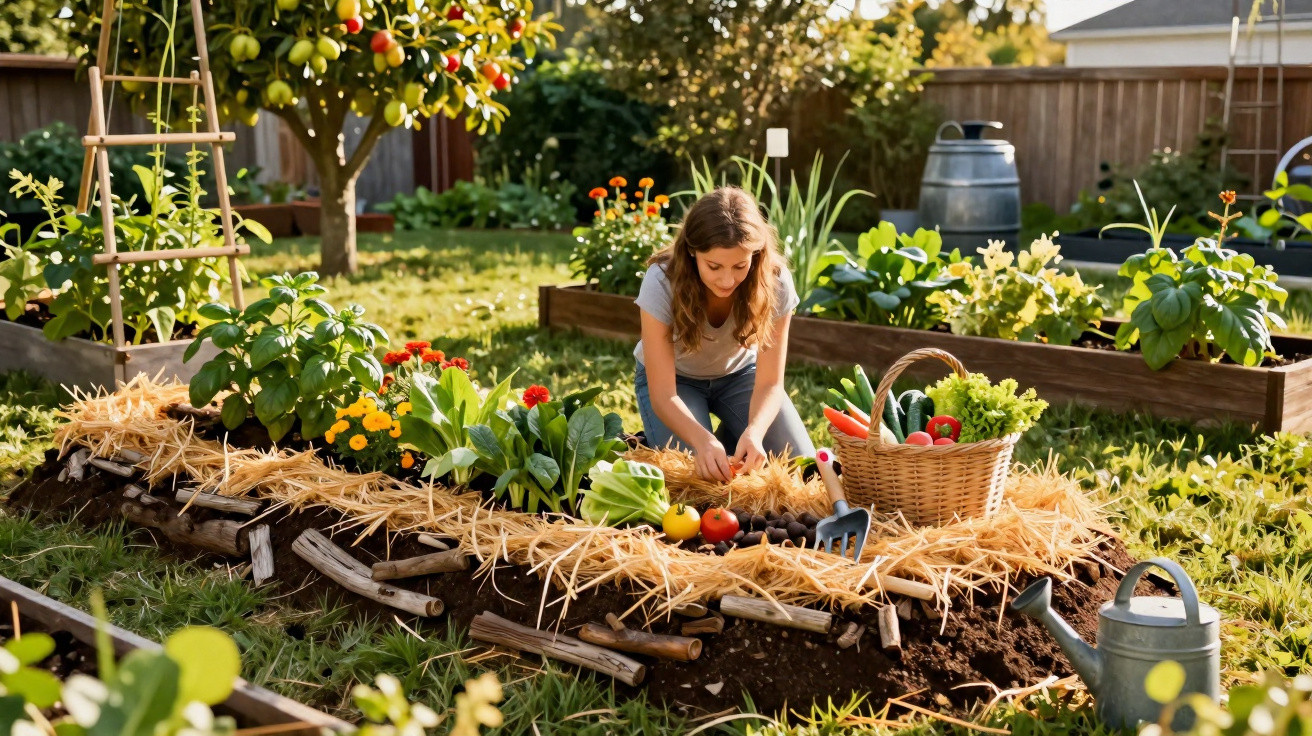
Anyone who has gardened in the traditional way for years often feels they already know the essentials: dig, sow, water, fertilise. Then permaculture comes along for the first time, and suddenly a lot of what you’ve been doing can seem oddly hard work - and somehow at odds with nature. The good news is you don’t need to start from scratch. Just three core methods can make a garden noticeably more fertile, easier to look after, and far more resilient.
What permaculture really means at its core
The word permaculture comes from “permanent agriculture” - a long-lasting, viable approach to farming and gardening. Yet in everyday garden practice, you often see very little of that: bare beds, artificial fertilisers, constant watering, and an ongoing battle against so-called “pests”.
Permaculture approaches the garden differently. Rather than chasing maximum short-term yields, the priority is a stable system. Three guiding ideas run through everything:
- The soil stays alive and is not depleted.
- People should get more harvest with less labour.
- Resources are shared and kept in a sensible cycle.
In practical terms, this means paying close attention to how water moves, how sunlight shifts across the year, which animals settle in, and how plants influence one another. A garden like this is never “finished”. It adapts, partly self-regulates, and becomes more self-sustaining over time.
“Permaculture doesn’t try to control nature - it uses its dynamics instead of fighting them.”
First method: a permanent plant-and-mulch cover instead of bare soil
One key principle surprises many people straight away: in a well-run permaculture garden, the ground is almost never left uncovered. From this perspective, exposed soil is a warning sign.
Bare earth dries out, seals over during heavy rain, and loses nutrients. Under a layer of organic matter, by contrast, a protected, living environment develops. That is exactly what permanent mulching is designed to create.
How mulching quietly repairs the soil
With mulching, a layer of organic material sits on top of the soil at all times. Common options include:
- straw or hay
- fallen leaves and dried grass clippings
- woodchips, shredded twigs and branches, pieces of bark
- plant residues from the veg bed, half-rotted compost
This layer breaks down slowly and feeds soil life such as earthworms, fungi, and bacteria. Those organisms build stable crumb structures, create air channels, and move nutrients towards plant roots.
“If you mulch consistently, you hand the real ‘digging’ over to the earthworms - spades and rotavators become almost unnecessary.”
You can feel the impact in day-to-day gardening:
- The soil holds moisture for longer, so you can extend watering intervals.
- Weed pressure drops because seedlings don’t get enough light.
- The ground becomes softer, deeper, and more productive.
- Even heatwaves or intense downpours cause less damage.
If you want to begin, you don’t have to wait until every detail is planned. A generous mulch layer is worthwhile even on beds that are not yet planted. It conditions the soil for the next season and reduces work later on.
Second method: plants as team players - smart companion planting
The second building block looks modest, but its effects are significant: instead of rigid rows, permaculture places plants so they support one another. This is known as companion planting or mixed cropping.
This isn’t about mysticism - it’s about observable results. Some species attract beneficial insects, others deter pests, and some loosen the soil. Combine them deliberately and you create mini-ecosystems within your vegetable beds.
Examples of plant teams that genuinely work
Proven pairings that suit many home gardens include:
- Tomato with basil and marigold (Tagetes): basil can improve the flavour of the fruit, while marigold flowers disrupt certain soil nematodes.
- Carrot with leek: each crop offers some protection against the other’s typical fly pests.
- Squash with maize and climbing beans: maize acts as a support, beans supply nitrogen, and squash covers the soil and helps retain moisture.
These combinations loosen up the “one bed, one crop” routine. Instead of maintaining monotonous blocks, you end up with a varied patchwork where each plant plays a role.
“Companion planting turns lots of small effects into a steadier, more productive vegetable garden - without any added chemicals.”
The benefits show up in several ways: diseases spread more slowly, space is used more efficiently, and the bed simply looks more alive. If you like, slot herbs or edible flowers between vegetables - it adds variety in the kitchen and brings in more pollinators.
Third method: self-fertile hugelkultur beds with built-in water storage
The third method is the most visually striking: rather than flat, rectangular beds, you build mounded structures. These raised mound beds - often based on the principles of so-called Hugelkultur - store water inside and release nutrients over several years.
How a hugelkultur mound bed is built
A typical mound is made up of several layers:
- coarse wood such as old branches or chunks of log as the core
- finer prunings, leaves, straw on top
- a layer of manure or nutrient-rich compost
- garden soil as the final planting layer
The wood at the centre decomposes slowly, soaks up rainwater, and then releases moisture gradually into the surrounding area. At the same time, the organic mass generates warmth within the bed - useful during cooler spells.
The main effects of a well-made mound bed:
- Local garden “waste” doesn’t go into a bin; it becomes a source of nutrients.
- The raised shape creates different microclimates, from a dry crest to a damp base.
- Watering needs fall because the wood acts like a sponge.
- Soil organisms find countless niches and multiply strongly.
“A well-filled mound bed works like a slow-release nutrient and water battery right beneath the roots.”
Building one takes effort at the start, but the payoff lasts for years. You can mix vegetables, herbs, and perennial plants in a colourful way, which greatly reduces the risk of complete crop failures.
How to combine the three methods sensibly
If you’re just starting out, you don’t need to change everything at once. A realistic plan for a typical detached-house plot could look like this:
| Step | Measure | Effect in the first year |
|---|---|---|
| 1 | Mulch existing beds continuously | Less watering, looser soil, fewer weeds |
| 2 | Create selected companion-planting areas | More stable harvests, lower pest pressure |
| 3 | Build one mound bed as a test project | New planting options, first increase in yields |
As you implement these steps gradually, the shift becomes obvious: fewer routine chores, more observation, and a better grasp of what’s happening in the soil. Common worries such as “The soil is exhausted” or “I can’t keep up with watering” start to carry much less weight.
Practical tips and common pitfalls for beginners
Despite the advantages, it’s worth noting a few typical mistakes. Mulch that’s too thick and made from fresh grass clippings can rot and attract slugs, for example. A looser blend of dry and moist materials tends to work better.
With companion planting, many people are tempted to mix everything randomly. Some structure is still helpful: keep taller plants towards the back and shorter ones at the front, and avoid putting heavy-feeding crops right next to each other year after year. A simple notebook with sketches makes it much easier to stay organised.
Mound beds also benefit from careful planning. Overly large constructions can dry out heavily on the top. In smaller gardens, a lower, broader mound is often enough and is simpler to maintain. If you have heavy clay soil, you can benefit especially because excess water drains away more readily.
Why the switch pays off in the long run
At first glance, permaculture can seem complex because it considers many factors at the same time. In everyday practice, it often looks quite different: over time, standard chores decrease while structure and diversity in the garden increase.
Once you introduce the three methods described above, your role as a gardener changes. Instead of continually importing nutrients and water from outside, you develop a system that takes on much of that work itself. Soil quality improves markedly, plants respond with sturdier growth, and extreme weather events no longer punch new holes in the harvest every year.
For small urban gardens and rented plots, you can scale the approach down: thinner mulch layers, mini mound beds, and companion planting in raised beds or even large containers. The core ideas stay the same - and that consistency is exactly where the strength of the method lies.


Comments
No comments yet. Be the first to comment!
Leave a Comment