
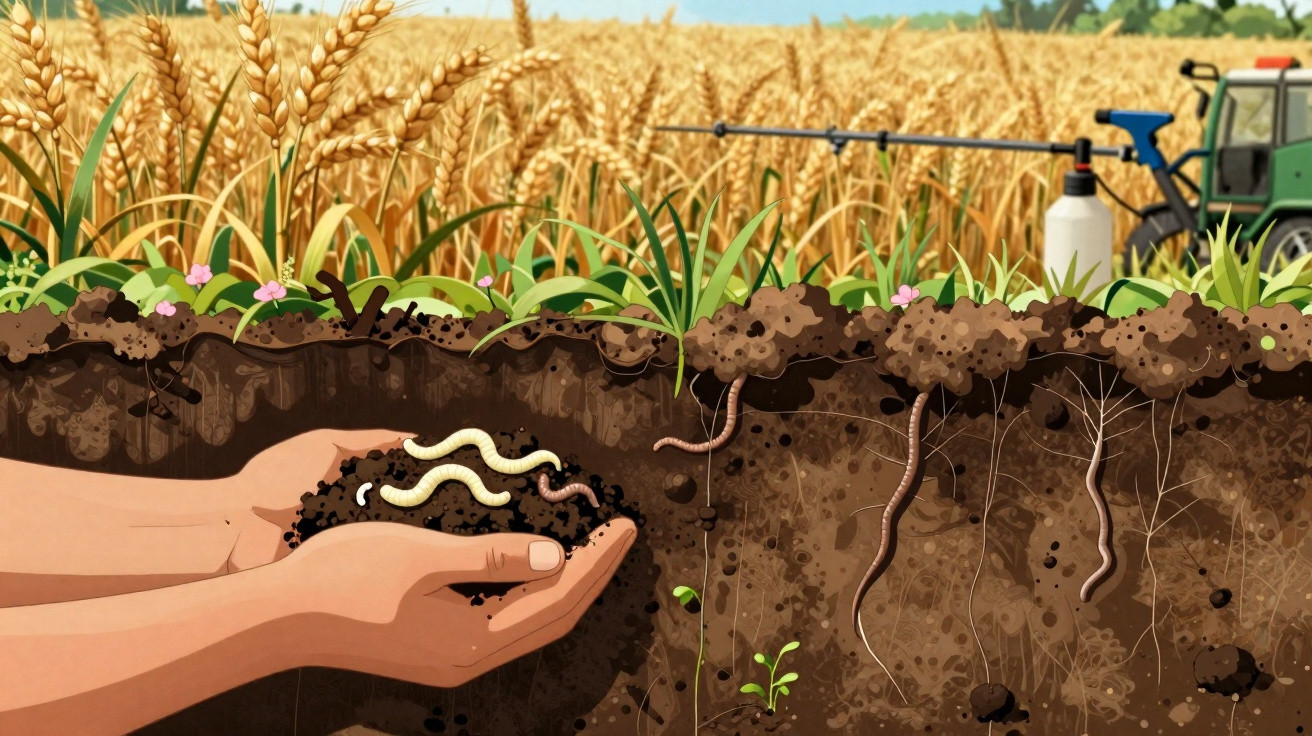
The presence of earthworms is a sign of a healthy, balanced agricultural environment. However, repeated use of synthetic chemical products can severely harm these annelids. Recent greenhouse research shows that commercial formulations lead to substantial reductions in the reproduction and activity of these essential underground organisms.
How does glyphosate herbicide affect earthworm reproduction?
Controlled trials in Austria examined how the species Aporrectodea caliginosa responded to exposure to widely used agricultural pesticides. Results showed that its reproductive rate fell by more than half over a three-month period, demonstrating the significant ecotoxicity caused by glyphosate in soil.
This decline in numbers disrupts the natural cycling of nutrients that cultivated plants need. As fewer cocoons are produced and fewer new individuals emerge, the land's capacity for biological regeneration gradually declines, putting the sustainability of crops treated with this widely used chemical compound at risk.
Why do earthworms often come to the surface when it rains?
Excessive moisture changes underground conditions and drives these creatures out for a surprising reason involving… Read more
Which species experience changes in underground behaviour?
In addition to reproductive losses, Lumbricus terrestris showed a sharp reduction in its usual burrowing activity. The pesticide disrupts the normal behaviour of annelids, restricting their movement and limiting the recycling of organic matter through the deeper layers of cultivable soil.
Suppressing the activity of these animals reduces natural aeration and impairs water absorption in the upper horizons. Without the ongoing movement of earthworms, the physical structure of the soil becomes compacted, making it harder for roots to develop and reducing long-term agricultural productivity.
Below is a video from the Pesticide Action Network PAN Europe (YouTube) channel on YouTube that explores the issues discussed in this subject in greater depth:
What does University of BOKU research reveal about glyphosate?
Researchers Johann G. Zaller and Mailin Gaupp-Berghausen led the laboratory assessments at the Austrian institution. Their scientific findings, published in the journal Scientific Reports, raised important warnings about the hidden contamination affecting soil fauna during the routine management of commercial crops.
The study highlighted that even recommended doses of Roundup create marked imbalances in the biology of the substrate. Its conclusions underline the need to reassess the toxicological risks of synthetic chemical products in order to safeguard biodiversity and environmental safety in agricultural areas.
Main impacts on soil
Observed damage to substrate biology
Direct effects demonstrated in soil organisms:
- A reduction of more than half in the reproductive rate of annelids;
- A drastic decline in underground burrowing and aeration;
- Severe harm to the continuous cycling of organic matter.
Why is the land's biological fertility under threat?
Earthworms act as ecosystem engineers, creating vital tunnels that help water to drain. When their population falls sharply, the soil loses its characteristic friability, reducing its ability to retain moisture and provide nutrition to agricultural plants.
The decomposition of organic residues also slows when these underground organisms are not actively present. This weakens beneficial microbiota and encourages excessive use of synthetic fertilisers, creating a damaging cycle that degrades the structural quality and vitality of farmed land.
The key ecological functions harmed by the decline of earthworms are:
- Poor aeration and compaction of the land's physical structure.
- A lower rate of plant-residue decomposition.
- Reduced availability of soluble nutrients for roots.
Which alternatives protect the health of soil organisms?
Adopting ecological farming practices helps restore microbiological life in crops. Using living plant cover provides a refuge in which earthworms can recover, promoting natural balance without relying on pesticides and strengthening soil fertility.
Moving towards regenerative methods protects the ecosystem while ensuring consistent harvests from season to season. Valuing underground biota is an essential step for those seeking to balance food production with the preservation of the vital resources of living nature.



Comments
No comments yet. Be the first to comment!
Leave a Comment