
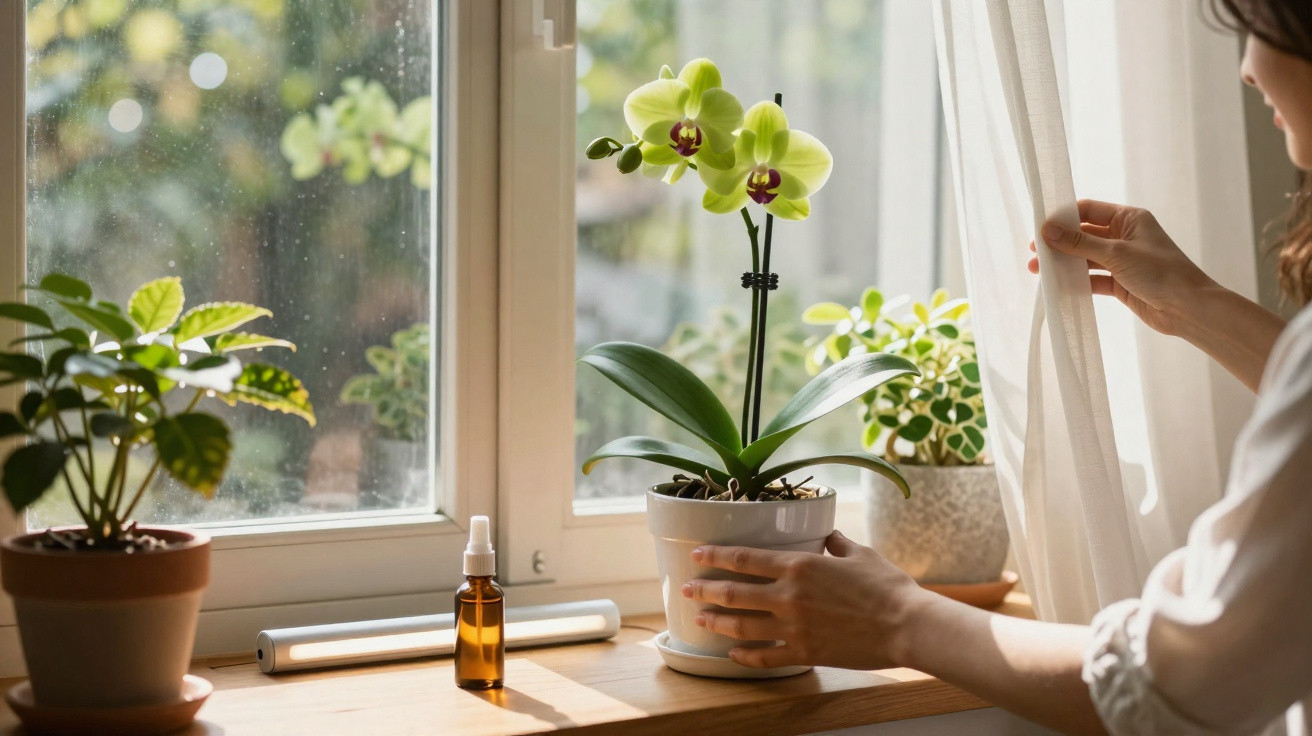
An orchid may have green, firm, seemingly healthy leaves yet go for months without producing flowers. This does not automatically mean it has a disease or that it is time to repot it. In many cases, the missing detail is linked to the light conditions provided for the plant and to how other aspects of its care routine are managed.
Why do attractive leaves not mean an orchid will flower?
Vigorous leaves indicate that the plant can carry out its basic functions, but flowering relies on different triggers. An orchid may keep developing leaves and roots without finding the conditions it needs to start a new flower spike.
For this reason, judging only by the appearance of the leaves can lead to the wrong conclusion. Vegetative growth and flowering are not exactly the same thing, and the plant must balance energy, light levels and environmental conditions in order to move from one stage to the next.
Can the amount of light be preventing orchid flowering?
Light is one of the main points to consider when an orchid grows well but does not flower. Many species grown indoors need plenty of bright, indirect light to thrive and, depending on the species, insufficient lighting may encourage attractive leaves without properly triggering flowering.
The leaves can provide a few clues too. Very dark leaves may suggest that the plant is receiving less light than is ideal for certain species, whereas yellowed or scorched areas may indicate excessive light. What looks healthy differs between orchid species, so identifying the species helps with interpreting these signs.
How can you improve lighting without scorching the leaves?
If the plant is in a dim corner, moving it gradually to a brighter position may be more suitable than placing it straight into intense sunshine. A spot near a window with good indirect light is often an option for many indoor orchids.
It is also worth checking the space at different times of day. A window that seems bright in the morning may receive strong sun later in the afternoon. The aim is to find a position suited to the species, providing enough light without exposing the leaves to an abrupt change.
What other factors can affect flower formation?
Light is not the only consideration. Temperature, watering, humidity, nutrition and the orchid's own growth cycle can all affect the development of a new flower spike. Some species also respond to differences between daytime and night-time temperatures.
In addition, a plant that has recently flowered may simply be going through a natural period of recovery and growth. Before changing several care practices at once, check whether the roots, leaves and new shoots are still developing.

Comments
No comments yet. Be the first to comment!
Leave a Comment