
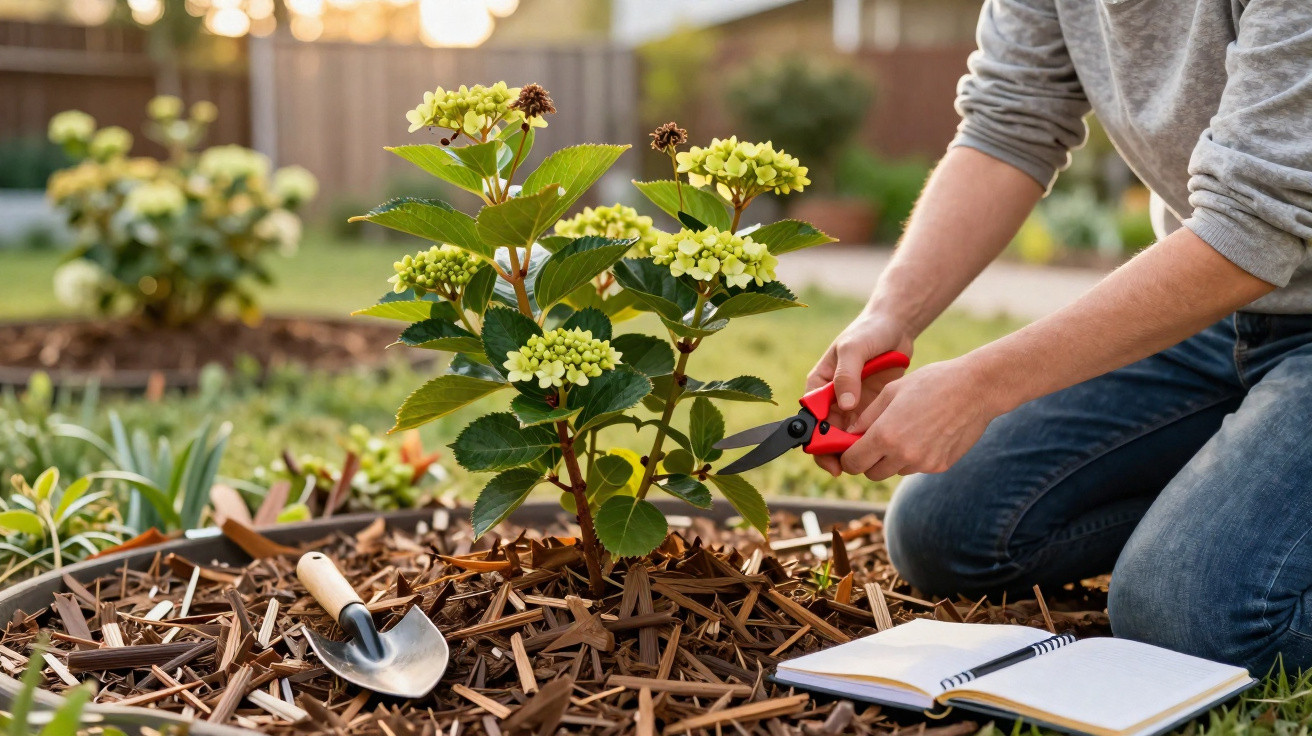
Many amateur gardeners do everything right in spring – yet still ruin their hydrangeas with one tiny mistake.
Anyone hoping for dense, plump flower heads on their hydrangeas in summer needs to look closely in March. Television gardener Monty Don relies on an inconspicuous little task that few people carry out – yet it determines whether the plant produces abundant blooms or lacklustre foliage.
Why March determines hydrangea flowers
Hydrangeas are not straightforward bedding plants. The particularly popular mophead and lacecap hydrangeas (Hydrangea macrophylla) produce flowers on what is known as “old wood” – shoots that grew during the previous year. Cutting those stems at the wrong time removes all the developing flowers for the coming summer.
Something crucial happens within the shrub in March: buds begin to swell, although frost may still occur overnight. It is during this period that you can first see which stems are alive, where the buds are located and which tips have been damaged by winter. Monty Don considers this the ideal moment – but only for one highly selective, gentle task.
“The difference between a spectacular floral display and a green foliage monster often comes down to one correctly placed cut in March.”
Many people cut their hydrangeas back neatly in late winter because they are used to treating roses that way. The consequences can be severe: come summer, they get leaves rather than flowers. Monty Don therefore repeatedly stresses the difference between hard pruning and careful deadheading.
Deadheading rather than hard pruning: Monty Don’s small routine
The method is essentially simple, but it requires real consistency: in March, remove only the spent flower heads, not the entire shoot.
How to prune in March, step by step
- Wait until the worst frosts have passed – usually towards the end of March, depending on the region.
- Find the old flower heads – the brown, papery balls left from the previous year.
- Identify healthy buds – beneath the old flower head, each stem has one or two clear pairs of buds.
- Cut directly above the upper pair of buds – only a few centimetres below the old flower.
- Remove genuinely dead wood only – stems without buds that are dry and brittle can be cut out at the base.
The principle is that the old bloom is removed while the young buds remain entirely intact. Over the course of spring, these buds develop into strong shoots carrying the sought-after summer flowers. Cutting further down, by contrast, removes precisely these emerging flower buds.
“Take off only the old flowers and leave the buds below them – that is how simply you can save the entire summer display.”
Gardener Sophie Law says from personal experience that deadheading after the final night frost is the safest option. Only then are winter-damaged sections clearly visible, helping to prevent healthy buds from being cut away. The result is noticeably fuller flower heads and much more even flowering.
The most common hydrangea mistakes in spring
The same mishaps are repeated in front gardens every year. Three pitfalls are especially common:
Pruning too early in January or February
The plants are still dormant and the buds are barely visible. Anyone tidying them up at this stage may unknowingly remove the entire set of developing flowers.Hard shaping cuts, as used for shrubs or roses
Cutting back old stems heavily removes the foundation for flowers on mophead hydrangeas, because these flowers appear on old wood rather than new growth.Pulling at buds without checking carefully
Some gardeners snap off tips that look dried out without inspecting them closely. Healthy buds are often sitting immediately below and are then removed too.
This is exactly where Monty Don’s method comes in: it is better to examine every stem carefully with secateurs once than to cut the whole plant into a tidy shape.
Monty Don’s winter ritual: mulch as a hidden source of strength
Pruning is only half the story. Monty Don combines his March routine with a second habit that is rarely noticed but has a major effect: applying a thick layer of organic mulch in winter.
When and how to apply mulch
In January, when beds appear bare and hydrangeas are little more than a framework of branches, he spreads well-rotted organic material around the plants. Suitable materials include:
- mature garden compost
- mushroom compost
- bark mulch or chipped bark, preferably slightly acidic, such as pine bark
The depth of the layer is crucial. Monty Don recommends at least around five centimetres, preferably more. Many gardening guides support this range: 5 to 10 centimetres around the root area is considered ideal.
| Mulch depth | Effect |
|---|---|
| 2–3 cm | Visual covering, limited protective effect |
| 5 cm | Good protection against drying out, initial nutrient benefit |
| 8–10 cm | Strong weed suppression, noticeable soil improvement |
His view is that it is better to mulch one part of the garden properly and deeply than to spread a token thin layer everywhere. The roots then sit as though beneath a blanket, the soil retains moisture for longer, and microorganisms gradually turn the material into nutrients. This later benefits the flowers directly.
What mulch and light pruning achieve together
Combining careful March deadheading with a substantial winter mulch layer makes a clear difference to hydrangeas over several years. The shrubs grow more evenly, produce new growth from a stronger base and need complete rejuvenation less often.
Well-mulched soil holds rainwater for longer, which is particularly beneficial for hydrangeas because they are sensitive to drought stress. Mulch also protects the root zone from extreme temperature changes, reducing late-frost damage. When the roots remain healthy, plants can put more energy into flowers instead of simply surviving.
Which hydrangeas benefit from the method – and which do not?
This light March pruning is intended primarily for varieties that bloom on old wood, namely traditional mophead and lacecap hydrangeas. For these plants, severe pruning would effectively mean a year without flowers.
However, some hydrangea species flower on new wood, including panicle hydrangeas (Hydrangea paniculata) and smooth hydrangeas (Hydrangea arborescens). They tolerate harder pruning much better and are often deliberately cut back more strongly to keep them compact. Monty Don’s light pruning is not essential for them, although mulching still helps them greatly.
Practical examples for your own garden
Anyone unsure whether their hydrangea flowers on old or new wood can inspect the shrub carefully in summer. If flowers appear mainly on older, woody stems, it is usually a macrophylla variety. In that case, all that is needed the following spring is the targeted removal of the brown flower heads – directly above the first healthy pair of buds.
If you have cut your plant back severely for the past few years and seen hardly any flowers, the best approach is to make a fresh start: for one year, remove only dead wood, apply a thick layer of mulch and prune very gently in March. It often takes one or two seasons for the hydrangea to return fully to its rhythm – but patience is then rewarded with impressive flower heads.
The risks of continuing to prune incorrectly
Persistently shortening the shoots every spring puts the plant into a constant cycle of producing foliage without forming flowers. Some hydrangeas respond with very uneven growth: long, thin stems, lots of green growth and very little colour. There is also added frost stress when buds are left exposed without protection too early.
The supposedly neat cut therefore creates the exact opposite of what many gardeners want. Monty Don’s approach involves cutting less in March but doing so more precisely – and the reward becomes visible only months later, when the shrub is covered in large flower heads.


Comments
No comments yet. Be the first to comment!
Leave a Comment