
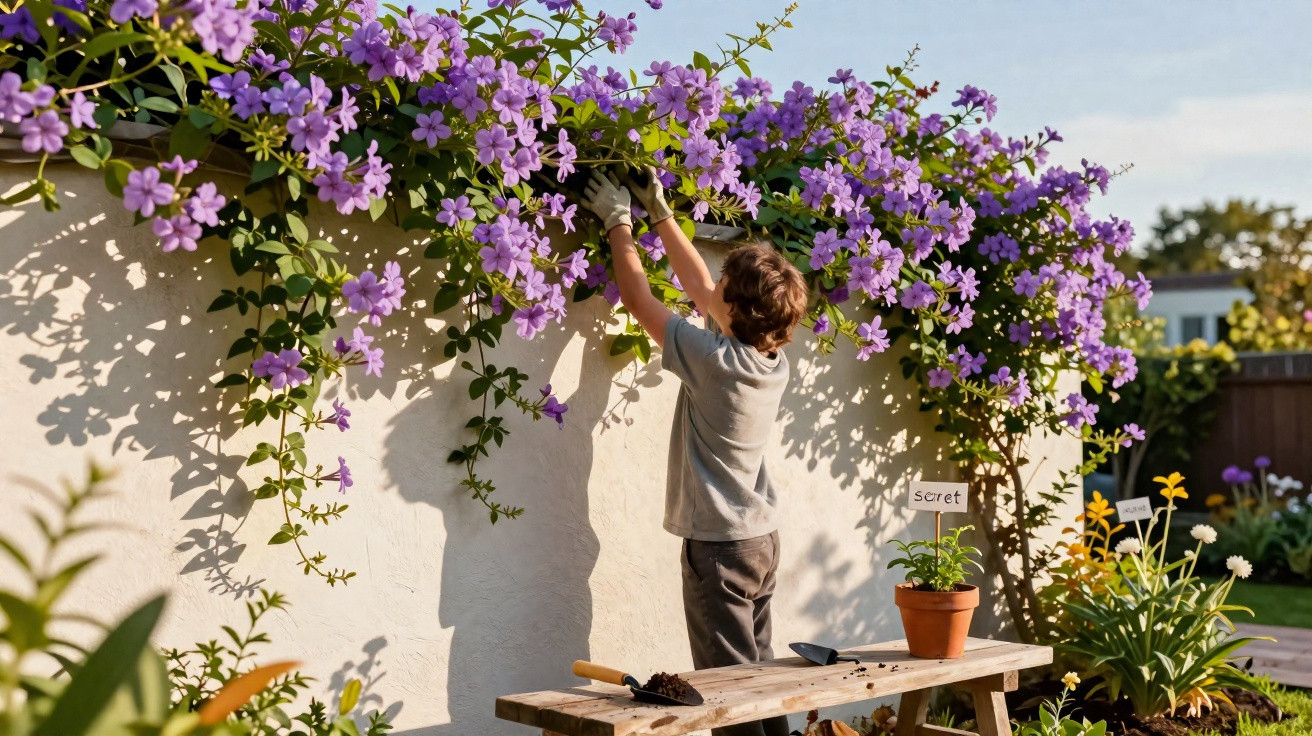
Many amateur gardeners plan their beds, lawn and patio down to the smallest detail, yet the retaining wall is often left as little more than a supporting extra: bare, grey and functional. That is precisely where a major opportunity lies. Choose the right plant and this “problem area” can become one of the garden’s most eye-catching features – without constant watering or feeding.
Why a retaining wall is perfect for these flowering cushions
Retaining walls are often considered challenging places to plant: there is little soil, along with heat, wind and rainwater that drains away immediately. Many garden plants struggle in these conditions. Alpine cushion perennials, however, are ideally equipped for them. Originating from rocky landscapes, they grow in crevices and on sparse slopes – much like the conditions found on a wall.
The plant in question is especially suitable: aubrieta, also known as rock cress or false rock cress (botanically Aubrieta deltoidea). It remains low-growing, forms dense cushions and spreads widely sideways. Then, in spring, it puts on a real display: from around mid-April into early summer, hundreds of small violet flowers appear, sometimes tinged with pink or purple.
“Within just a few weeks, the wall no longer looks like an alien feature in the garden, but like a natural rocky slope drenched in a lilac waterfall of flowers.”
This plant thrives in sunny, warm and freely draining spots – exactly where other plants may “burn” or dry out. Its shoots creep across the stones, locate cracks, take root and then tumble softly down the wall face in cascades. The stones stay structurally visible and stable, but their hard appearance is softened.
The best position on the wall: start the flowering waterfall at the top
To create the characteristic “waterfall effect”, do not plant aubrieta at the foot of the wall. Position it along the top edge instead. Its shoots can then hang downwards and gradually cover the surface.
- Position: full sun is essential; a south- or west-facing aspect is ideal
- Soil: poor to average soil is suitable, but it must drain well
- Wall height: from around 60 cm upwards, the cascading effect is particularly striking
- Companion plants: other rock-garden plants, such as houseleeks or sedums, are a good visual and practical match
Ideally, there will be a narrow strip of soil along the wall top or gaps between the stones. This creates the “starting bed” for the aubrieta. Pure, heavy garden soil is unsuitable because it retains too much water and becomes compacted. A loose, stony growing medium is a better choice.
How to plant aubrieta in a retaining wall
The quickest approach is to use small young plants in pots rather than seed. They can be placed precisely into gaps and planting pockets without requiring major alterations to the wall.
Mixing the growing medium and preparing planting pockets
First, make small pockets between the stones or behind the upper row of stones. Fill them with a loose mixture of:
- around 50% ordinary garden soil
- 20–30% mature compost
- 20–30% grit or coarse gravel
This blend allows surplus water to drain away quickly, preventing the roots from sitting in wet conditions. Aubrieta prefers conditions that are slightly dry rather than overly damp.
The right time to plant
There are two suitable planting windows:
- Spring: after the last heavier frosts, once the soil has dried out
- Autumn: during a mild spell, allowing the roots enough time to establish
Carefully remove the young plant from its pot, loosen the rootball slightly and place it in the prepared pocket. Set it with a gentle outward slope so that rainwater does not collect around the plant. Water thoroughly once afterwards to settle the soil around the roots. From then on, water sparingly rather than frequently.
Care: little effort, plenty of impact
Once aubrieta has established itself well, it is among the most rewarding plants in the garden. It does not require continual attention with the watering can or heavy applications of fertiliser.
Watering, feeding and pruning to keep the floral carpet dense
- Watering: only during prolonged dry spells in the first year; established plants cope well with drought
- Feeding: a light layer of compost in spring is entirely sufficient
- Pruning: cut the cushions back by around half after the main flowering period
Trimming after flowering has two benefits: it keeps the cushions compact instead of allowing them to become woody and tired, while encouraging fresh young shoots that will flower abundantly again the following year. Without this cut-back, bare patches often develop in the centre of the cushions after several years.
“A single use of the shears in early summer often determines whether the wall continues to look like a dense carpet or gradually develops gaps.”
There is another advantage: the lilac flowers attract insects. Bees and butterflies use the cushions as a food source. Deer and rabbits, by contrast, show little interest in the plant – a useful point for gardeners in rural areas.
Which aubrieta varieties are especially suited to retaining walls
Garden centres offer numerous cultivated forms that vary slightly in flower colour and growth habit. For walls, the best choices are robust varieties that form strong, dense cushions.
- Blue-cushion varieties: classic violet-blue flowers and compact growth
- Pink and purple forms: add greater depth of colour to the wall
- Double-flowered varieties: have an elegant look, although they often flower for a slightly shorter period
- Repeat-flowering varieties: may produce another flush in late summer under good conditions
For a larger wall, plant several varieties next to one another. This creates waves of colour without making the overall effect look restless. Spacing young plants about 25 to 30 centimetres apart is enough, as the cushions soon grow together.
Ideal companion plants for a living wall mosaic
A retaining wall becomes even more impressive when aubrieta does not grow alone but is combined with other rock-garden plants. Suitable choices include:
- houseleeks (Sempervivum) for their graphic rosettes
- different sedum species with yellow, white or red flowers
- thyme for fragrance and additional blooms
- early-flowering bulbs, such as small daffodils, along the top edge
The result is an ever-changing display throughout the year: bulb flowers begin in early spring, followed by aubrieta’s lilac curtain of blooms; sedums and thyme add accents in summer, while houseleeks provide structure all year round.
Risks, limitations and a few honest points to consider
This method does have its limits. Anyone with a permanently wet, shaded north-facing wall is unlikely to get much pleasure from the plant described here, as it needs sunshine. Completely smooth concrete walls without joints also offer neither soil nor grip; planting blocks or wall baskets are often a better solution in that case.
The wall should also be structurally sound before it is planted. Plants may conceal cracks visually, but they cannot replace proper structural stability. In addition, using very nutrient-rich soil and applying excessive fertiliser can result in lush but short-lived cushions that become matted more quickly.
Why this project is particularly worthwhile for new gardeners
Beginners in particular often underestimate demanding sites such as retaining walls and mentally dismiss them as “impossible to plant”. Yet this is exactly where an uncomplicated, inexpensive perennial can create a surprisingly dramatic result – without complex care instructions or costly specialist materials.
A few pots of aubrieta, a wheelbarrow of soil-and-grit mix and half a day’s work can create a project that becomes more impressive year after year. The once dreary retaining wall almost disappears behind a lilac slope of flowers, suddenly looking like the deliberately designed centrepiece of a carefully planned garden.


Comments
No comments yet. Be the first to comment!
Leave a Comment