
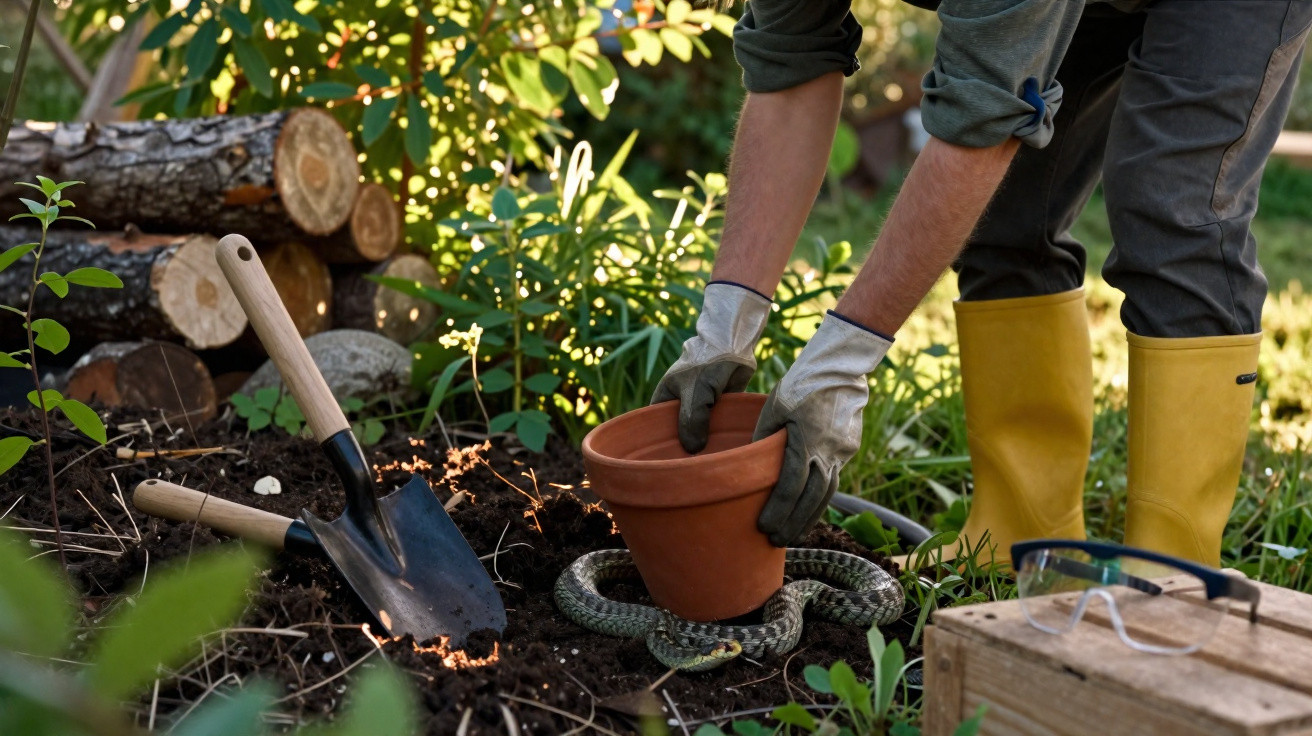
Many amateur gardeners do not realise how risky one careless movement can be.
Anyone weeding, tidying a border or trying to pull out a wild plant “quickly” will often instinctively put a hand into dense greenery without looking first. During the warmer months, this automatic reaction repeatedly leads to painful bites from native venomous snakes. A few straightforward habits can greatly reduce the risk without taking away the enjoyment of gardening.
The single movement that changes everything
Almost everyone who gardens regularly knows the situation: you bend down to pull an unwanted plant from a perennial border, briefly move the leaves aside – or perhaps do not – and reach blindly into a dark spot. It may be long grass, beneath a rounded lavender plant, behind a stone or in the compost heap.
“Blindly reaching into leaf litter or beneath shrubs greatly increases the chance of putting your hand directly into a viper’s defensive zone.”
The risk is highest between April and September. At this time, the beds are not the only things full of life: snakes are active too, basking in the sun and sheltering in warm, protected corners. Hands and feet are most often bitten because these are the areas where people tend to work least attentively.
Vipers and other snakes do not seek confrontation with people. Venomous snakes generally bite only when they feel threatened: when someone comes too close, steps on them or accidentally catches them with a hand. A sudden reach close to the animal is perceived as an attack, and the bite is its defensive response.
Where vipers are most likely to hide in the garden
Snakes favour sheltered, warm and quiet places. Gardens offer more of these than many people expect. Typical refuges where vipers may be found include:
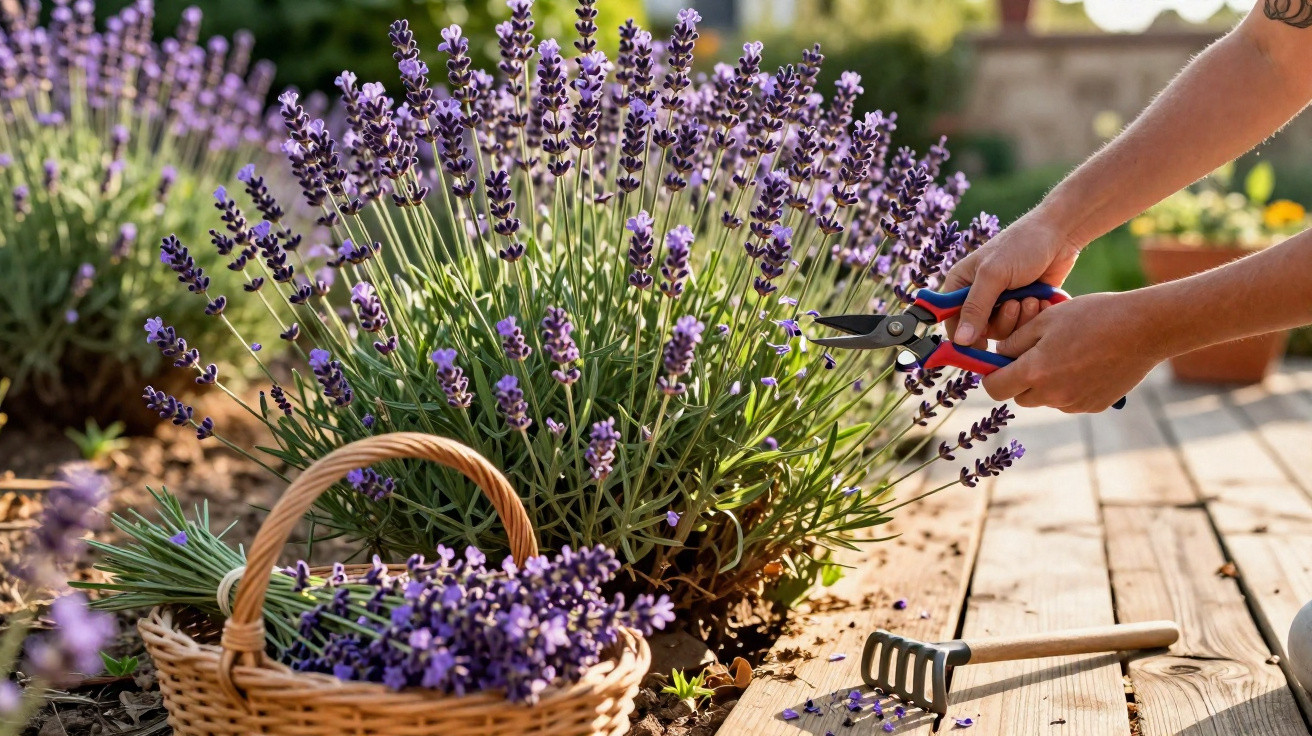
- dense perennials and shrubs, such as low roses or lush cushions of lavender
- shaded border edges, along walls or fences
- dry-stone walls and piles of stones, especially natural stone
- log piles, thick layers of mulch and heaps of leaves
- areas around the compost heap, including beneath boards and sheeting
Anyone reaching into these places without thinking can easily put their hand straight into an animal’s hiding place. Gardeners pulling weeds “quickly” from a dense clump of lavender with bare hands often notice the snake only after it has already bitten. Visibility is also poor in long grass or beneath overhanging branches – ideal cover for an animal looking for peace and quiet.
How to reduce the risk of a viper bite
The most important rule is: Never put your hand anywhere you cannot see. Following this simple principle substantially lowers the danger. A few practical habits can also be easily incorporated into everyday gardening.
Protective equipment for hands and feet
- Wear sturdy, preferably high shoes rather than sandals or flip-flops.
- Use thick gardening gloves made from leather or similarly robust material.
- If you regularly work in rough ground, wear long trousers that cover the ankles.
This equipment may feel inconvenient on hot days, but it provides an important barrier against thorns, splinters and teeth.
Working techniques that keep you away from the animal
A few simple methods help keep your body a step away from possible hiding places:
- Loosen weeds with long-handled tools rather than your hands, such as a hoe, cultivator, patio-joint scraper or dandelion weeder.
- Before reaching into a border, gently move or comb through the plants, for example with a rake. Snakes will usually move away when they sense vibrations.
- Work from bright, clearly visible areas towards denser, darker growth.
- Never lift boards, slabs, buckets or tarpaulins with bare hands; first nudge or raise them using a tool.
- Pull clumps of plants towards you before reaching into them, rather than putting your hand straight into their depths.
“Keeping your hands in view and working with tools first takes away the viper’s element of surprise.”
What genuinely helps after a bite – and what can cause harm
Despite every precaution, a bite may still occur. Panic helps no one, so having a clear course of action is invaluable:
- Immediately step back a few paces and leave the animal alone; do not attempt to catch it.
- Call the emergency services on 112 and explain what has happened.
- Sit or lie the affected person down and keep them as still as possible.
- Remove jewellery, tight clothing and footwear close to the bite site before swelling increases.
- Clean the bite with soap and water, then cover it loosely with a clean cloth.
- Keep the bitten arm or foot still and positioned slightly raised.
Paracetamol can be used for pain relief. Certain persistent “home remedies” are more likely to do harm. The following should be strictly avoided:
- Do not apply a tourniquet or pressure bandage.
- Do not put ice on the wound.
- Do not cut the wound, suck it or use suction devices.
- Do not consume alcohol, coffee or strong tea.
- Do not take aspirin or other blood-thinning or anti-inflammatory medicines.
- Do not administer injections or “antivenom” yourself.
In hospital, the patient will be monitored carefully. Antivenom is used only when there is clear evidence that the venom is having a severe effect. Many bites are milder, particularly when action is taken quickly.
How venomous are vipers in Central Europe really?
In Germany, Austria and Switzerland, the common adder and the asp viper are the principal venomous species. Their venom can be painful and may cause severe swelling, nausea and circulatory problems. Thanks to modern medical care, deaths are now very rare, particularly among adults.
The greatest danger is to children, older people and those with pre-existing health conditions. Every bite remains a medical emergency, even where symptoms initially appear mild. Sometimes little or no venom enters the wound, but symptoms can intensify after a delay.
Creating a wildlife-friendly garden while staying safe around vipers
Many animal species, including snakes, benefit from wildlife-friendly gardens containing stone piles, dead wood and dense planting. Anyone creating these features does not necessarily need to remove them in order to garden safely. A clear division into zones is useful:
- Keep areas near the patio, seating areas and play spaces relatively open and easy to see through.
- Position stone piles, wood stores and dense hedges nearer the edge of the property.
- Tell children not to enter certain corners alone, such as spaces behind sheds or beside dry-stone walls.
People who work regularly in the same areas gradually develop a feel for the places where animals like to shelter. During warm, dry periods, it is especially worthwhile to check sunny, protected spots carefully.
Practical everyday tips for more relaxed gardening
Over the years, many gardeners develop small routines that become almost automatic. These are precisely the routines that can be adjusted deliberately:
- When stepping into a border, pause briefly and ask yourself: “Where can I put the tool first, rather than my hand?”
- Choose new tools that create some distance – a long handle is preferable to doing everything close to the ground.
- Cut back paths regularly so that you do not have to walk through long grass.
- Move leaf and branch piles in good time during autumn, or only in late winter when snakes are less active.
Anyone who adopts these small changes can approach the gardening season far more calmly. The aim is not to eliminate every risk, but to work more consciously. Snakes remain part of the ecosystem and eat rodents – which also benefits the garden. What matters is ensuring that people and animals cross paths as little as possible.

Comments
No comments yet. Be the first to comment!
Leave a Comment